







Understanding the 407 Letter: Definition and Purpose
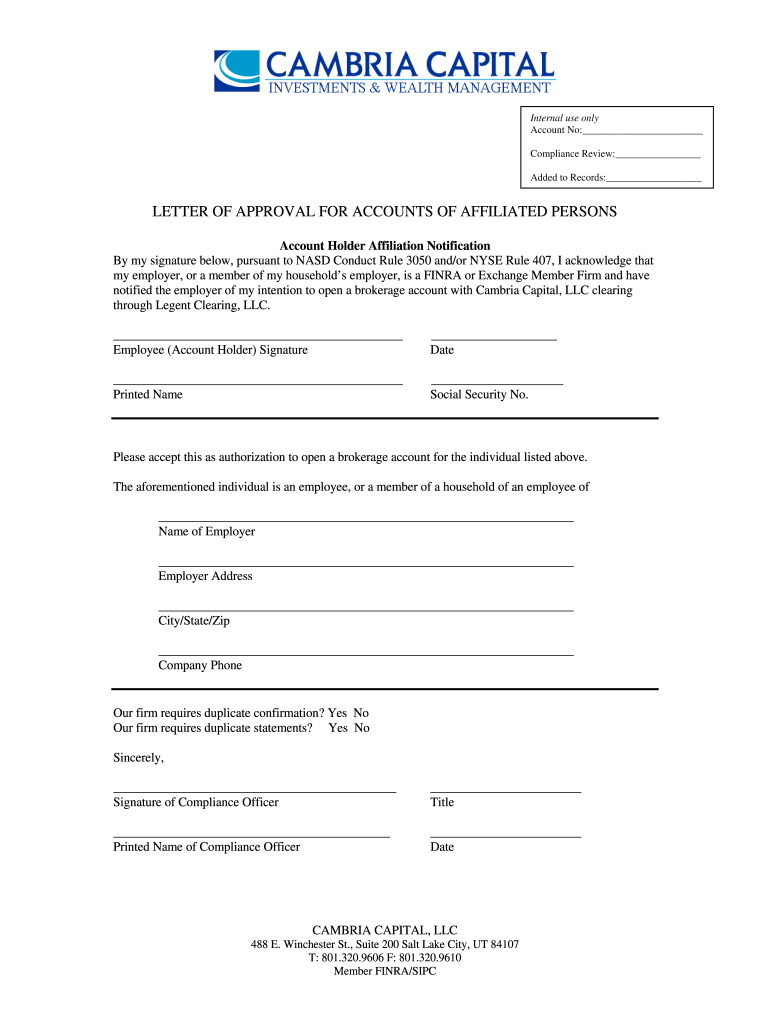
The 407 letter serves as a formal communication tool primarily used within the financial services and brokerage sectors. It is often associated with compliance and regulatory frameworks, particularly in relation to affiliations with FINRA-member firms. The document typically outlines important details such as the account holder's acknowledgment of their affiliation with a registered firm and serves as a prerequisite for opening brokerage accounts.
Key Elements of a 407 Letter
-
Affiliation Acknowledgment: The account holder must confirm their association with a FINRA or Exchange Member Firm. This acknowledgment is crucial for compliance and regulatory purposes.
-
Personal Information: The letter requires the account holder to provide essential personal information, which may include their name, contact details, and identification numbers such as Social Security number or Tax Identification Number.
-
Authorization for Account Opening: The letter must clearly authorize the opening of the brokerage account under the specified terms, ensuring all parties are aware of the implications of the account management.
Importance in Financial Transactions
The 407 letter is an integral part of documentation when opening a brokerage account. It assures brokerage firms that the individual complies with industry regulations, thereby protecting the firm from potential legal issues. Furthermore, it ensures the integrity of the financial systems by outlining the responsibilities and obligations of all parties involved.
Steps to Complete and Submit the 407 Letter
Completing a 407 letter involves several key steps to ensure compliance and accuracy.
-
Obtain the 407 Letter Template: Many brokerage firms provide a standard template. Utilizing this template ensures that all necessary information is included and reduces the chances of missing vital elements.
-
Fill in Personal Details: Carefully enter your affiliation information alongside your personal details. Double-check for accuracy to avoid delays in processing.
-
Sign the Document: Including your signature is essential. This signature not only legitimizes the document but also serves as a confirmation of the details provided.
-
Submit the Letter: Follow the instructions regarding submission, whether sending it electronically, via mail, or in-person. Be aware of any specific submission methods mandated by the financial institution.
-
Retain Copies for Your Records: After submission, retain copies of the signed letter and any correspondence for future reference, should questions or issues arise.
Considerations for Successful Completion
-
Review Regulatory Guidelines: Familiarize yourself with regulatory requirements specific to your state and entity type (e.g., LLC, corporation).
-
Seek Professional Advice: If unclear on certain provisions or requirements, consulting with a compliance officer or legal expert can provide clarity and ensure adherence to all necessary regulations.
Legal Implications of the 407 Letter
The 407 letter bears significant legal implications, particularly in the context of financial compliance. Failure to submit a 407 letter, or submitting an incomplete or inaccurate form, can result in several potential consequences:
-
Inability to Open an Account: Without this letter, brokerage firms may deny account openings, affecting the account holder’s ability to trade or manage investments.
-
Potential Legal Repercussions: The absence of regulatory compliance can lead to legal action against the account holder or the associated firm, jeopardizing professional reputations and financial stability.
-
Enhanced Scrutiny from Regulatory Bodies: Regulatory bodies may scrutinize firms without proper compliance documentation, leading to audits or investigations.
Examples of How the 407 Letter is Utilized
Several scenarios illustrate the application of the 407 letter:
-
Brokerage Account Opening: A financial advisor affiliated with a firm like Cambria Capital wants to open a trading account. They must complete and submit a 407 letter to ensure compliance before gaining access.
-
Transfer of Account Assets: When transferring assets from one brokerage account to another, the 407 letter may be required to confirm the account holder's affiliations, ensuring all aspects of regulatory compliance are met.
-
Updates to Account Information: Should an account holder change their firm affiliation, they are often required to submit a new 407 letter to reflect this change accurately.
Best Practices for Handling the 407 Letter
-
Keep Documentation Organized: Maintain a folder for all compliance-related documents, including the 407 letter and any correspondence with brokerage firms.
-
Monitor Expiration Dates: Occasionally, firms may require updated 407 letters indicating current affiliations; staying attentive to these timelines is crucial.
-
Utilize Digital Solutions: Leverage platforms like DocHub to streamline document management, sign letters electronically, and collaborate with others on compliance documentation.
In conclusion, understanding the 407 letter's purpose, proper utilization, and legal nuances is vital for anyone involved in the financial services industry. It ensures compliance, protects all parties involved, and facilitates effective brokerage operations.




