
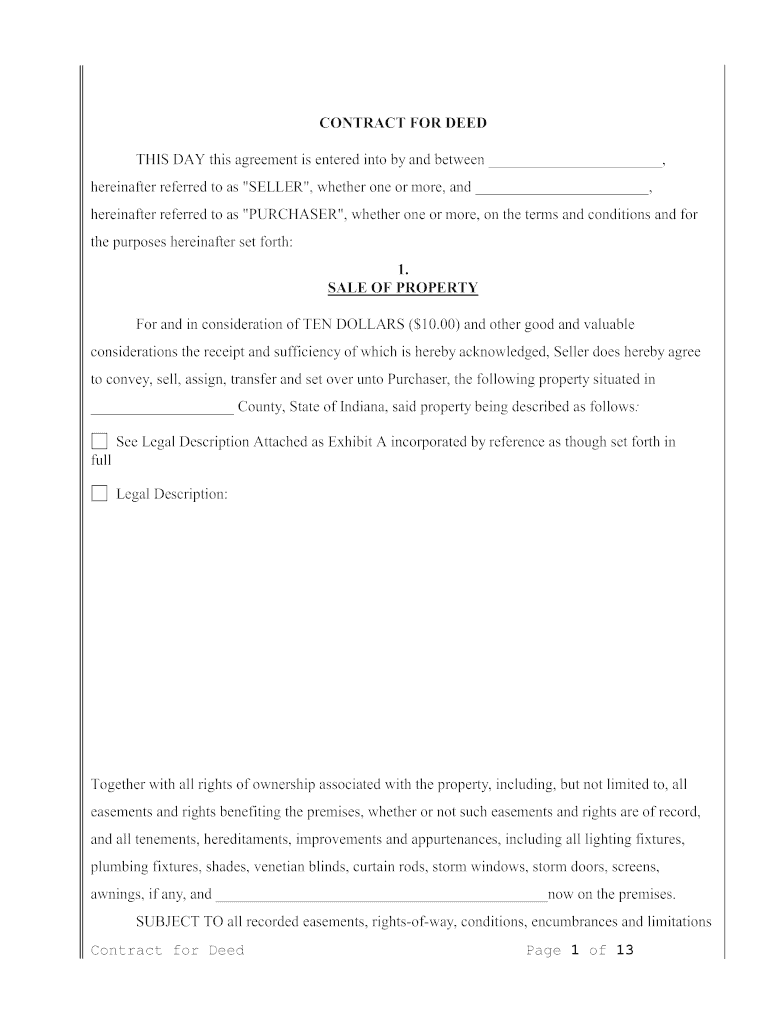







Definition and Meaning of Land Contract Indiana
A "land contract" in Indiana, also known as a contract for deed, is a legal agreement between a seller and a purchaser to convey property ownership over time. Unlike a traditional mortgage, where the buyer gets full ownership upfront, a land contract allows the buyer to make payments directly to the seller until the purchase price is fully paid. Upon payment completion, the title is transferred from the seller to the buyer. This arrangement can be beneficial in scenarios where the buyer may not qualify for traditional financing.
How to Use the Land Contract in Indiana
To effectively use a land contract in Indiana, both parties—seller and purchaser—must agree on the terms outlined in the contract. This document should include essential details such as the purchase price, down payment, interest rate, payment schedule, and responsibilities for property taxes and insurance. It’s crucial to communicate these terms clearly to avoid misunderstandings. Furthermore, both parties should understand their rights and obligations, such as property maintenance and default remedies, to ensure a smooth transaction.
How to Obtain the Land Contract Indiana
Obtaining a land contract in Indiana begins with negotiations between the buyer and seller. Once the terms are agreed upon, the contract can be drafted. It's advisable to consult a legal professional to ensure that the contract complies with Indiana state laws and adequately protects both parties' interests. The contract should be drafted in clear, unambiguous language, and both parties should have a thorough understanding of all included terms. Legal advisors can also assist in recording the contract with local authorities for public record.
Steps to Complete the Land Contract Indiana
Completing a land contract in Indiana requires careful adherence to agreed-upon terms. Here’s a step-by-step guide to navigating this process:
- Negotiate Terms: Both parties must agree on key elements like purchase price and payment schedule.
- Draft the Contract: Have a legally binding contract drafted, preferably by a legal expert.
- Review the Contract: Both parties should thoroughly review and understand the contract before signing.
- Execute the Contract: Sign the contract in front of a notary public.
- Record the Contract: File the contract with the appropriate county office to ensure it is part of public records.
- Make Payments: Buyer makes installment payments as outlined in the contract.
- Transfer Title: Once payments are complete, the seller transfers the title to the buyer.
Key Elements of the Land Contract Indiana
The land contract should contain several key elements to ensure it meets legal requirements and protects both parties:
- Purchase Price: Total amount agreed upon for the property sale.
- Down Payment: Initial payment made towards the property.
- Interest Rate: If applicable, the rate of interest on remaining payments.
- Payment Schedule: Detailed timeline of regular payments required until the purchase price is fulfilled.
- Maintenance and Taxes: Designation of which party is responsible for maintenance, taxes, and insurance.
- Default Provisions: Consequences and actions to be taken in case of default by either party.
- Transfer of Title: Conditions under which the legal title will be transferred to the buyer.
Legal Use of the Land Contract Indiana
The legal use of a land contract in Indiana requires compliance with state regulations that govern real estate transactions. It’s essential to ensure that all terms are in accordance with property laws and that local municipal requirements are met. Both parties must fully understand their contractual rights and obligations, particularly concerning default and foreclosure processes. Engaging a legal professional to review the contract before execution can help avoid potential legal pitfalls.
Important Terms Related to Land Contract Indiana
Understanding the terminology associated with a land contract is critical for all parties involved:
- Vendor: The seller of the property.
- Vendee: The buyer of the property.
- Amortization Schedule: A detailed table outlining each periodic payment on a loan (in this case, the contract).
- Balloon Payment: A large payment due at the end of the contract term if applicable.
- Escrow: A neutral third party responsible for holding documents or funds during the transaction process.
State-Specific Rules for Land Contract Indiana
Indiana imposes specific rules regarding land contracts, focusing on protecting both seller and buyer interests. Key state-specific requirements include:
- Recording: Contracts must be recorded in the county land records to protect the buyer’s interest in the property.
- Equitable Title: While legal title remains with the seller until the buyer completes payment, the buyer may hold equitable interest in the property.
- Foreclosure: Indiana law requires following formal foreclosure procedures in the event of buyer default, rather than retaking possession without due process.
- Statutory Right of Redemption: Buyers typically retain a statutory right to redeem their property within a set period after default, allowing them a final opportunity to fulfill their obligations and retain ownership.
Examples of Using the Land Contract Indiana
Real-world scenarios demonstrate the practical application of land contracts in Indiana:
- First-Time Buyers: A young couple unable to secure traditional financing opts for a land contract to purchase their first home. This allows them to establish credit and build equity over time while living in the property.
- Owner Financing: A current homeowner sells their property via a land contract to a buyer who prefers owner financing terms, thereby creating a steady income stream through installment payments until the price is paid in full.
- Investment Properties: Real estate investors use land contracts to acquire properties with the intent of making improvements and increasing value before completing the purchase.




