Nj cohabitation 2026

Get Form
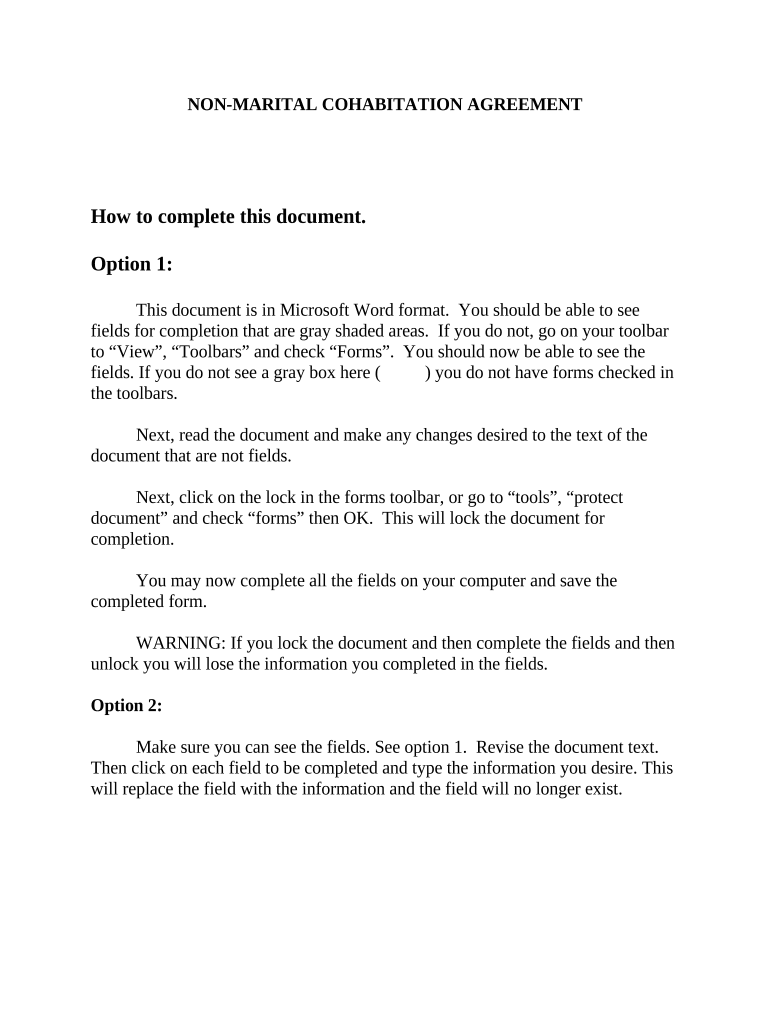
common law marriage new jersey Preview on Page 1

Here's how it works

01. Edit your common law marriage new jersey online
Type text, add images, blackout confidential details, add comments, highlights and more.
02. Sign it in a few clicks
Draw your signature, type it, upload its image, or use your mobile device as a signature pad.
03. Share your form with others
Send does nj recognize common law marriage via email, link, or fax. You can also download it, export it or print it out.

How to use or fill out nj cohabitation with our platform

Form edit decoration
9.5
Ease of Setup
DocHub User Ratings on G2
9.0
Ease of Use
DocHub User Ratings on G2
  1. Click ‘Get Form’ to open the nj cohabitation agreement in the editor.
  2. Begin by reviewing the introductory section, which outlines the importance of consulting an attorney and understanding the terms. Ensure both parties are aware of their rights.
  3. Fill in the names and addresses of both parties in the designated fields. This is crucial for identifying each party involved in the agreement.
  4. Complete sections regarding previously owned property and debts. Specify how debts will be managed, whether individually or jointly, by selecting appropriate options.
  5. Provide financial disclosures as required in Exhibits A and B. Input details about assets, liabilities, and income to ensure transparency between parties.
  6. Review all entries for accuracy before finalizing. Once satisfied, save your completed form securely within our platform.

Start using our platform today to streamline your nj cohabitation agreement process for free!

be ready to get more

Complete this form in 5 minutes or less

Get form

Got questions?

We have answers to the most popular questions from our customers. If you can't find an answer to your question, please contact us.
Contact us
Both persons must not be related by blood or affinity up to and including the fourth degree of consanguinity and be of the opposite sex age 62 years or older. Both persons must agree to be jointly responsible for each others basic living expenses during the domestic partnership.
However, since 31 January 2024, the rule has changed. Now, Appendix FM requires unmarried couples to have been in a relationship similar to marriage or civil partnership for at least 2 years. This means that unmarried couples who have lived together for at least 2 years have been dropped.
Maxwell says there are 4 kinds of people when it comes to relationships: 1) some people add something to life (we enjoy them) 2) some people subtract something from life (we tolerate them) 3) some people multiply something in life (we value them) 4) some people divide something in life (we avoid them.)
She distinguishes four different types of cohabitation: cohabitation as a temporary situation preceding marriage (either as a prelude to marriage or as a trial marriage allowing for a period of testing); cohabitation without strong commitment leading to a temporary union with separation after a short period of
Casper and Bianchi (2002) proposed four cohabitation types, essentially introducing one more distinction within the prelude to marriage type: (a) alternative to marriage, (b) precursor to marriage, (c) trial marriage, and (d) coresidential dating.

Security and compliance

At DocHub, your data security is our priority. We follow HIPAA, SOC2, GDPR, and other standards, so you can work on your documents with confidence.

Learn more
ccpa2
pci-dss
gdpr-compliance
hipaa
soc-compliance

People also ask

What is the Definition of Cohabitation in NJ? The New Jersey statutes define cohabitation as an intimate relationship that is mutually supportive. This means that a couple has taken on duties or privileges that are often associated with the formalities of a marriage of civil union. Alimony and Cohabitation | Paterson Divorce Lawyers Peter Van Aulen pvalaw.com practice-areas alimony-and- pvalaw.com practice-areas alimony-and-
The six factors to proving cohabitation in the statute include intermingled finances in joint bank accounts or other joint accounts or debts; joint responsibility for living expenses; acknowledged relationship by friends and family; living together, spending a lot of time together, a long-term relationship and other

Related links