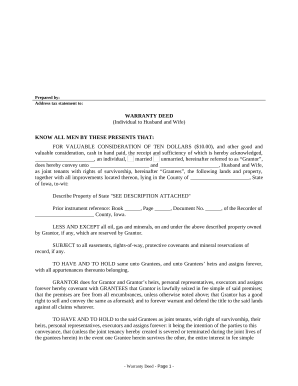
Nebraska joint tenancy 2026

Get Form
nebraska joint tenancy Preview on Page 1

Here's how it works

01. Edit your form online
Type text, add images, blackout confidential details, add comments, highlights and more.
02. Sign it in a few clicks
Draw your signature, type it, upload its image, or use your mobile device as a signature pad.
03. Share your form with others
Send it via email, link, or fax. You can also download it, export it or print it out.

How to use or fill out Nebraska Joint Tenancy with Our Platform

Form edit decoration
9.5
Ease of Setup
DocHub User Ratings on G2
9.0
Ease of Use
DocHub User Ratings on G2
  1. Click ‘Get Form’ to open the Nebraska Joint Tenancy document in the editor.
  2. In Section I, enter your name as the surviving joint tenant and specify the decedent's name and date of death.
  3. Proceed to Section III, where you must attest that the disclaimer will be filed within nine months after the decedent's death.
  4. In Section IV, list the property interests you are disclaiming. Be specific about each asset involved.
  5. Review Section V to confirm your renunciation of any interest in the property as per Nebraska law.
  6. Complete Sections VI and VII by signing and dating the document, ensuring all information is accurate.
  7. Finally, have your signature notarized in the designated area to validate your disclaimer.

Start using our platform today for free to streamline your Nebraska Joint Tenancy form completion!

be ready to get more

Complete this form in 5 minutes or less

Get form

Got questions?

We have answers to the most popular questions from our customers. If you can't find an answer to your question, please contact us.
Contact us
Joint tenancy is a way of sharing ownership among two or more persons in which each joint tenant holds an equal and undivided interest in the property. (If the ownership interests are not equal, tenants in common ownership applies. See NF96-294, Tenants In Common As An Estate Planning Tool.)
Nebraska follows equitable division laws. This means that the property a couple has when they divorce is divided fairly. Fair does not always mean equal. Even if one persons name is not on the deed or title to the property, the court considers it a marital asset (if it was acquired during the marriage).

Security and compliance

At DocHub, your data security is our priority. We follow HIPAA, SOC2, GDPR, and other standards, so you can work on your documents with confidence.

Learn more
ccpa2
pci-dss
gdpr-compliance
hipaa
soc-compliance