Type text, add images, blackout confidential details, add comments, highlights and more.
02. Sign it in a few clicks
Draw your signature, type it, upload its image, or use your mobile device as a signature pad.
03. Share your form with others
Send it via email, link, or fax. You can also download it, export it or print it out.
How to use or fill out Letter from Landlord to Tenant as Notice to remove unauthorized inhabitants - North Dakota with our platform
Ease of Setup
DocHub User Ratings on G2
Ease of Use
DocHub User Ratings on G2
Click ‘Get Form’ to open the document in the editor.
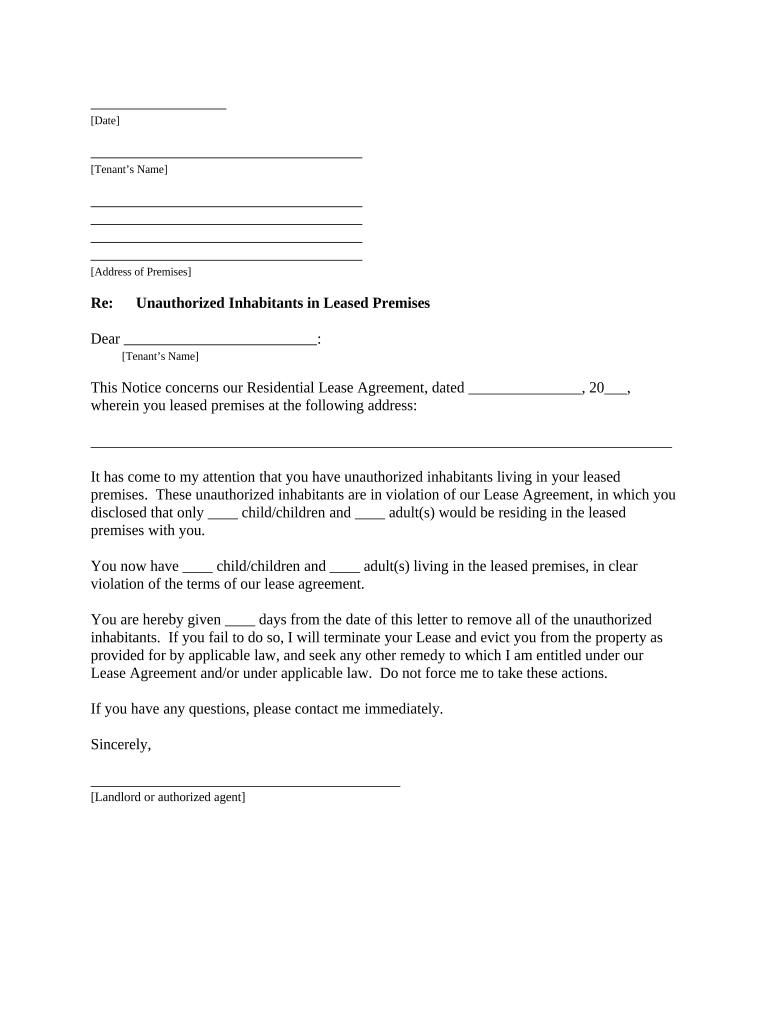
Begin by entering the date at the top of the letter. This is crucial for establishing a timeline for the notice.
Fill in the tenant’s name and address of the premises where they reside. Ensure accuracy to avoid any confusion.
In the body of the letter, specify the details of your Residential Lease Agreement, including its date and address of the leased premises.
Clearly state the number of authorized inhabitants as per your lease agreement, followed by how many are currently residing there. This highlights the violation.
Indicate a specific number of days for compliance regarding the removal of unauthorized inhabitants. This should be reasonable and in line with local laws.
Conclude with your signature and printed name as landlord or authorized agent, ensuring it is clear who is sending this notice.
Finally, select how you will deliver this notice (personal delivery, certified mail, etc.) and sign off on that section.
Start using our platform today to efficiently manage your rental documents for free!
Fill out Letter from Landlord to Tenant as Notice to remove unauthorized inhabitants - North Dakota online It's free
You have to file an eviction against him. Fill out the paperwork and turn it in to the court. Theyll set a court date. He either show or not, but lose either way. Court will issue a writ of eviction and if he doesnt comply within a certain time frame, you file more paperwork with the judge.
Is North Dakota a landlord-friendly state?
Yes, North Dakota is generally considered landlord-friendly. The state does not impose rent control, places no statutory cap on late fees, and offers broad flexibility in lease terms. However, landlords must still comply with federal fair housing laws and follow due process for evictions.
What is the fastest way to remove a tenant?
An Accelerated Possession Order is a fast way to evict tenants and get your property back at the end of a fixed term tenancy. It does not usually require a court hearing, but a judge will review your application and make a judgment upon satisfactory evidence being provided.
How to remove a tenant from a tenancy?
Legal process to end a tenancy sending a written notice to quit at the right time. applying for a court order if the tenant does not leave. asking the courts to enforce that order if the tenant still does not leave.
Whats the quickest way to get someone out of your house?
The Landlord and Tenant Branch is eviction court, and you do not have to be a landlord to file a case to evict someone. You do not have to use the Landlord and Tenant Branch, but it is usually the fastest way to get a judgment to remove a person from your property.
Related Searches
Warning letter unauthorized occupant violation notice pdf3-day eviction notice north dakotaUnauthorized occupant Violation Notice templateWarning letter to tenant for unauthorized occupantsUnauthorized occupant violation notice free templateHow to prove unauthorized occupantNorth Dakota eviction laws winter30-day notice to vacate north dakota
Security and compliance
At DocHub, your data security is our priority. We follow HIPAA, SOC2, GDPR, and other standards, so you can work on your documents with confidence.
Overview of Eviction The eviction legal action takes place in North Dakota state district court. A tenant cant be evicted without a court order from a North Dakota state district court. North Dakota eviction law strictly limits the ability to combine eviction with other claims related to the lease agreement.
How to legally remove someone from the lease?
If the tenant refuses to leave the rental unit, renters may consider negotiation or initiating legal eviction through the landlord. By the landlord and tenant evicting the problematic co-tenant, they are effectively removed from the lease through judicial termination.
How to write a notice letter to a tenant to vacate?
It typically contains the following information: Landlords Information. Tenants Information. Date of Notice. Property Address. Reason for Eviction E.g. Non-payment of rent, Illegal activities e.t.c. Notice Period. Details on Payment of Outstanding Dues. Move-Out Instructions.
Related links
FORM 10-K
Feb 23, 2021 We refer to our tenants as clients, because we strive to build mutually beneficial relationships and we believe their success is our success.
Cookie consent notice
This site uses cookies to enhance site navigation and personalize your experience.
By using this site you agree to our use of cookies as described in our Privacy Notice.
You can modify your selections by visiting our Cookie and Advertising Notice.