Type text, add images, blackout confidential details, add comments, highlights and more.
02. Sign it in a few clicks
Draw your signature, type it, upload its image, or use your mobile device as a signature pad.
03. Share your form with others
Send it via email, link, or fax. You can also download it, export it or print it out.
How to use or fill out Minnesota Bylaws with our platform
Ease of Setup
DocHub User Ratings on G2
Ease of Use
DocHub User Ratings on G2
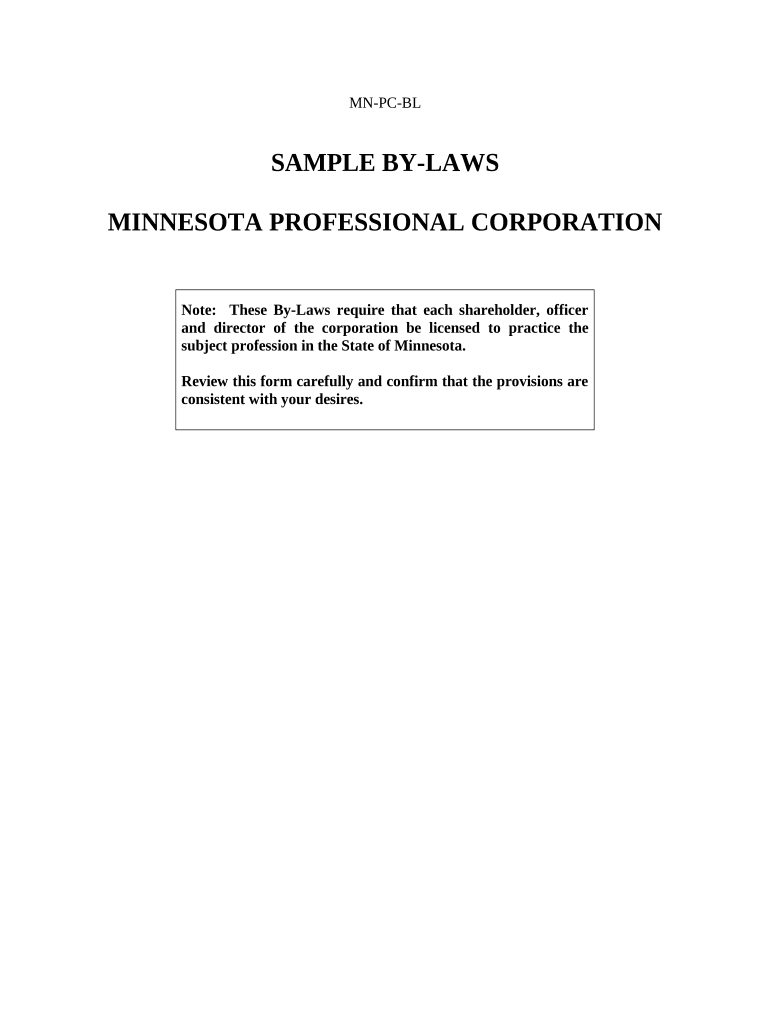
Click ‘Get Form’ to open the Minnesota Bylaws document in the editor.
Begin by entering the 'Name of Professional Corporation' in Article I. This is essential for identifying your corporation.
Provide the address of the principal office and registered office in Section 2. Ensure these addresses are accurate as they are crucial for legal correspondence.
In Article II, specify the date for the annual meeting of shareholders. This helps establish a routine for corporate governance.
Complete Sections regarding shareholder meetings, including notice requirements and quorum details. These sections ensure compliance with state regulations.
Fill out Article III by detailing the number of directors and their qualifications. Remember, each director must be licensed to practice in Minnesota.
Finalize by reviewing all entries for accuracy before saving or exporting your completed bylaws document.
Start using our platform today to easily complete your Minnesota Bylaws online for free!
How long can someone leave their belongings on your property in Minnesota?
Public Access vs. Private Restrictions: Public nonprofits are generally required to disclose bylaws, while private businesses have stricter access limitations. State and Federal Resources: Some states maintain nonprofit bylaws in databases, and the IRS requires tax-exempt organizations to submit copies.
What makes bylaws invalid?
Unauthorized leadership actions: When executives or board members act outside the scope of their authority, it can trigger legal disputes. Bylaw amendments without proper approval: Changes to bylaws typically require a formal process. Skipping steps can make amendments invalid and lead to conflicts.
What are common bylaw mistakes?
There are four common mistakes nonprofits make when it comes to bylaws: including too much detail about day-to-day operations, having unrealistic standards, creating other policies that contradict your bylaws, and letting your bylaws get so out-of-date that youre no longer able (or willing) to follow them.
What not to put in bylaws?
What NOT to Put in Your Nonprofit Organizations Bylaws Organizational Policies and Procedures. Specifically Targeted Policies that Adversely Affect Future Boards. Provisions that Violate State Laws. Inconsistencies with the Articles of Incorporation. Making Bylaws Too Inflexible. Incorporating Roberts Rules of Order.
What should not be included in bylaws?
Treat your bylaws as a policy and procedure manual. We have seen bylaws that contain everything from employee vacation rules to the organizations anti-smoking policy. These are totally inappropriate for bylaws. Create a separate policy manual for management purposes.
Related Searches
Minnesota laws you should knowMinnesota StatutesMinnesota administrative RulesMinnesota Statutes 2024Minnesota Rules of Civil ProcedureMinnesota Statutes IndexMinnesota laws passed recently2025 Minnesota Statutes
Security and compliance
At DocHub, your data security is our priority. We follow HIPAA, SOC2, GDPR, and other standards, so you can work on your documents with confidence.
A corporation may, but need not, have bylaws. Bylaws may contain any provision relating to the management of the business or the regulation of the affairs of
Cookie consent notice
This site uses cookies to enhance site navigation and personalize your experience.
By using this site you agree to our use of cookies as described in our Privacy Notice.
You can modify your selections by visiting our Cookie and Advertising Notice.