Type text, add images, blackout confidential details, add comments, highlights and more.
02. Sign it in a few clicks
Draw your signature, type it, upload its image, or use your mobile device as a signature pad.
03. Share your form with others
Send it via email, link, or fax. You can also download it, export it or print it out.
How to use or fill out Lease Subordination Agreement - Minnesota with our platform
Ease of Setup
DocHub User Ratings on G2
Ease of Use
DocHub User Ratings on G2
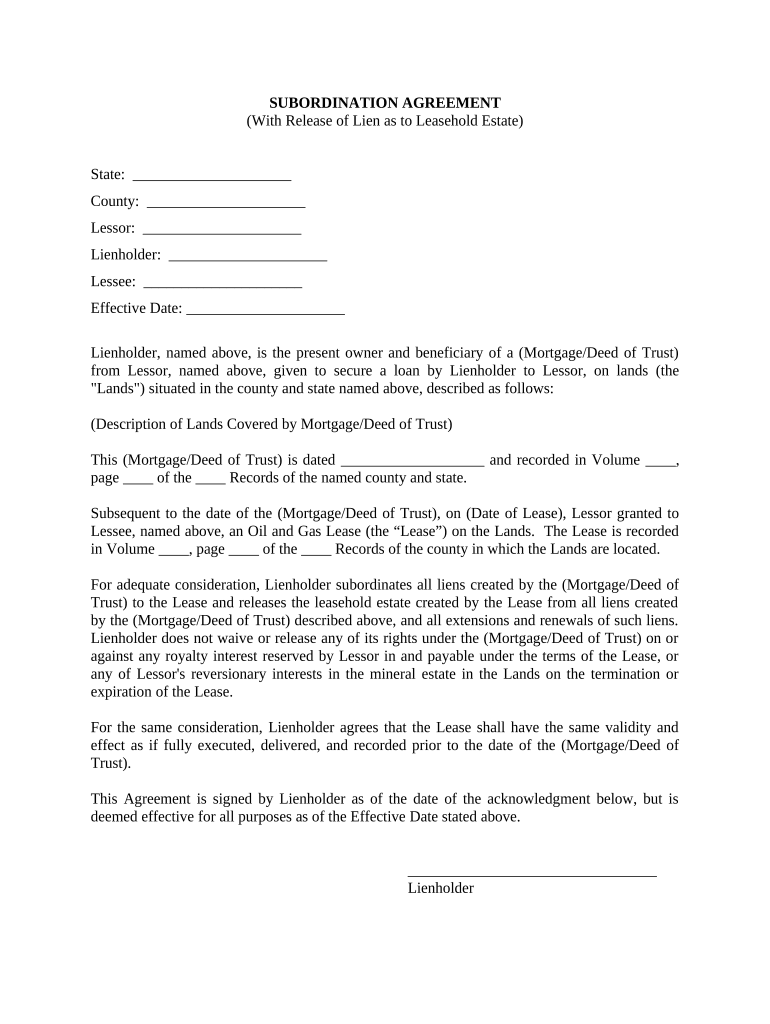
Click ‘Get Form’ to open the Lease Subordination Agreement in the editor.
Begin by filling in the 'State' and 'County' fields at the top of the document. This information is crucial for identifying the jurisdiction of your agreement.
Next, enter the names of the 'Lessor', 'Lienholder', and 'Lessee'. Ensure that these names are accurate as they represent all parties involved in this agreement.
Specify the 'Effective Date' of the agreement. This date marks when the terms of this subordination take effect.
In the section regarding the mortgage or deed of trust, provide a detailed description of the lands covered, including any relevant recording information such as volume and page numbers.
Fill in details about the lease granted to Lessee, including its recording information. This ensures clarity on rights associated with both parties.
Finally, review all entries for accuracy before signing. Use our platform’s features to save and share your completed document securely.
Start using our platform today to complete your Lease Subordination Agreement easily and for free!
Fill out Lease Subordination Agreement - Minnesota online It's free
What does subordination mean in a lease agreement?
A subordination agreement must be signed and acknowledged by a notary and recorded in the official records of the county to be enforceable.
What are the requirements for a subordination agreement?
For landlords, a subordination agreement can facilitate tenant financing, which can lead to property improvements and increased property value. However, it also means that the landlords claim on the property is secondary to the lenders, which can pose risks in the event of a foreclosure.
by PA Kunkel 2015 Under Minnesota law, any lease for a period longer than one year is void unless the contract is in writing and signed by the party by whom the lease is to be
Cookie consent notice
This site uses cookies to enhance site navigation and personalize your experience.
By using this site you agree to our use of cookies as described in our Privacy Notice.
You can modify your selections by visiting our Cookie and Advertising Notice.