
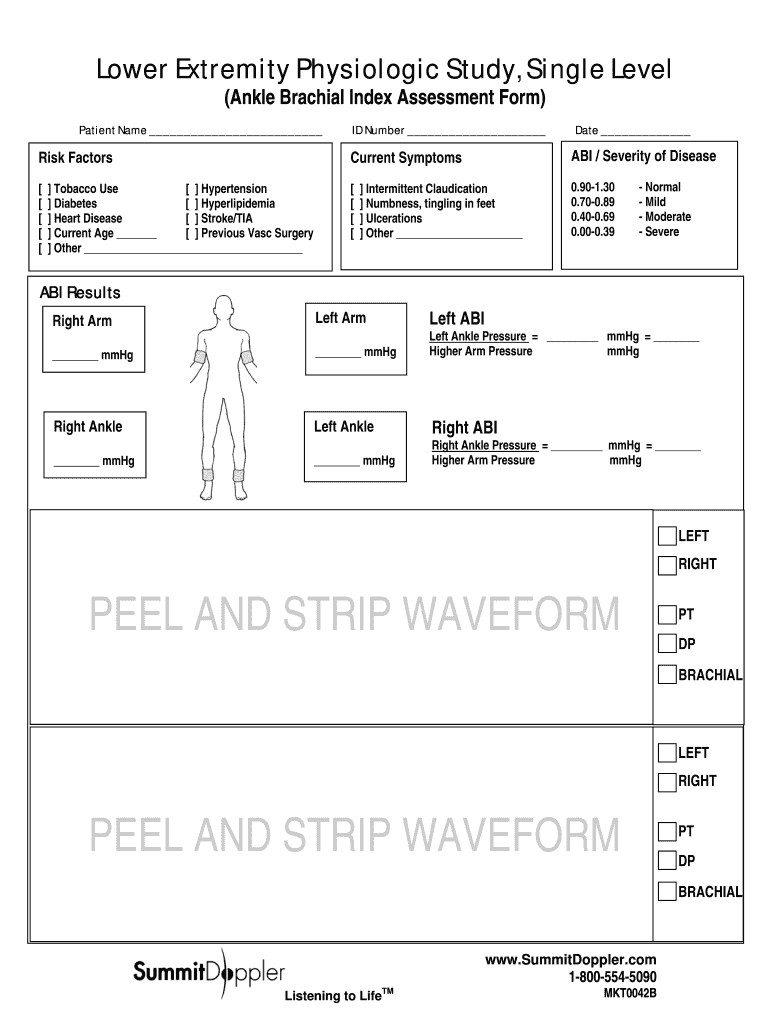







Understanding the ABI Assessment Form
The ABI assessment form is a critical document used in evaluating the Ankle Brachial Index (ABI), a key measurement in diagnosing peripheral artery disease (PAD). This form typically collects essential patient information, including health history, symptoms, and specific measurements taken during the ABI test.
Details of the ABI Assessment Process
The ABI test compares the blood pressure in a patient's ankle with the blood pressure in the arm. The resulting index provides valuable insights into potential vascular issues. To complete the ABI assessment form, the following steps are essential:
-
Patient Information Collection
- Gather personal details such as name, age, and medical history.
- Document any symptoms the patient may be experiencing, such as leg pain, cramps, or numbness.
-
Risk Factor Documentation
- Note risk factors like smoking, diabetes, hypertension, and cholesterol levels. These factors are critical for understanding the patient's overall vascular health.
-
Measurement and Recording
- Perform the ABI test using a Doppler device to measure blood pressure in both arms and ankles.
- Record these readings accurately on the ABI assessment form.
-
Calculating the ABI
- Calculate the ABI by dividing the highest ankle pressure by the highest arm pressure. A value below 0.90 typically indicates PAD.
Components of the ABI Assessment Form
The ABI assessment form usually consists of various sections designed to guide healthcare professionals in documenting thorough and accurate evaluations. Key sections typically include:
-
Patient Demographics
Basic information including the patient's name, age, and medical record number. -
Medical History
Detailed health history capturing previous diseases or conditions relevant to vascular health. -
Description of Symptoms
A section dedicated to describing the current symptoms experienced by the patient, essential for context. -
ABI Measurement Results
A designated area for recording systolic blood pressures for both arms and ankles with spaces for calculated ABI values.
Importance of Accurate ABI Measurements
Accurate ABI measurements are critical for several reasons:
-
Diagnosis of Peripheral Artery Disease
An accurate ABI index helps in confirming or ruling out PAD, guiding further testing or interventions. -
Monitoring Treatment Efficacy
Regular ABI assessments can track the effectiveness of prescribed treatments, helping healthcare providers make informed decisions. -
Patient Education and Engagement
Providing patients with clear results fosters better understanding and adherence to recommended lifestyle changes or treatments.
Legal and Regulatory Considerations
The use of ABI assessment forms is governed by regulatory frameworks that ensure patient confidentiality and compliance with healthcare standards. Key considerations include:
-
HIPAA Compliance
Ensure all patient information collected and stored is compliant with the Health Insurance Portability and Accountability Act, safeguarding patient privacy and data security. -
Record Keeping
Maintain accurate records as per state regulations to aid any potential audits and ensure consistency in patient care.
Real-World Applications of ABI Assessment Forms
ABI assessment forms serve various practical applications in clinical settings:
-
Use in General Practice
Physicians routinely use these forms during annual assessments or when patients present symptoms suggestive of vascular insufficiency. -
Referral for Specialized Care
The ABI form can act as a referral tool, providing specialists with essential background information to assist in further diagnostics or treatment planning. -
Research and Clinical Trials
In academic or research settings, aggregated ABI data from various assessments can inform studies related to vascular health and treatment outcomes.
Conclusion: The Role of ABI Assessment Forms in Patient Care
The ABI assessment form is an essential instrument in evaluating peripheral artery disease, informing treatment and diagnostic strategies. By enabling accurate data collection and risk factor identification, these forms play a significant role in managing vascular health effectively.




