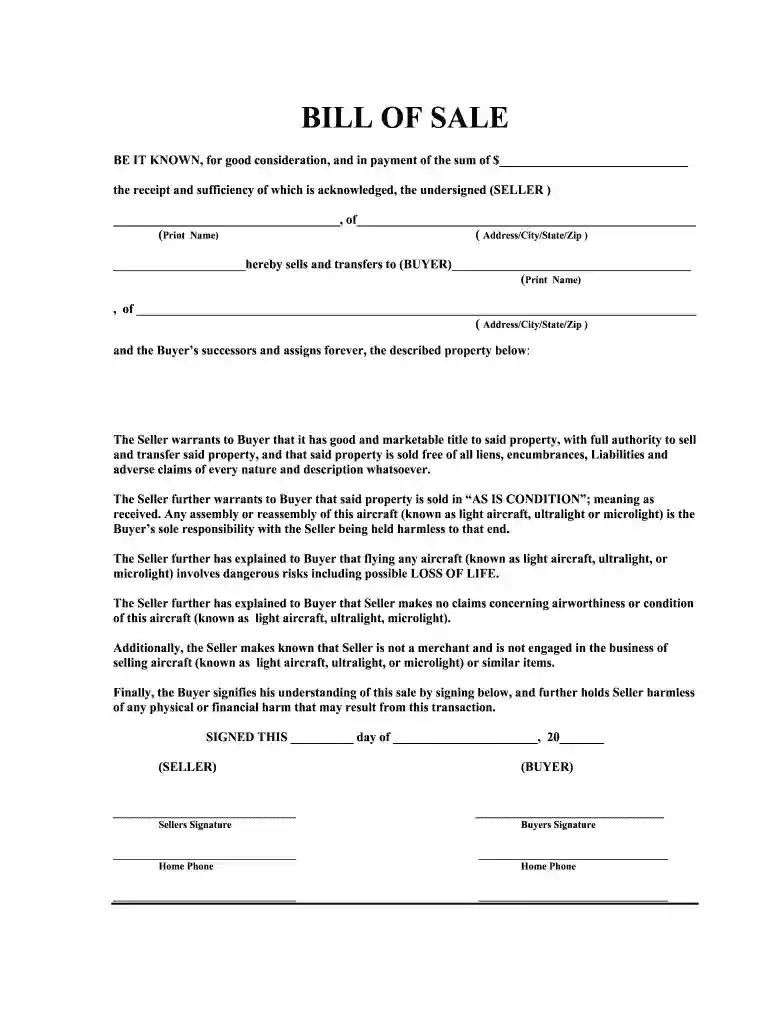
Horse bill of sale 2026

Get Form
horse bill of sale template Preview on Page 1

Here's how it works

01. Edit your horse bill of sale template online
Type text, add images, blackout confidential details, add comments, highlights and more.

02. Sign it in a few clicks
Draw your signature, type it, upload its image, or use your mobile device as a signature pad.

03. Share your form with others
Send printable horse bill of sale via email, link, or fax. You can also download it, export it or print it out.

Definition and Meaning of a Horse Bill of Sale

A horse bill of sale is a formal document that outlines the transfer of ownership of a horse from one party to another. This document serves as legal proof of the transaction and includes critical information such as the identities of the buyer and seller, details of the horse, and the terms of the sale. The document can also signify the completion of financial obligations related to the purchase.

  • Parties Involved: The primary parties are the seller, who transfers the horse, and the buyer, who acquires ownership.
  • Horse Identification: Essential details include the horse's name, breed, age, registration number, and any distinguishing features.
  • Sale Terms: The agreement covers the purchase price, payment method, liabilities, and any warranties or guarantees concerning the horse's health and soundness.

Having a properly executed horse bill of sale creates transparency and mitigates potential disputes between the buyer and seller.

Key Elements of a Horse Bill of Sale

A comprehensive horse bill of sale should contain several essential components that ensure clarity and enforceability.

  • Contact Information: Full names, addresses, and contact numbers for both the buyer and seller should be clearly stated. This enables easy communication concerning the transaction.
  • Description of the Horse: Information about the horse should be detailed, including breed, age, color, markings, and any relevant registration papers.
  • Sales Price: Clearly state the purchase price and terms of payment. This section can include information about deposits and payment methods, such as cash, check, or financing.
  • Warranties and Disclaimers: Buyers should be aware of any guarantees regarding the horse's health, training, or soundness. Disclaimers protect the seller from liability after the sale.
  • Signatures: Both parties must sign and date the bill of sale to validate the agreement. Witness signatures can also add an extra layer of authenticity.

These elements are vital for ensuring that the transaction is legally binding and minimizes misunderstandings in the future.

Steps to Complete a Horse Bill of Sale

Completing a horse bill of sale involves several methodical steps to ensure accuracy and legality.

  1. Gather Required Information: Collect all necessary details about the horse, the buyer, and the seller. This includes confirming the horse’s registration and health status.
  2. Draft the Document: Use a template or create a custom bill of sale that incorporates all key elements. This document should be clear and unambiguous.
  3. Review Terms of Sale: Both parties should discuss and agree on the terms, including the sales price and any warranties. Ensure that all conditions are understood before proceeding.
  4. Sign the Document: Both the buyer and the seller should sign and date the bill of sale. If desired, have a notary public witness the signatures for added security.
  5. Provide Copies: Each party should keep a signed copy of the agreement for their records. This offers proof of ownership transfer and can be useful for future references.

Following these steps helps ensure a smooth transaction and lays the groundwork for legal clarity should any disputes arise later.

Why You Should Use a Horse Bill of Sale

Employing a horse bill of sale is essential for several reasons, particularly in maintaining clear ownership and transferring rights.

  • Legal Proof of Ownership: This document provides undeniable proof that the buyer is the new owner, which is crucial for future transactions, registrations, or shows.
  • Transparency of Terms: Clearly delineating terms protects both buyer and seller, specifying what is included in the sale and any conditions related to the horse's health or training.
  • Protection from Liability: Including appropriate disclaimers or warranties shields the seller from post-sale liability concerning the horse's condition or behavior.
  • Record Keeping: A bill of sale serves as a formal record that can help in organizing sales and purchases, tax purposes, or other regulatory compliance.

Overall, utilizing a horse bill of sale fosters trust and helps avert disputes that can arise from informal transactions.

Legal Use of the Horse Bill of Sale

The horse bill of sale serves not only as a transactional document but also plays a significant role within the legal context of horse sales.

  • Enforceability: A properly executed bill of sale is enforceable in a court of law, ensuring that both parties are bound to the terms agreed upon.
  • State Regulations: Legal requirements may differ by state. It is essential to ensure that the bill of sale complies with state-specific laws governing equine transactions.
  • Liability Protection: Including disclaimers related to the horse's soundness or health can safeguard the seller against future claims by the buyer, should any issues arise post-sale.

Understanding the legal implications and protections offered by a horse bill of sale is paramount to effective engagement in horse transactions.

Examples of Using the Horse Bill of Sale

Practical scenarios illustrate how a horse bill of sale functions in real-world transactions, accounting for various circumstances.

  • Private Sale Between Individuals: An individual selling their horse to a friend would use a horse bill of sale to document the sale and specify the agreed-upon purchase price.
  • Professional Breeder to Buyer Transaction: A professional horse breeder may include detailed information about the horse's pedigree and health history in their bill of sale, thereby increasing the buyer's confidence.
  • Sale with First Right of Refusal: In some cases, a horse bill of sale might stipulate that the seller retains the right to be notified if the buyer decides to sell the horse, allowing the original owner the opportunity to repurchase it.

These examples showcase the diverse applications of a horse bill of sale and emphasize the importance of having an accurate, clear document for various equine transactions.

Important Terms Related to Horse Bill of Sale

Understanding specific terminology related to the horse bill of sale is essential for both buyers and sellers involved in equine transactions.

  • Equine: Refers to horses and relates to various terms used in the sale and transaction of horses.
  • AS-IS: A phrase often included in bills of sale indicating that the horse is being sold in its current condition without warranties.
  • Registration Papers: Official documents that verify the horse’s breed, ownership, and lineage, which can be critical in certain sales or competitions.
  • Liability Waiver: A section that may be included in a bill of sale, relieving one party of legal responsibility for any future issues related to the horse post-sale.

Understanding these terms encourages better communication and clarity in discussions surrounding the horse bill of sale.

be ready to get more

Complete this form in 5 minutes or less

Get form

Got questions?

We have answers to the most popular questions from our customers. If you can't find an answer to your question, please contact us.
Contact us
A horse sales agreement is a written contract that outlines the terms of buying or selling a horse. It includes key details like who the buyer and seller are, what horse is being sold, the price, payment terms, and any conditions of the sale. This document protects both parties.
A bill of sale in Georgia should generally include: The sellers legal name, full address, and drivers license or state ID number. The buyers legal name, full address, and drivers license or state ID number. A clear, specific description of the item (make, model, year, color, VIN number, etc)
How do I write a Bill of Sale? Describe the item. Provide the propertys details. Provide each partys information. List the name and address of both the seller and the buyer. Outline payment details. State the items sale price and specify if sales tax will apply to the sale. Note any loans or liens.
This receipt should include at the very least the horses passport and microchip identification number, the amount paid for the horse, as well as the sellers and buyers name and address.
Can a bill of sale be handwritten? While it is common to present a bill of sale in a digital format, you can also create a handwritten bill of sale. Whats most important is to include all of the pertinent details in the bill of sale in order to protect both parties.

Security and compliance

At DocHub, your data security is our priority. We follow HIPAA, SOC2, GDPR, and other standards, so you can work on your documents with confidence.

Learn more
ccpa2
pci-dss
gdpr-compliance
hipaa
soc-compliance
be ready to get more

Complete this form in 5 minutes or less

Get form

People also ask

What is included in a bill of sale? Buyer and seller details. You should include their full names, addresses, and contact information. Description of the item being sold. The sale agreement. Location and date of sale. Terms and conditions of the transaction. Buyers signature and sellers signature.
That might get you to wonder if a handwritten bill of sale is legally binding. Handwritten bills of sale are indeed contractual agreements so long as they have the right elements.

horse bill of sale form