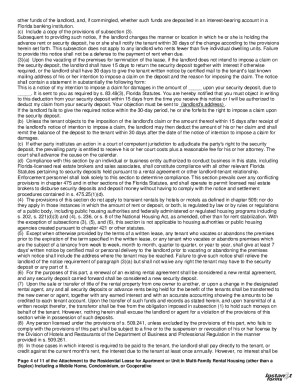
Final Notice of Default for Past Due Payments in connection with Contract for Deed - Minnesota 2026

Get Form
Final Notice of Default for Past Due Payments in connection with Contract for Deed - Minnesota Preview on Page 1

Here's how it works

01. Edit your form online
Type text, add images, blackout confidential details, add comments, highlights and more.
02. Sign it in a few clicks
Draw your signature, type it, upload its image, or use your mobile device as a signature pad.
03. Share your form with others
Send it via email, link, or fax. You can also download it, export it or print it out.

How to use or fill out Final Notice of Default for Past Due Payments in connection with Contract for Deed - Minnesota

Form edit decoration
9.5
Ease of Setup
DocHub User Ratings on G2
9.0
Ease of Use
DocHub User Ratings on G2
  1. Click ‘Get Form’ to open it in the editor.
  2. Begin by filling in the recipient's name and address at the top of the form. This ensures that the notice is directed to the correct individual.
  3. In the section regarding the seller and purchaser, enter the names of both parties involved in the contract for deed. This establishes who is responsible for payments.
  4. Specify the property address clearly, as this identifies which property is under discussion.
  5. Detail the past due payments by entering the amount owed and specifying which months these payments cover. Include any applicable late fees in their respective fields.
  6. Calculate and enter the total amount due at the bottom of this section to provide a clear summary of what needs to be paid.
  7. Finally, sign and date the document at the bottom to validate your notice before sending it out.

Start using our platform today to easily complete your Final Notice of Default form for free!

be ready to get more

Complete this form in 5 minutes or less

Get form

Got questions?

We have answers to the most popular questions from our customers. If you can't find an answer to your question, please contact us.
Contact us
What must happen for a nondefaulting party in a contract to receive earnest money being held in escrow? The defaulting party must sign a release form and provide it to the title company. may ignore the list of repairs and reject any price adjustment.
However, they involve the seller, rather than a bank or lender, assessing the buyers creditworthiness. That means payments made on land contracts are typically not reported to credit agencies, so they do not help improve the buyers credit as on-time mortgage payments would.
As a buyer, you can back out of the deal at closing and even after signing the contract, but you will lose money. Sellers also face consequences for backing out of the contract. If a seller backs out, the buyer could sue for bdocHub of contract, and the seller may also be forced to return the buyers earnest money.
If the buyer defaults or fails to make the monthly payments to the seller as required, the seller will need to file a court action called land contract forfeiture. Success in court will result in the buyer forfeiting, or giving up, all money paid to the seller for the property pursuant to the land contract.
Minnesota Statutes, Section 559.21 is primarily used to terminate the rights of a contract-for-deed purchaser in the event of the purchasers default in the terms of the contract-for-deed.

Security and compliance

At DocHub, your data security is our priority. We follow HIPAA, SOC2, GDPR, and other standards, so you can work on your documents with confidence.

Learn more
ccpa2
pci-dss
gdpr-compliance
hipaa
soc-compliance

People also ask

Forfeiture of down payment and home equity: Land contract homebuyers often lose their entire financial investment if they fall behind on their monthly payments because, unlike mortgage holders, land contract homebuyers often go through eviction proceedings rather than more buyer-friendly foreclosure processes.
If theres a cooling-off period: Many states require a cooling-off period of a few days (typically three business days) after any contract is signed. If this is the case in your state, either party may cancel the contract without penalty during this period.
Entering into all residential contracts for deed Commencing August 1, 2024, all sellers entering into residential contracts for deed have a non-alterable obligation to pay any delinquent real estate taxes on the property and to record the contract within four months of execution.

Related links