Nc deed trust 2026

Get Form
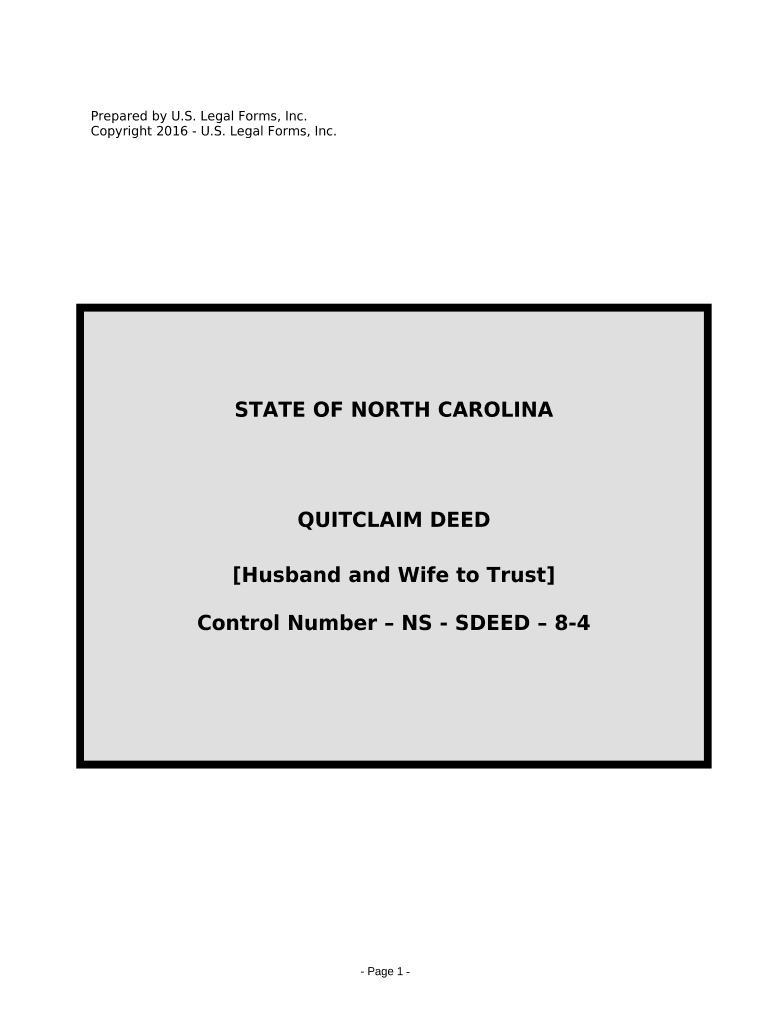
nc deed trust Preview on Page 1

Here's how it works

01. Edit your form online
Type text, add images, blackout confidential details, add comments, highlights and more.
02. Sign it in a few clicks
Draw your signature, type it, upload its image, or use your mobile device as a signature pad.
03. Share your form with others
Send it via email, link, or fax. You can also download it, export it or print it out.

How to use or fill out nc deed trust with our platform

Form edit decoration
9.5
Ease of Setup
DocHub User Ratings on G2
9.0
Ease of Use
DocHub User Ratings on G2
  1. Click ‘Get Form’ to open the nc deed trust in the editor.
  2. Begin by filling in the Grantor(s) section. Enter the names of both husband and wife who are transferring the property.
  3. Next, complete the Grantee(s) section with the name of the Trustee as per your Trust Agreement.
  4. In the property description field, provide a detailed description of the property being transferred. If necessary, attach a separate document for this information.
  5. Fill in any prior instrument references, including Book and Page numbers from previous records if applicable.
  6. Finally, ensure that both Grantors sign and date the document. You may also need to have it notarized; fill in the Notary Public section accordingly.

Start using our platform today to easily complete your nc deed trust online for free!

be ready to get more

Complete this form in 5 minutes or less

Get form

Got questions?

We have answers to the most popular questions from our customers. If you can't find an answer to your question, please contact us.
Contact us
Like a mortgage, a trust deed makes a piece of real property security (collateral) for a loan. If the loan is not repaid on time, the lender can foreclose on and sell the property and use the proceeds to pay off the loan. A trust deed is not used to transfer property to a living trust (use a Grant Deed for that).
If either 50% of the number of creditors, or creditors representing at least one third of the value of the debts do not agree to you entering such a plan, then your trust deed will fail to gain protected status.
Should you put your home in a trust? Absolutely. Putting your home in a trust can save you a lot of time and money. Typically, there are two reasons people put their home in a trust. The first is for the tax benefits. The second reason is to avoid probate. To learn why you want to avoid probate and how else putting you.
One may be wondering, what are the risks because every investment has them? For Trust Deeds it is liquidity, which is due to the fact that you are unable to cash out on your investment before the loan matures. You must wait for the borrower to pay it off, and there is the risk of the borrower defaulting on the loan.
What Are the Disadvantages of a Trust? Loss of Control. Setting up the trust necessitates you giving up some amount of control of the assets you place within the trust. Loss of Asset Access. Cost. Recordkeeping Complexity. High Need for Competency.

Security and compliance

At DocHub, your data security is our priority. We follow HIPAA, SOC2, GDPR, and other standards, so you can work on your documents with confidence.

Learn more
ccpa2
pci-dss
gdpr-compliance
hipaa
soc-compliance

People also ask

Mortgages require judicial foreclosure, a court process where the lender sues the borrower for default. In contrast, a deed of trust lets the lender commence a faster and less expensive nonjudicial foreclosure, bypassing the court system and adhering to the procedures outlined in the trust deed and state law.
Myth #2: I must put my house in a trust. Unless your home needs to be sold to pay creditors upon your death, real property passes outside of probate in North Carolina. You do not need to put your house in a trust, nor put your children on the deed to your home to achieve this result.
A deed of trust is a legal agreement used in real estate transactions that establishes a piece of property as collateral for a loan, much like a traditional mortgage. The deed of trust is signed by the borrowing party and recorded with the register of deeds where the property is located.

Related links