North carolina easement 2026

Get Form
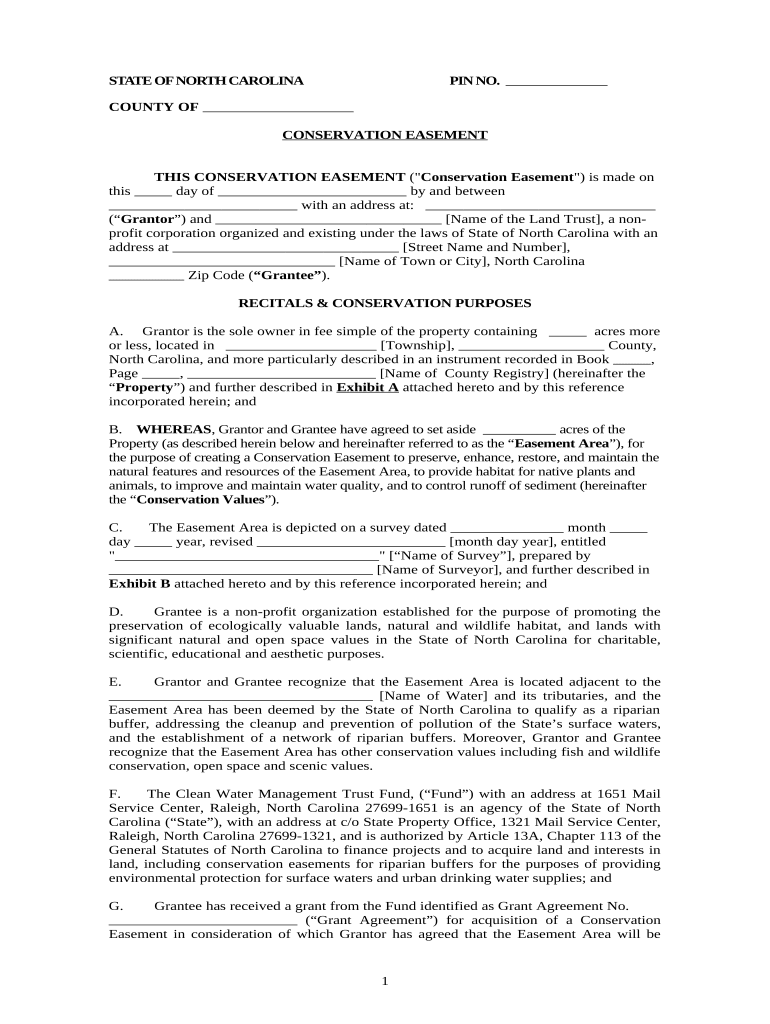
north carolina easement Preview on Page 1

Here's how it works

01. Edit your form online
Type text, add images, blackout confidential details, add comments, highlights and more.
02. Sign it in a few clicks
Draw your signature, type it, upload its image, or use your mobile device as a signature pad.
03. Share your form with others
Send it via email, link, or fax. You can also download it, export it or print it out.

How to use or fill out North Carolina Easement with our platform

Form edit decoration
9.5
Ease of Setup
DocHub User Ratings on G2
9.0
Ease of Use
DocHub User Ratings on G2
  1. Click ‘Get Form’ to open the North Carolina Easement document in the editor.
  2. Begin by filling in the date of execution at the top of the form. This is crucial for establishing the timeline of the easement agreement.
  3. Enter the names and addresses of both the Grantor and Grantee in their respective fields. Ensure accuracy as this information is vital for legal identification.
  4. In the Recitals section, specify details about the property, including its location and size. Attach any necessary exhibits that provide further descriptions.
  5. Review and complete each article, particularly focusing on rights reserved to Grantor and prohibited activities. This ensures compliance with conservation goals.
  6. Finally, ensure all parties sign and date the document where indicated, including notarization if required. This finalizes your easement agreement.

Start using our platform today to streamline your North Carolina Easement process for free!

be ready to get more

Complete this form in 5 minutes or less

Get form

Got questions?

We have answers to the most popular questions from our customers. If you can't find an answer to your question, please contact us.
Contact us
Owners are generally prohibited from building over or too close to an easement or must obtain approval from the authority who owns the easement to do so. If a structure is built over an easement without permission or where permission is denied, then the owner will be legally required to remove the structure.
An easement is a right given to a non-landowner to enter and use land owned by another. Generally, easements run with the land in the sense that, once in existence and made of public record, the easement rights transfer from one owner to the next.
In California, easements are subject to specific rules and regulations, and property owners generally cannot unilaterally block or obstruct established easements. Property owners should seek legal advice to navigate the complexities of easement disputes and to comply with California Law.

Security and compliance

At DocHub, your data security is our priority. We follow HIPAA, SOC2, GDPR, and other standards, so you can work on your documents with confidence.

Learn more
ccpa2
pci-dss
gdpr-compliance
hipaa
soc-compliance