Living Trust Property Record - North Carolina 2026

Get Form
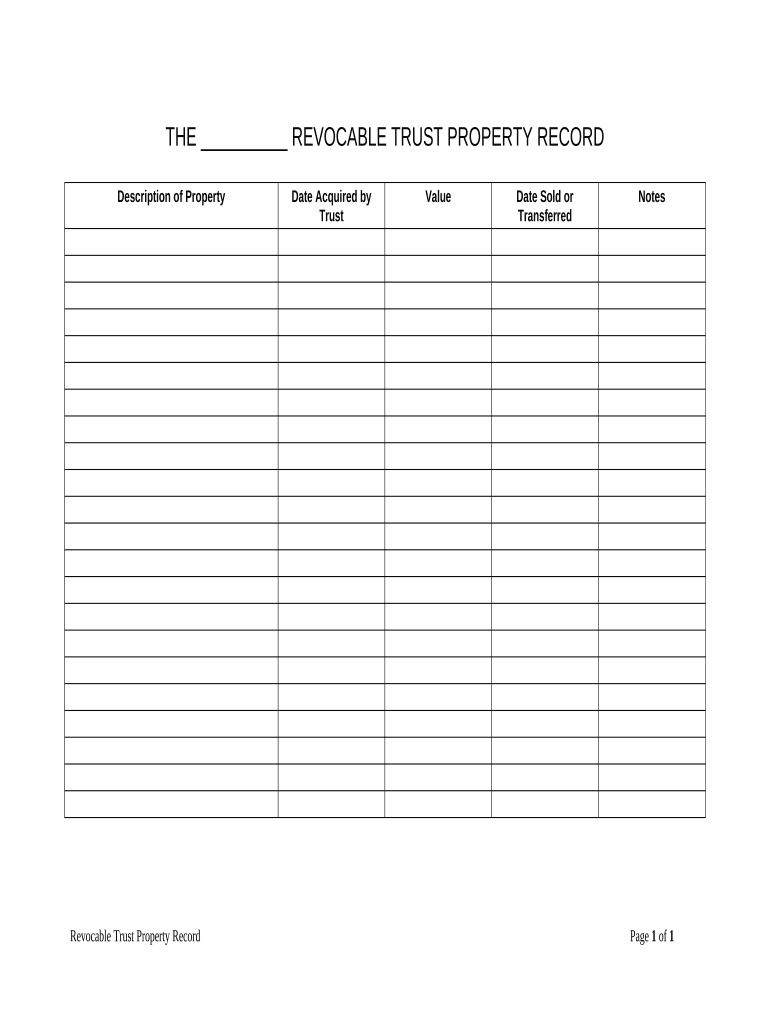
simple living trust form Preview on Page 1

Here's how it works

01. Edit your simple living trust form online
Type text, add images, blackout confidential details, add comments, highlights and more.
02. Sign it in a few clicks
Draw your signature, type it, upload its image, or use your mobile device as a signature pad.
03. Share your form with others
Send it via email, link, or fax. You can also download it, export it or print it out.

How to use or fill out Living Trust Property Record - North Carolina with our platform

Form edit decoration
9.5
Ease of Setup
DocHub User Ratings on G2
9.0
Ease of Use
DocHub User Ratings on G2
  1. Click ‘Get Form’ to open the Living Trust Property Record in the editor.
  2. Begin by entering the name of the trust in the designated field at the top of the form. This identifies the specific revocable trust you are documenting.
  3. In the 'Description of Property' section, provide a detailed description of each property held in the trust. Be as specific as possible to ensure clarity.
  4. Fill in the 'Date Acquired by Trust' field with the date when each property was transferred into the trust. This is crucial for record-keeping and legal purposes.
  5. Next, indicate the 'Value' of each property at the time it was acquired. This helps in assessing overall trust value and can be important for tax considerations.
  6. If applicable, enter any relevant information regarding when properties were sold or transferred in the 'Date Sold or Transferred' section.
  7. Finally, use the 'Notes' section for any additional comments or details that may be pertinent to each property or transaction.

Start using our platform today to easily complete your Living Trust Property Record online for free!

be ready to get more

Complete this form in 5 minutes or less

Get form

Got questions?

We have answers to the most popular questions from our customers. If you can't find an answer to your question, please contact us.
Contact us
How to Look Up a Trust in California Step 1: Gather Necessary Information. Step 2: Contact the Trustee. Step 3: Contact Professionals Involved in the Trust Creation. Step 4: Search Personal Records and Belongings. Step 5: Inquire with Family and Friends. Step 6: Check with the County Recorders Office.
A decedents will becomes a public record when it is filed, after the decedents death, with the clerk of court. Any person may view a public record or request a copy of a public record for a fee. Who makes the court decisions about estate administration?
North Carolina property records are public records accessible by anyone for any reason. You may visit any of the offices during regular business hours. Check the North Carolina Association of Registers of Deeds website to find what you need.
According to North Carolina General Statutes Chapter 132, public records are defined as, all documents, papers, letters, maps, books, photographs, films, sound recordings, magnetic or other tapes, electronic data-processing records, artifacts, or other documentary material, regardless of physical form or
Unlike wills, trusts are not required to be recorded in North Carolina. Trusts, particularly revocable living trusts, remain private both during the lifetime and after the death of the trust maker (grantor). This privacy is one of the key advantages of using a trust as part of an estate plan.

Security and compliance

At DocHub, your data security is our priority. We follow HIPAA, SOC2, GDPR, and other standards, so you can work on your documents with confidence.

Learn more
ccpa2
pci-dss
gdpr-compliance
hipaa
soc-compliance

People also ask

Unlike wills, trusts typically bypass probate and are not part of the public record.
The beneficiaries you name in your living trust receive the trust property when you die. You could instead use a will, but wills must go through probatethe court process that oversees the transfer of your property to your beneficiaries. Many people create a revocable living trust as part of their estate plan.
Who has a right to copies of the trust? Once a trust becomes irrevocable due to the settlors death or incapacity, beneficiaries named in the trust and the decedents heirs have the right to request a copy of the trust terms.

Related links