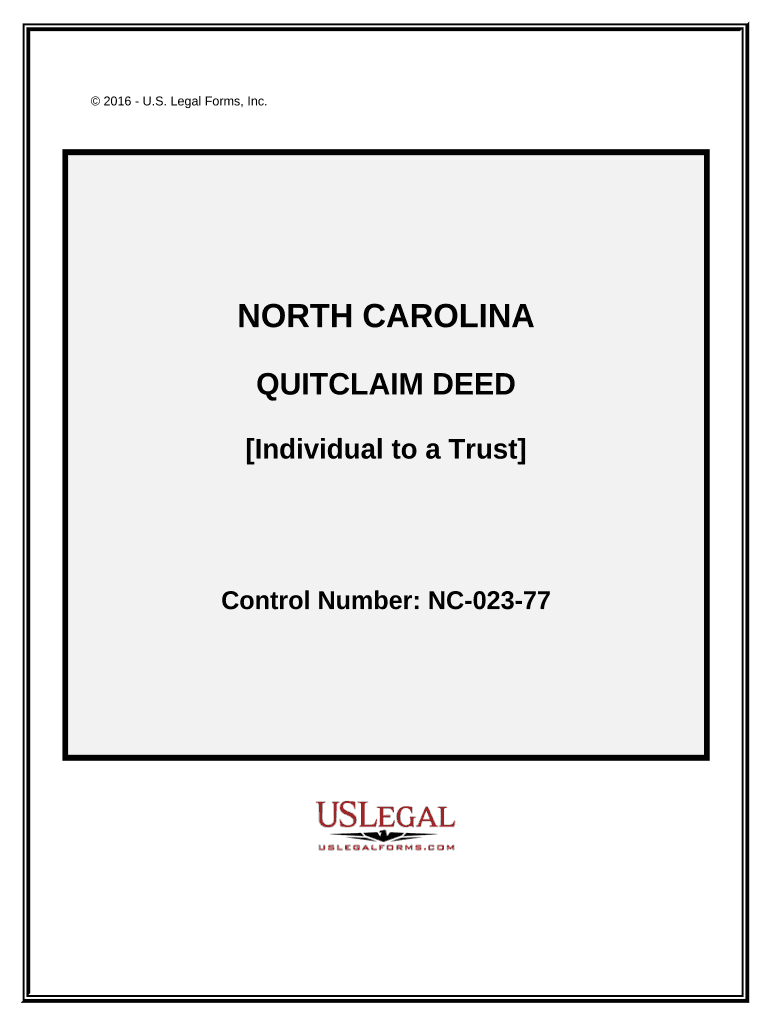
North carolina trust 2026

Get Form
north carolina trust Preview on Page 1

Here's how it works

01. Edit your form online
Type text, add images, blackout confidential details, add comments, highlights and more.
02. Sign it in a few clicks
Draw your signature, type it, upload its image, or use your mobile device as a signature pad.
03. Share your form with others
Send it via email, link, or fax. You can also download it, export it or print it out.

How to use or fill out North Carolina Trust with our platform

Form edit decoration
9.5
Ease of Setup
DocHub User Ratings on G2
9.0
Ease of Use
DocHub User Ratings on G2
  1. Click ‘Get Form’ to open the North Carolina Quitclaim Deed in the editor.
  2. Begin by filling in the date at the top of the form where it states 'made this ___ day of ______, 20___.'.
  3. Enter the name of the Grantor in the designated field. This is the individual transferring property rights.
  4. In the Grantee section, input the name of the Trustee and specify 'as Trustee under the provisions of a Trust Agreement dated...'. Fill in the date and name of the Trust.
  5. Provide a brief description for indexing purposes, ensuring clarity for future reference.
  6. Complete the legal description section by attaching Exhibit A, which details the property being transferred.
  7. Finally, ensure that all signatures are completed, including those of witnesses and a Notary Public to validate your document.

Start using our platform today to streamline your document editing and signing process for free!

be ready to get more

Complete this form in 5 minutes or less

Get form

Got questions?

We have answers to the most popular questions from our customers. If you can't find an answer to your question, please contact us.
Contact us
A living trust does not protect your assets from a lawsuit. Living trusts are revocable, meaning you remain in control of the assets and you are the legal owner until your death. Because you legally still own these assets, someone who wins a verdict against you can likely gain access to these assets.
Selecting the wrong trustee is easily the biggest blunder parents can make when setting up a trust fund. As estate planning attorneys, weve seen first-hand how this critical error undermines so many parents good intentions.
What is a Trust in North Carolina? A trust is an instrument whereby one person, the settlor, transfers property to a second person, the trustee, who holds and manages the property for the benefit of one or more third parties, the beneficiaries.
The only real downside of trusts is the time and effort it takes to organize and maintain them. You need to keep accurate records and complete all paperwork. However, with the help of an experienced trust attorney, you can navigate these challenges easily and confidently.
In North Carolina, the cost to set up a revocable living trust typically ranges from $1,200 to $3,000.

Security and compliance

At DocHub, your data security is our priority. We follow HIPAA, SOC2, GDPR, and other standards, so you can work on your documents with confidence.

Learn more
ccpa2
pci-dss
gdpr-compliance
hipaa
soc-compliance

People also ask

Myth #2: I must put my house in a trust. Unless your home needs to be sold to pay creditors upon your death, real property passes outside of probate in North Carolina. You do not need to put your house in a trust, nor put your children on the deed to your home to achieve this result.

Related links