Storyboard 2026

Get Form
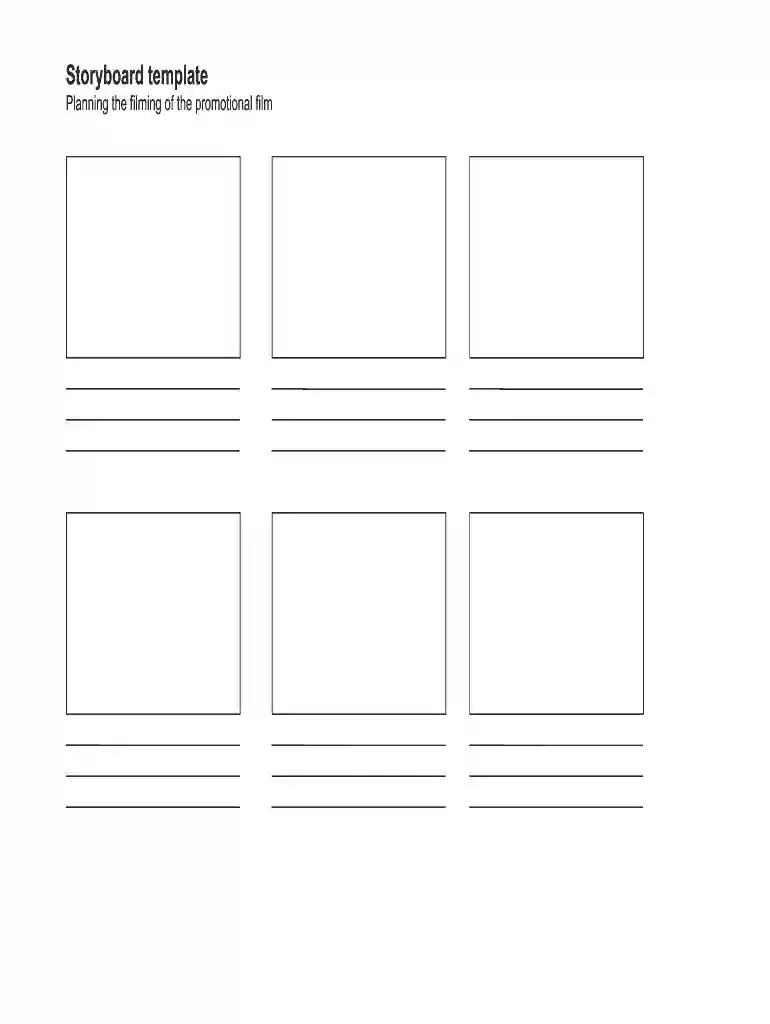
storyboard template printable free Preview on Page 1

Here's how it works

01. Edit your storyboard template printable free online
Type text, add images, blackout confidential details, add comments, highlights and more.

02. Sign it in a few clicks
Draw your signature, type it, upload its image, or use your mobile device as a signature pad.

03. Share your form with others
Send free printable story board template via email, link, or fax. You can also download it, export it or print it out.

Definition and Meaning

A storyboard is a visual representation of how a video or film will unfold, shot by shot. It's laid out in sequence, like a comic book, with illustrations or images representing each shot, and notes about what’s happening in the scene. Storyboards can include a variety of information, such as camera angles, dialogue, sequence timing, and lighting details. This tool is essential in the pre-production phase of visual storytelling, aiding filmmakers, animators, and marketers by providing a blueprint for the video project.

Historical Context and Evolution

  • Originally used in the film industry, storyboards have expanded into television, advertising, and web content.
  • The use of storyboards began in the 1930s at Walt Disney Studios, revolutionizing how stories were planned and visualized.

Benefits of Using a Storyboard

  • Facilitates clear communication among team members, providing a visual layout to discuss and revise before production begins.
  • Helps identify potential issues and sequencing errors, saving time and resources in later production stages.
  • Allows for experimentation with different visual styles and storytelling techniques without significant investment.

Key Elements of the Storyboard

Creating a storyboard requires understanding its core components, which help communicate the narrative and logistical details effectively.

Visual Frames

  • Frame-by-Frame Illustration: Each panel should represent a single moment or scene, functioning like comic panels.
  • Consistent Style: Stick to a uniform artistic style to maintain clarity throughout the storyboard.

Narrative Descriptions

  • Action Details: Brief descriptions of what happens in each frame.
  • Camera Directions: Notes on angles, movements, and framing choices.

Dialogue and Sound

  • Dialogue Bubbles: Include any crucial character dialogue or voice-over text beneath the relevant panels.
  • Sound Effects: Indicate significant audio elements that accompany visual actions.

Steps to Complete the Storyboard

Completing a storyboard involves a series of methodical steps to ensure all necessary elements are addressed and refined.

  1. Script Breakdown

    • Analyze the script for essential visual and narrative elements that need depiction.
  2. Identify Key Scenes

    • Determine pivotal scenes that define the story’s structure and need detailed coverage.
  3. Panel Creation

    • Sketch initial panel layouts focusing on the central action of each scene.
    • Use digital tools or paper depending on project scale and preference.
  4. Refinement and Feedback

    • Review with team members for input and improvements.
    • Adjust based on feedback to enhance narrative coherence and visual flow.

Who Typically Uses the Storyboard

Storyboards are versatile tools utilized by various professionals engaged in creative and commercial visual storytelling.


decoration image ratings of Dochub

Filmmakers and Animators

  • Essential for planning live-action scenes and animation sequences, providing directors with a visual roadmap.

Advertisers and Marketers

  • Help in mapping out the visual narrative of commercials and promotional content, ensuring alignment with campaign objectives.

Content Creators and Educators

  • Used in crafting engaging video content for platforms like YouTube, or instructional materials for educational settings.

Examples of Using the Storyboard

Storyboards are applied in a myriad of contexts, showcasing their adaptability across industries.

Film and Animation Successes

  • Iconic Films: Storyboarding was crucial in the production of classics like "Star Wars" and animated features like "The Lion King."

Marketing Campaigns

  • Advertisement Planning: Successful campaigns, such as the Coca-Cola commercial series, often start with detailed storyboards to visualize and execute the concept.

Educational Videos

  • Instructional Content: Educators use storyboards to plan video lectures or e-learning modules, ensuring content delivery is structured and engaging.

Software Compatibility and Tools

Today's digital landscape offers numerous software options that facilitate the creation of storyboards, catering to diverse professional needs.

Popular Tools

  • Adobe Photoshop: Widely used for detailed and customizable storyboard creation.
  • Storyboard That: An online platform ideal for simpler, education-focused projects with easy-to-use templates.

Integration with Other Software

  • Many tools offer integration capabilities with project management and collaboration platforms like Trello or Slack, enhancing team communication.

Considerations for Choosing Tools

  • Project Scope: Select software that matches the scale and complexity of your project.
  • Technical Skills: Opt for tools that align with the user’s proficiency level, whether simple drag-and-drop interfaces or advanced graphic software.

Versions or Alternatives to the Storyboard

While traditional storyboarding remains prominent, various adaptations and alternatives serve specific needs and preferences.

Animatics

  • A step beyond storyboards, animatics introduce basic motion and timing elements, providing a more dynamic preview of the final production.

Digital Storyboards

  • Use digital platforms to create interactive and easily modifiable storyboards, enhancing flexibility and ease of distribution.

Conceptual Alternatives

  • Mood Boards: Used to capture the overall visual style and tone of a project, focusing on aesthetic elements rather than narrative structure.

By understanding and implementing these aspects, individuals and teams can maximize the utility and effectiveness of storyboards in their projects.

See more storyboard versions

We've got more versions of the storyboard form. Select the right storyboard version from the list and start editing it straight away!
Versions Form popularity Fillable & printable
2021 4.6 Satisfied (47 Votes)
2021 4.9 Satisfied (48 Votes)
2021 4.8 Satisfied (94 Votes)
2020 4.2 Satisfied (27 Votes)
2019 4.8 Satisfied (35 Votes)
2018 4.5 Satisfied (47 Votes)
2018 4.7 Satisfied (26 Votes)
2017 4.8 Satisfied (101 Votes)
2017 4.8 Satisfied (229 Votes)
2016 4.8 Satisfied (131 Votes)
2016 4 Satisfied (50 Votes)
2016 4.1 Satisfied (60 Votes)
2016 4.6 Satisfied (33 Votes)
2016 4.8 Satisfied (119 Votes)
2016 4.5 Satisfied (44 Votes)
be ready to get more

Complete this form in 5 minutes or less

Get form

Got questions?

We have answers to the most popular questions from our customers. If you can't find an answer to your question, please contact us.
Contact us
A storyboard looks similar to a comic strip. Its a series of pictures illustrating critical moments in the narrative of the animation or film. Its how artists and directors get a visual sense of how a production will look.Sep 29, 2022
A storyboard is a visual plan, like a comic strip, that maps out a story sequence using a series of drawings or images in panels, detailing shots, camera angles, character actions, dialogue, and other key production notes for films, animations, games, or ads, serving as a blueprint to guide the creative and production teams. It helps visualize the flow, ensure everyone shares the same vision, and plan logistics before actual filming or animation begins, clarifying the narrative and technical aspects. Key Components Panels: Rectangular boxes (often squares) showing each shot in sequence, read left-to-right, top-to-bottom. Images/Sketches: Rough drawings, photos, or digital art depicting the scenes visual composition. Dialogue/Narration: Text for spoken lines or voiceovers. Action Notes: Descriptions of character movements, scene events, or visual effects. Camera Notes: Instructions for shot type (close-up, wide shot), angles, and movement. Arrows: Indicate shot transitions and movement direction. This video shows a professional storyboard artist explaining the key components of a storyboard: 58sToniko PantojaYouTube Jan 11, 2026Purpose Visualizing: Transforms a script into a clear visual guide, making complex scenes understandable. Planning: Helps define costs, timing, and resources needed. Alignment: Gets the entire team (director, animators, clients) on the same page with the original concept. Problem-Solving: Allows for testing ideas and identifying improvements early in pre-production. Watch this video to learn how to use a storyboard to plan a scene: 51sStudioBinder AcademyYouTube Jun 27, 2024Uses Film Animation: For movies, TV shows, and cartoons. Advertising: To pitch and plan commercials. Video Games: To map out gameplay and cutscenes. Product Development: To visualize user journeys and product features. This video provides tips on how to create your own storyboard: 58sKuzillonYouTube Apr 29, 2023AI can make mistakes, so double-check responsesWhat is a Storyboard and How to Make One | Storyboard TutorialJun 27, 2024 whether its a thrilling scene. a fun social media ad or a big national commercial every project needs some good plannYouTube StudioBinder Academy - YouTubeHow to Storyboard for Animation - DocHubFrame. A rectangular box in which the storyboard artist will sketch the shot what the viewer can see from that angle, roughly skDocHub
The 7 steps of storyboarding typically involve defining your goal, scripting the narrative, breaking it into scenes, choosing a format, sketching visuals (thumbnails), adding details like dialogue/sound, and finally reviewing/refining the flow for clarity and continuity before production. These steps guide you from a simple idea to a detailed visual plan for your video, film, or presentation. This video provides a professional overview of the 7 essential steps for storyboarding: 51sKuzillonYouTube Apr 29, 2023 Heres a breakdown of the common 7-step process: Define Goal Message: Clearly state the purpose of your project and what you want to communicate. Write Script/Outline: Develop your story with dialogue, key actions, and scene descriptions. Break into Scenes: Divide the script into individual shots or key moments. Choose Tool Format: Decide whether to use paper templates or digital software, and set up your panels (e.g., columns for visuals, audio, dialogue). Sketch Visuals (Thumbnails): Lightly draw the basic action and composition for each panel, focusing on clarity over artistic perfection. Add Details: Include specific notes for camera angles, character actions, sound effects, music, and transitions (cuts, fades, etc.). Review Refine: Check the entire storyboard for logical flow, pacing, continuity, and visual clarity, making adjustments as needed. You can watch this video for tips on how to make your storyboard clearer and more effective: 35sToniko PantojaYouTube Jan 11, 2026Key Elements to Include in Your Panels: Frame/Shot Number: To keep things organized. Visual Sketch: The main drawing of the scene. Dialogue/Voiceover: What characters say or what the narrator says. Action/Notes: Descriptions of movement, camera work, or scene details. Sound/Music: Specific audio cues. AI can make mistakes, so double-check responsesHow to make a storyboard Fundamentals - Boords Blog - MediumApr 9, 2018 Start with a script Before you can start storyboarding, youll need a script. Scripts can be relatively simple, outliniMedium7 steps to create a storyboard: template examples - Blue Carrot When it comes to the storyboard structure, it will generally include the following elements: * Number of frames. * Scene timelineBlue Carrot
There are four main elements of a business storyboard: the scenario, the activities, the visuals, and the story. Lets take a look at each of these areas in more detail.Oct 22, 2025
Our Top Picks Best for teams: Boords. Best free option: Canva. Best for animation: Toon Boom Storyboard Pro. Best for pre-production: Celtx. Who this is for: Boords is the ideal storyboarding software for video professionals and creative teams looking to streamline their pre-production process.

Security and compliance

At DocHub, your data security is our priority. We follow HIPAA, SOC2, GDPR, and other standards, so you can work on your documents with confidence.

Learn more
ccpa2
pci-dss
gdpr-compliance
hipaa
soc-compliance

People also ask

A storyboard should include several squares with illustrations or photos representing each shot or scene of a video, and notes about whats happening and being said in that scene. Make your storytelling⁠(opens in a new tab or window) more compelling with Canvas AI design⁠(opens in a new tab or window).
If you can draw, you might prefer just to sketch out each shot with your favorite drawing tool, or you can use the images generated by ChatGPT as a starting point. If you dont draw much, then ChatGPT can give you a decent set of storyboards to work with in your filmmaking project.Aug 12, 2025

free how to create a storyboard