
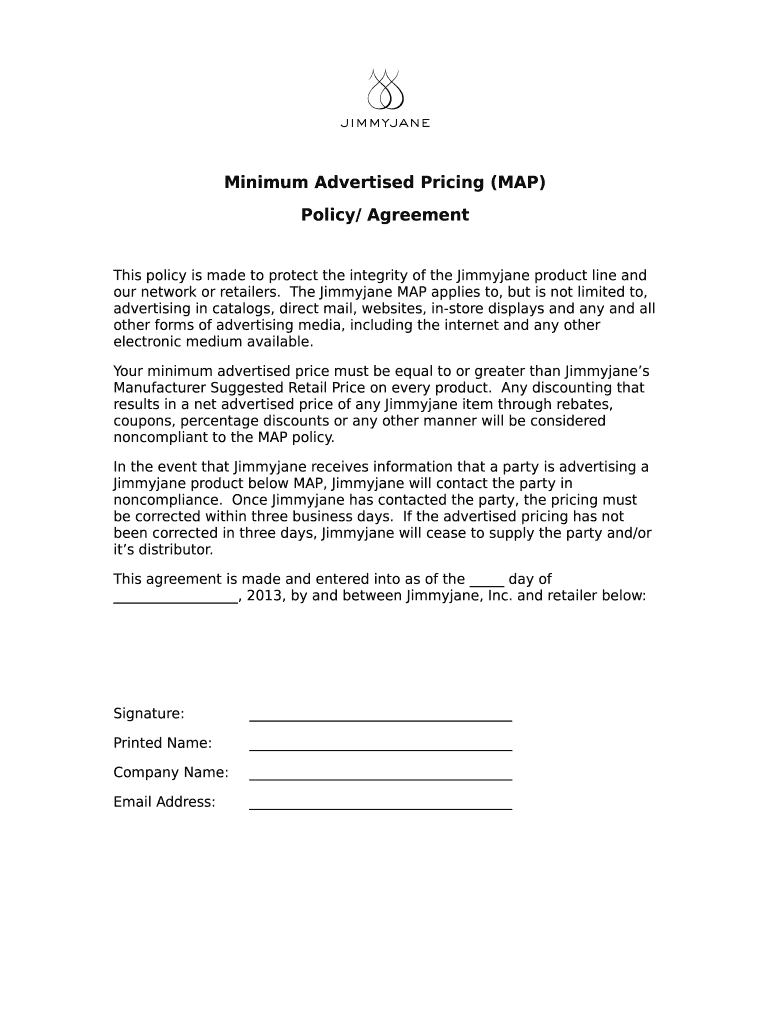







Definition and Meaning of a Map Pricing Agreement
A map pricing agreement is a formal arrangement between manufacturers and retailers that establishes minimum advertised prices (MAP) for products. The intention is to prevent price erosion in the marketplace, which can harm brand perception and profitability. By stipulating that retailers cannot advertise products below a designated price point, a MAP agreement helps maintain a level pricing structure across different sales channels.
Key Components of Map Pricing Agreements
- Manufacturer Suggested Retail Price (MSRP): This is the baseline price suggested by the manufacturer, serving as the foundation for the MAP.
- Advertising Restrictions: The agreement typically contains clauses that restrict retailers from advertising lower prices and outline the consequences for those that do not comply.
- Enforcement and Compliance: Manufacturers may implement steps for monitoring compliance and ensuring that any infractions are addressed promptly.
Understanding the fundamental aspects of a map pricing agreement is essential for both parties involved, as it dictates how products are marketed and sold.
How to Use a Map Pricing Agreement Effectively
Utilizing a map pricing agreement requires careful consideration and adherence to its stipulations. Retailers must ensure that their advertising strategies align with the pricing structure dictated by the agreement.
Practical Steps for Implementation
- Review the Terms: Understand all clauses related to pricing and advertising to avoid non-compliance.
- Training Staff: Educate sales and marketing personnel on the implications of the agreement to uphold pricing standards.
- Monitoring Compliance: Regularly assess advertising channels to ensure that MAP policies are being followed by all team members and associated partners.
By following these steps, both manufacturers and retailers can maintain a sustainable pricing strategy.
Steps to Complete a Map Pricing Agreement
Completing a map pricing agreement involves multiple stages that require attention to detail from both parties.
Detailed Process Steps
- Drafting the Agreement: Start with a clear template that defines key terms, pricing strategies, and compliance measures.
- Negotiation: Both parties should elaborate on their expectations and establish mutual agreement on pricing and enforcement policies.
- Signing the Agreement: Once both parties agree, they can sign and date the document, making it legally binding.
- Distribution: Share copies of the finalized agreement with all stakeholders involved, including relevant sales and marketing teams.
- Ongoing Review: Periodically revisit the agreement to ensure it remains relevant and is adjusted as market conditions or business strategies evolve.
These steps help ensure that both parties are on the same page regarding pricing and advertising practices.
Legal Use of the Map Pricing Agreement
A map pricing agreement must comply with U.S. legal standards to avoid antitrust violations.
Essential Legal Considerations
- Adherence to the ESIGN Act: Ensure that electronic signatures are legally binding.
- Non-Collusion Clause: Retailers should not be coerced into non-competitive practices with other retailers as this could violate antitrust laws.
- Termination Clauses: Specify conditions under which the agreement may be terminated by either party to protect legal rights.
Legal clarity is critical, as failure to adhere to laws may result in significant penalties or loss of business relationships.
Key Elements of the Map Pricing Agreement
Understanding the key elements of a map pricing agreement is crucial for effective enforcement and compliance.
Core Components
- Effective Date: The date when the agreement takes effect.
- Duration: Specify how long the agreement will remain in force before it requires revision or renewal.
- Compliance Monitoring: Outline how compliance will be monitored and the potential consequences for any parties that fail to adhere to the pricing policy.
- Signatory Authority: Identify the individuals empowered to sign the agreement on behalf of each party.
These elements ensure that all involved parties understand their roles and responsibilities in maintaining compliance.
Important Terms Related to Map Pricing Agreements
Familiarity with terminology specific to map pricing agreements is essential for a clear understanding of the document.
Common Terms and Definitions
- MAP Policy: Outlines permissible pricing practices.
- Retail Price Maintenance (RPM): A legal term that refers to agreements among manufacturers and retailers to maintain specific price points.
- Manufacturer Suggested Retail Price (MSRP): The suggested price at which a retailer should sell products for market stability.
Knowing these terms enhances comprehension and facilitates easier discussions regarding pricing strategies.
Examples of Using the Map Pricing Agreement
Real-world scenarios can provide valuable insights into the practical applications of map pricing agreements.
Case Study Insights
- Electronics Retailer Example: A leading electronics manufacturer establishes a MAP to combat price competition that undermines brand value. Retailers must maintain prices above a specified threshold, ensuring consistent value perception among consumers.
- Apparel Industry Scenario: A clothing brand issues a MAP agreement to prevent retailers from discounting heavily during sales periods, preserving the brand's premium image and driving full-price sales.
These examples illustrate how companies leverage MAP agreements to maintain their desired pricing strategies and brand integrity.
Who Typically Uses the Map Pricing Agreement
Map pricing agreements are utilized across various industries, particularly those with significant brand value at stake.


Typical Users Include
- Manufacturers: To protect brand equity and profits.
- Wholesalers and Retailers: Looking to maintain a level playing field in pricing strategies.
- E-commerce Platforms: To ensure a standardized pricing system across diverse marketplaces.
Identifying these users can illuminate the strategies that underpin pricing stability and market integrity.




