




01. Edit your navmc 11711 online
Type text, add images, blackout confidential details, add comments, highlights and more.

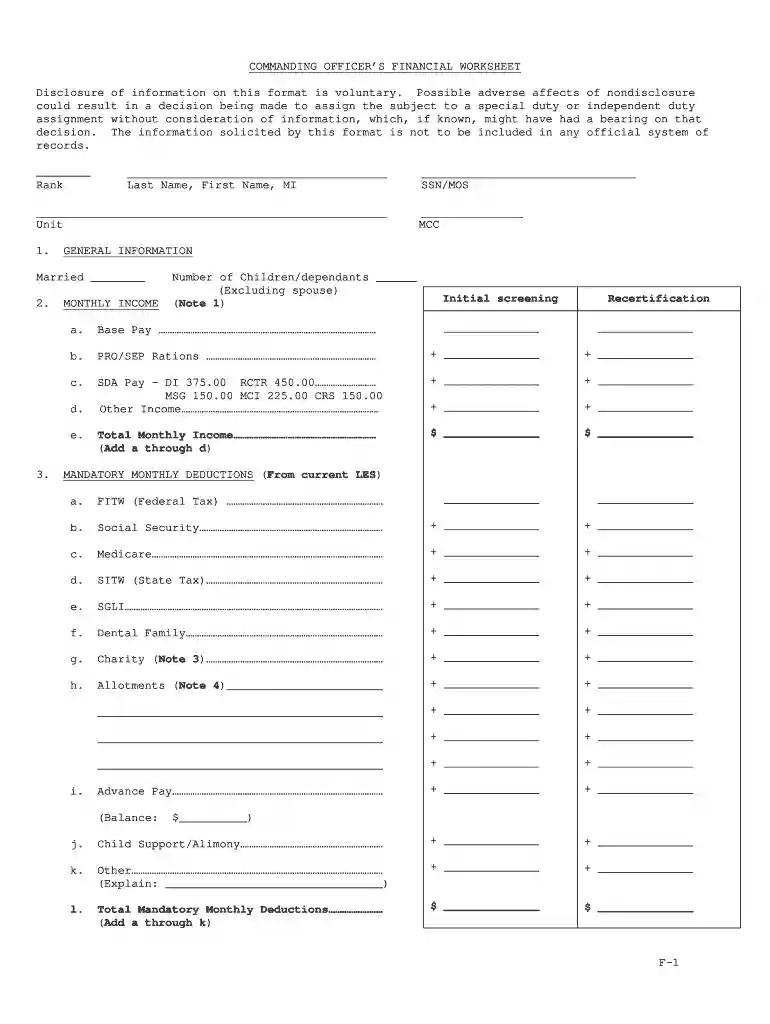
Type text, add images, blackout confidential details, add comments, highlights and more.

Draw your signature, type it, upload its image, or use your mobile device as a signature pad.

Send usmc financial worksheet via email, link, or fax. You can also download it, export it or print it out.
Worksheet amplified deductions refer to the deductions that can significantly decrease a taxpayer's taxable income, ultimately reducing tax liability. These deductions are critical for individuals and businesses alike. Understanding how to maximize these deductions requires familiarity with various financial components, tax rules, and eligibility criteria.
Amplified deductions encapsulate a wide range of allowable expenses. These deductions often include:
Business Expenses: For self-employed individuals or business owners, amplifying deductions can include costs such as office supplies, utilities, and travel expenses incurred for business purposes.
Medical Expenses: Taxpayers may deduct unreimbursed medical expenses that exceed a certain percentage of their adjusted gross income (AGI). This includes costs for surgery, prescriptions, and long-term care.
Educator Expenses: Teachers and eligible educators can deduct out-of-pocket expenses for classroom supplies, which can provide a useful tax-saving mechanism.
Charitable Contributions: Donations to qualifying nonprofit organizations can also amplify deductions. Taxpayers should keep receipts and records of contributions for accurate reporting.
To effectively utilize worksheet amplified deductions, consider following these steps:
Gather Financial Documentation: Compile all relevant receipts, invoices, and financial statements that substantiate your deductions.
Review Eligibility Requirements: Confirm that the expenses you plan to deduct meet IRS guidelines, such as being ordinary and necessary for your profession or business.
Complete the Worksheet: Fill out your worksheet accurately, ensuring all amounts are properly categorized and substantiated.
Monitor Changes in Tax Law: Stay updated on changes to tax regulations that may affect deduction eligibility. This might include new thresholds for medical expenses or updates on business expense deductions.
Several key components play a vital role in the amplified deduction process:
Taxpayer Scenarios: Different taxpayers consider different things based on their situation. For example, self-employed individuals may focus more on business-related deductions, while families may seek medical or educational deductions.
Documentation: Each deduction must be supported by documentation to validate claims if audited. This includes maintaining accurate records and receipts throughout the year.
Filing Deadlines: Adhering to IRS deadlines is crucial. Taxpayers must ensure deductions are claimed within the correct tax cycle to avoid penalties.
Practical examples highlight how amplified deductions can significantly impact tax liability:
Self-employed Individual: A freelance graphic designer who spends $2,000 on new software, $500 on a computer, and $300 on marketing can amplify their deductions by accurately reporting these expenses, reducing taxable income.
Medical Costs: A taxpayer facing health issues incurs $15,000 in medical bills. If their AGI is $50,000 and the medical deduction threshold is seven and a half percent, they can deduct the amount exceeding $3,750, allowing them to report a deduction of $11,250.
Regular monitoring of compliance with IRS guidelines regarding deductions is vital:
Review IRS Publications: Staying informed about IRS publications allows taxpayers to keep abreast of allowable deductions, changes to the tax code, and potential new deductions.
Consult Tax Professionals: Engaging with certified tax professionals can provide personalized advice and ensure that all available deductions are maximized and in compliance with the law.
Worksheet amplified deductions are an essential aspect of tax planning that can substantially decrease taxable income. By understanding the types of deductions, maintaining thorough documentation, and adhering to IRS guidelines, individuals and businesses can effectively utilize these deductions to optimize their tax situation.
At DocHub, your data security is our priority. We follow HIPAA, SOC2, GDPR, and other standards, so you can work on your documents with confidence.
Annexure 44: Ranking Worksheet the period following notification and deduct the sum from payments due to the Supplier under.Read more
Apr 15, 1976 Section 179 deduction dollar limits. For tax years be- ginning in 2022, the maximum section 179 expense de- duction is $1,080,000.Read more


