
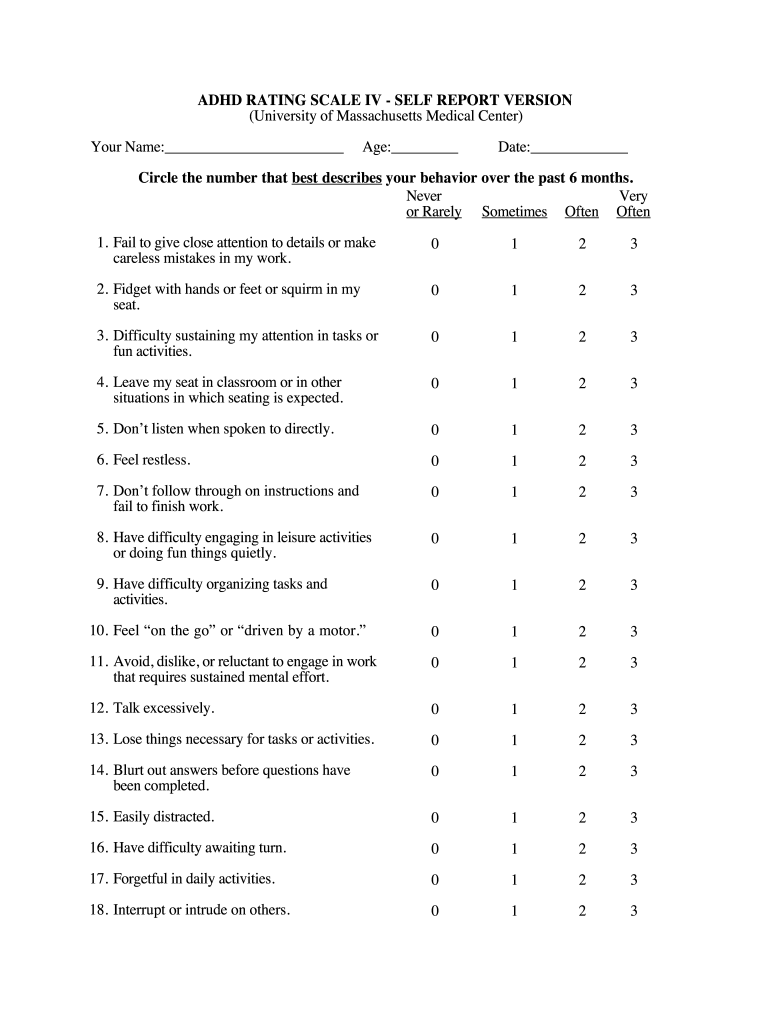







Definition and Meaning of the Conners Rating Scale
The Conners Rating Scale is a widely used tool for assessing behavioral, emotional, and academic problems in children and adolescents, focusing primarily on Attention Deficit Hyperactivity Disorder (ADHD). It provides structured insights into various symptom domains, including inattention, hyperactivity, and impulsivity, helping caregivers and professionals gauge the severity and impact of these behaviors on daily functioning. The tool often includes both parent and teacher reports, ensuring a comprehensive understanding of a child's behavior across different settings.
- Purpose: The primary purpose of the Conners Rating Scale is to identify ADHD and related behavioral issues, helping clinicians make informed treatment decisions.
- Components: It usually consists of multiple questionnaires tailored for parents, teachers, and self-reporting adolescents, each focusing on specific behavioral criteria.
How to Use the Conners Rating Scale
Utilizing the Conners Rating Scale involves several key steps to ensure accurate administration and interpretation:
- Selection of Version: Determine which version of the scale is appropriate based on the age of the child and the context in which the assessment will occur (e.g., parent, teacher, or self-reports).
- Distribution: Provide the questionnaire to the relevant respondents (parents, teachers, or the child). Ensure they understand the rating criteria, which ranges from "Not True at All" to "Very Much True."
- Scoring: Once the forms are completed, scores are calculated based on the predefined criteria. Each response corresponds to a numerical value that reflects the frequency of specific behaviors.
- Interpretation of Results: Analyze the scores with respect to normative data to determine if the behaviors fall within typical ranges or suggest potential ADHD or other behavioral problems.
- Integration with Clinical Practice: Use the results in conjunction with clinical interviews and other assessments for a more holistic view of the child's needs.
How to Obtain the Conners Rating Scale
The Conners Rating Scale is accessible through various means, ensuring that professionals and parents can easily obtain the necessary forms for evaluation:
- Official Sources: The scale can be acquired from authorized publishers like Multi-Health Systems (MHS), which provides the official versions and scoring manuals need for accuracy.
- PDF Formats: Various online platforms may offer PDF downloads, such as the Conners 3 Self Report Questionnaire PDF or the Conners Questionnaire Teacher PDF. Ensure that the downloaded versions align with the latest editions for validity.
- School Resources: Schools may have access to the scale and may distribute it during evaluations for students suspected of having ADHD.
Steps to Complete the Conners Rating Scale
Completing the Conners Rating Scale involves a systematic approach to ensure that the results are reliable and reflect the child’s behavior accurately:
- Preparation: Gather necessary information about the child’s background, including previous assessments if applicable.
- Completion of the Questionnaire:
- For parents: Focus on behaviors observed within the home over the past month.
- For teachers: Reflect on behaviors seen in the classroom setting.
- For self-reports: Encourage the child to consider their behaviors in various settings, such as home and school.
- Review: After completion, review the forms for any inconsistencies or unclear responses that may require follow-up clarification.
- Submission: Return the completed forms to the relevant assessing professional, ensuring timely submission for prompt analysis.
- Follow-Up: Schedule a meeting with the clinician to discuss the results and any subsequent steps needed for intervention or support.
Important Terms Related to the Conners Rating Scale
Understanding key terminology associated with the Conners Rating Scale is crucial for its effective application. Here are some essential terms:
- Parent Rating Scale: A questionnaire completed by parents that evaluates their child's behavior based on daily experiences.
- Teacher Rating Scale: Similar to the parent version but tailored for educators to provide insights into the child's school behaviors.
- Self-Report Scale: Completed by older children or adolescents, allowing them to self-assess their behaviors and feelings.
- T-Scores: Standardized scores used in the scale to compare individual scores against normative data for age and gender.
Knowledge of these terms enhances comprehension and guides users through the assessment process effectively.
Examples of Using the Conners Rating Scale
Practical examples can help illustrate the application of the Conners Rating Scale in various scenarios:
- Case Study in Schools: A teacher notices a student frequently disrupts class and struggles with tasks. Utilizing the Teacher Rating Scale provides quantitative data to discuss with school psychologists for further evaluation of potential ADHD.
- Parental Insights: Parents may fill out the Parent Rating Scale for their child, highlighting significant behaviors observed at home, which can be shared with the pediatrician to consider further diagnostic testing.
- Self-Assessment: An adolescent experiencing self-doubt and academic challenges could complete the Self-Report Scale. This self-evaluation may reveal patterns of inattention requiring intervention and support.
Overall, these examples demonstrate the versatility of the Conners Rating Scale in different settings while facilitating informed discussions on behavioral concerns and treatment options.




