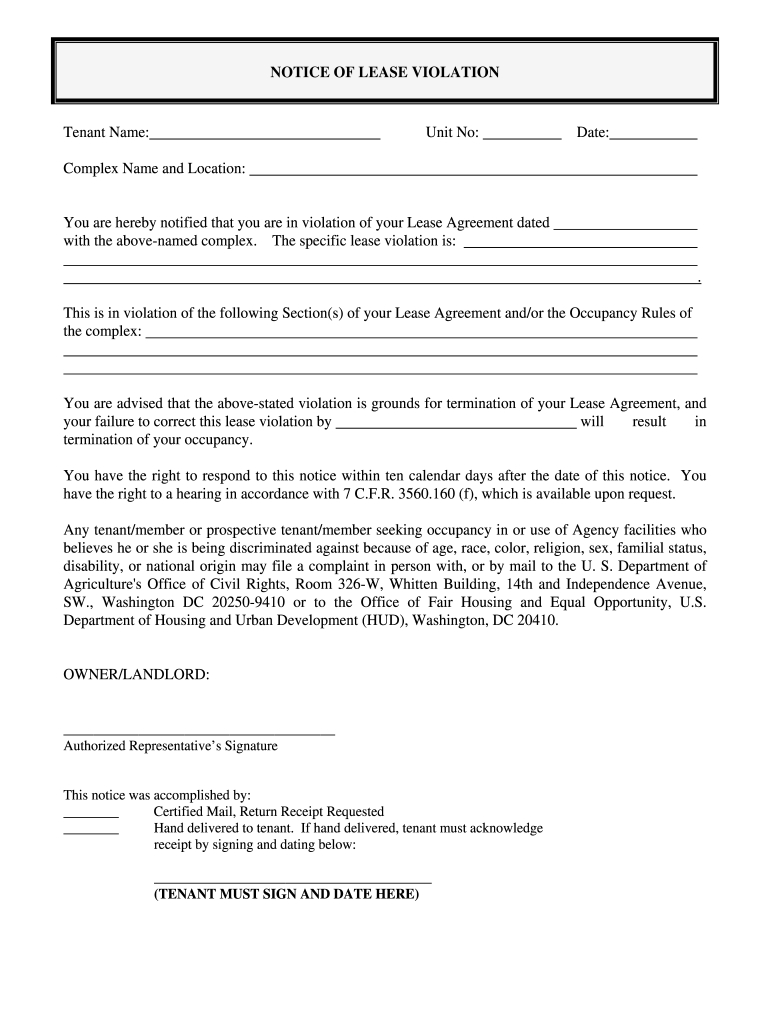







Definition and Meaning of Lease Violation Notice
A lease violation notice is a formal document issued by a landlord or property manager to a tenant, informing them of a breach of the lease agreement. This notice is essential in property management, as it outlines the specific violation, references relevant sections of the lease, and advises the tenant on the consequences of not rectifying the issue. Common violations may include failure to pay rent, unauthorized occupants, or damages to the property. The lease violation notice serves as a legal record that the landlord has communicated the issue to the tenant, which can be critical should further action, such as eviction, become necessary.
The notice typically specifies a time frame, often ten days, for the tenant to respond. Depending on the specifics of the lease and state laws, tenants may have the option to request a hearing to contest the notice. It is vital for landlords to accurately complete the lease violation notice to ensure it holds up legally. Including information about how to file discrimination complaints with relevant authorities can also be beneficial for both tenants and landlords.
Key Elements of the Lease Violation Notice
Understanding the specific components of a lease violation notice is crucial for ensuring compliance with legal requirements. A well-structured lease violation notice should include:
- Tenant's Name and Address: Clearly state the full name of the tenant and the address of the rental property.
- Date of Notice: The date the notice is issued helps establish a timeline for the tenant's response.
- Description of Violation: Provide a clear and concise statement of the violation, referencing the exact section(s) of the lease agreement that are being breached.
- Cure Period: Specify the time frame within which the tenant must correct the violation. This period can vary by state and type of violation.
- Consequences of Non-Compliance: State the potential actions that may be taken if the violation is not rectified, such as eviction proceedings.
- Landlord’s Contact Information: Provide a way for the tenant to reach the landlord for clarification or discussion regarding the notice.
- Signature of the Landlord or Authorized Representative: The notice should be signed to indicate it is an official communication from the landlord.
These elements ensure that the notice is both clear and actionable, providing tenants with the necessary guidance to rectify their lease violations.
How to Use the Lease Violation Notice
Using the lease violation notice effectively requires understanding the correct procedure for issuing it as well as ensuring compliance with state laws. Here are the steps to properly utilize a lease violation notice:
- Identify the Violation: Review the lease agreement and identify the specific violation that has occurred, ensuring it is aligned with the terms outlined in the lease.
- Gather Documentation: Collect any supporting documentation related to the lease violation, including payment records, photographs of damages, or witness statements.
- Draft the Notice: Use a lease violation notice template to draft the notice. Ensure all necessary information is included, maintaining clarity and specificity to avoid potential disputes.
- Deliver the Notice: Provide the notice to the tenant through an acceptable method, such as personal delivery, certified mail, or via electronic means if permitted. It's advisable to keep proof of delivery.
- Follow Up: Monitor the situation following the notice to determine if the tenant resolves the violation within the specified period. Maintain open channels of communication for any inquiries from the tenant.
Following these steps not only ensures compliance with legal requirements, but also demonstrates a fair approach to landlord-tenant relations.
Why Should You Use a Lease Violation Notice
Using a lease violation notice is crucial for several reasons:
- Legal Protection: A formal notice protects landlords legally by providing evidence that the tenant was informed of the breach and was given an opportunity to rectify it.
- Clarity for Tenants: It clearly articulates the issues at hand, helping tenants understand the potential consequences of continued non-compliance with lease terms.
- Communication Record: It serves as a documented communication tool, which can be valuable in case of legal disputes or eviction proceedings.
- Encourages Compliance: The act of receiving a notice may motivate tenants to correct their behavior or payment issues to avoid formal eviction processes.
By utilizing a lease violation notice, landlords can encourage an atmosphere of responsibility and compliance while ensuring their legal rights are protected.
Examples of Lease Violations
Lease violations can take many forms, and understanding these examples can provide clarity for both landlords and tenants. Some common violations include:
- Non-Payment of Rent: Failure to pay rent by the due date is one of the most common violations, often leading to immediate notice issuance.
- Unauthorized Occupants: Allowing guests to stay for extended periods without landlord consent may violate occupancy clauses within the lease.
- Property Damage: Any damage to the property beyond normal wear and tear can also be cited as a violation. For instance, if a tenant has made unauthorized alterations that compromise the property’s integrity, a lease violation notice would be warranted.
- Noise Complaints: Excessive noise that disrupts neighbors can be considered a violation, particularly in multi-family housing situations.
- Violation of Pet Policies: Keeping pets or other animals in rental properties where they are prohibited can also result in a lease violation notice.
By understanding these examples, tenants are better equipped to adhere to their lease terms, while landlords can more effectively manage their properties.
State-Specific Rules for Lease Violation Notices
Lease violation notices are subject to varying regulations across different states, which can affect how landlords draft and deliver these documents. Here are some key considerations:
- Notice Period Requirements: Many states dictate the timeframes within which tenants must correct violations. For example, in Texas, landlords typically provide tenants with a three-day notice to vacate for non-payment of rent, while other violations may require different notice periods.
- Content Specifications: Some states require specific information to be included in a lease violation notice, such as the ability to meet certain conditions before corrective measures are taken, or guidelines on how to remedy a lease violation.
- Delivery Methods: Each state has regulations governing how notices should be delivered—such as personal delivery versus mail. Familiarizing oneself with these rules is essential for enforceability.
- Tenant’s Right to Cure: Certain jurisdictions grant tenants the right to rectify a lease violation within a specified period. Landlords should be aware of these rights to ensure compliance with local laws.
Understanding state-specific guidelines is crucial for landlords to prevent costly mistakes that could impact eviction proceedings or result in legal penalties.