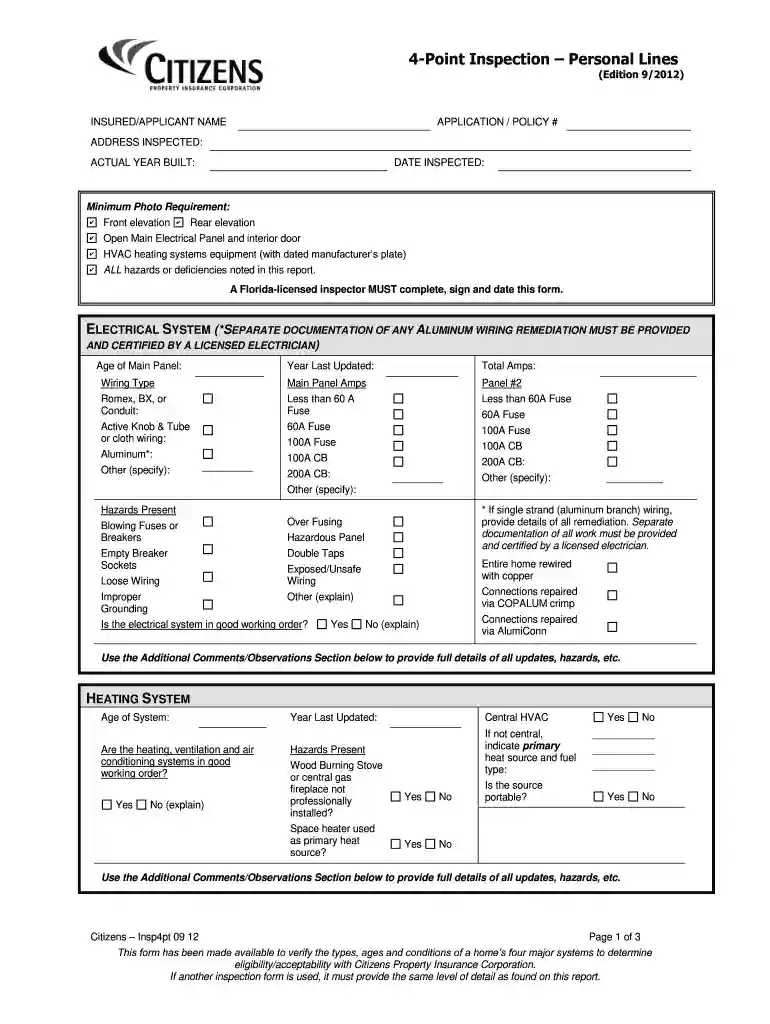
Definition and Importance of the 4 Point Inspection Form
The 4 point inspection form is a crucial document used primarily in the real estate and insurance industries, particularly necessary for homes and mobile structures over 30 years old. This inspection serves as a comprehensive evaluation of four essential systems within a property: electrical, heating, plumbing, and roofing. The purpose of this form is to assess the current condition of these systems, ensuring they meet safety standards and insurance guidelines, especially when applying for policies through providers like Citizens Property Insurance Corporation.
Key Components of the Inspection
The inspection covers:
- Electrical System: Evaluates the wiring, panel, and overall safety of electrical appliances.
- Heating System: Assesses the state of the heating units, including furnaces and HVAC systems.
- Plumbing System: Inspects pipes, fixtures, and water supply systems for leaks or damages.
- Roofing System: Reviews the condition of the roof, including shingles, seams, and flashing.
Each of these components must be thoroughly documented to reflect their condition, age, and any deficiencies present. This documentation is critical for insurers to determine risk and eligibility for coverage.
How to Use the 4 Point Inspection Form
Utilizing the 4 point inspection form involves a structured approach to ensure all necessary information is collected accurately. Here’s how to effectively use this form:
- Acquire the Form: Obtain the latest version of the 4 point inspection form, which is often available through insurance companies or regulatory bodies.
- Schedule an Inspection: Hire a Florida-licensed inspector who is familiar with the specific requirements of the 4 point inspection.
- Complete the Form: As the inspector performs the evaluation, they should fill out the form, noting details such as system age, condition, and any repairs needed.
- Documentation: Ensure the form includes photographs of each system to validate the inspector's findings.
- Submission: Provide the completed form to your insurance company as part of your application or renewal process.
Practical Considerations
- Always verify with your insurance provider if there are specific requirements or preferred formats for the 4 point inspection form.
- Stay updated on state regulations that may impact the inspection process, particularly in Florida.
Steps to Complete the 4 Point Inspection Form
Completing the 4 point inspection form requires meticulous attention to detail. Here are the steps typically involved in the process:
- Preparation: Gather necessary documents related to the home's age, previous inspections, and any repair records prior to the inspection.
- Conducting the Inspection: The inspector checks each of the four systems.
- For example, they may test electrical outlets and circuit breakers during the electrical inspection.
- Filling Out the Form:
- Clearly document findings for each section. For example:
- Electrical: "All outlets functional; no visible wear on wiring."
- Heating: "Heater over 15 years old, functioning but requires servicing."
- Clearly document findings for each section. For example:
- Photographic Evidence: Take clear pictures of each system to accompany the form.
- Review: Once completed, review the form for accuracy and completeness before submission.
Importance of Each Step
Each step is vital to ensure compliance with insurance requirements and a seamless application process. Accurate documentation also aids homeowners in planning necessary repairs or upgrades.
Who Typically Uses the 4 Point Inspection Form?
The 4 point inspection form is predominantly used by:

- Homeowners: Individuals seeking to insure older properties must navigate insurance underwriting requirements.
- Real Estate Agents: Agents may require the form for properties on the market, particularly older homes that need insurance.
- Insurance Providers: Companies like Citizens Property Insurance utilize this form to evaluate risk before issuing policies.
- Inspectors: Licensed professionals performing inspections use the form to standardize their findings and assist clients in reporting needs accurately.
Broader Implications
Understanding who uses this form can help streamline the process for stakeholders involved in real estate transactions, ensuring that all parties meet necessary insurance standards.
Legal Use of the 4 Point Inspection Form
The legal implications of the 4 point inspection form are significant, especially within the realm of property insurance in the United States.
Compliance Necessities
- Insurance Underwriting: The form is often mandated by insurance companies to determine eligibility for coverage.
- Regulatory Standards: Ensuring the form is completed by a licensed Florida inspector adheres to state regulatory guidelines.
- Protection for Homeowners: By conducting a thorough inspection, homeowners can protect their investment and ensure they are not liable for hidden deficiencies.
Documentation Validity
The signed inspection form, along with attached photos and any additional documentation, serves as a legal record that may be referenced in future insurance claims or disputes.
Key Elements of the 4 Point Inspection Form
The 4 point inspection form features specific elements crucial for a thorough assessment:
- Inspector Information: Name, license number, and contact information of the licensed inspector need to be included.
- Property Address and Owner Details: Clear identification of the property and the homeowner is necessary.
- Detailed System Assessments: Each system should have a section to detail its condition, age, and any repairs needed.
- Signatures: The form typically requires signatures from both the inspector and the homeowner, affirming the inspection's results.
Importance of Each Element
Completing each section thoroughly enhances the form’s utility, providing comprehensive insights for insurers and ensuring that homeowners understand the current status of their property systems.
Florida-Specific Requirements for the 4 Point Inspection Form
In Florida, specific requirements govern the use of the 4 point inspection form, reflecting the state's unique climate and regulatory standards:
- Licensing: Only inspectors licensed by the Florida Department of Business and Professional Regulation can complete the form.
- Photo Documentation: Florida regulations may stipulate specific photo requirements to enhance the validity of the inspection results.
- Insurance Requirements: Insurance companies operating in Florida may have tailored versions of the 4 point inspection checklist that meet their particular underwriting criteria.
Navigating State Regulations
Staying informed about Florida-specific regulations is essential, as it affects both what needs to be reported in the inspection and the overall process of obtaining home insurance.
Examples of Using the 4 Point Inspection Form
Several practical scenarios illustrate the application of the 4 point inspection form:
- Scenario A: A homeowner with a 35-year-old roof requests a new homeowners policy. The insurance company requires a completed 4 point inspection form highlighting any repairs needed to ensure compliance.
- Scenario B: A real estate agent lists a property over thirty years old. The agent coordinates an inspection and uses the form to provide prospective buyers with insights about system conditions and necessary upgrades.
- Scenario C: A property investor acquires an older building. The investor commissions an inspection to ascertain the state of the four systems outlined in the form, informing future renovation plans before seeking insurance coverage.
Implications of Each Scenario
These examples showcase the form's relevance across various situations, emphasizing its role as a critical tool in the home insurance and real estate processes.