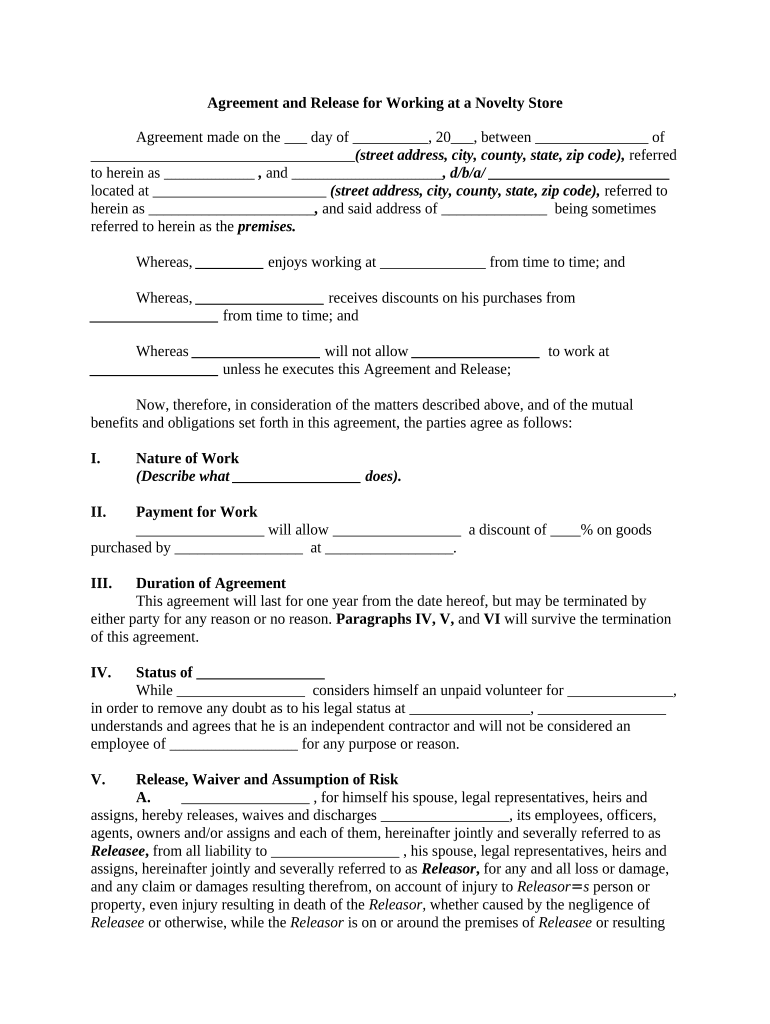







Definition and Purpose of the Agreement and Release for Working at a Novelty Store - Self-Employed
The Agreement and Release for Working at a Novelty Store - Self-Employed serves as a vital document that outlines the relationship between a self-employed individual and the novelty store. This agreement details the expectations, responsibilities, and legal implications of the working relationship.
Key Components of the Agreement
- Nature of Work: The agreement specifies the type of work the individual will perform, which may include selling products, managing inventory, or assisting customers.
- Compensation Structure: Instead of traditional wages, compensation may be offered in the form of discounts on store merchandise or other non-monetary benefits.
- Duration of Agreement: The time frame for the agreement should be clearly outlined, whether it is for a specific period, ongoing, or project-based.
- Legal Contractor Status: The document establishes the self-employed individual as an independent contractor, distinguishing them from regular employees, which carries different legal and tax obligations.
- Liability Waivers and Indemnification: It often includes waivers that protect the store from claims arising from accidents or damages during the work, alongside clauses that indemnify the store against legal claims.
Importance in the Novelty Store Context
This agreement is crucial as it establishes the terms and conditions under which the self-employed individual operates, thereby fostering a clearer understanding for both parties and creating a framework that can minimize disputes and misunderstandings.
Steps to Complete the Agreement and Release for Working at a Novelty Store - Self-Employed
Completing the Agreement and Release for Working at a Novelty Store involves several clear steps to ensure all critical components are included and legally binding.
Step-by-Step Process
-
Gather Required Information:
- Collect personal and business information, including names, addresses, and contact details of both parties.
-
Detail the Scope of Work:
- Clearly define job responsibilities and tasks expected from the self-employed individual.
-
Outline Compensation Terms:
- Specify how compensation will be structured, detailing the discount rates or other forms of remuneration.
-
Set Agreeable Duration:
- Decide on the time frame the agreement will cover and ensure it is clearly documented.
-
Incorporate Legal Provisions:
- Include clauses for liability waivers, indemnification, and arbitration processes for dispute resolution.
-
Review and Sign:
- Both parties should review the document for accuracy and completeness before signing to make it legally binding.
Additional Considerations
- Legal Review: It may be beneficial to have a legal professional review the document to ensure compliance with local laws.
- Maintain Copies: Each party should keep a signed copy of the agreement for their records.
Legal Use of the Agreement and Release for Working at a Novelty Store - Self-Employed
Understanding the legal aspects of the Agreement and Release for Working at a Novelty Store is essential for proper implementation and enforcement.
Legal Validity
- Compliance with State Laws: Ensure that the agreement adheres to both federal and state regulations regarding independent contracting and liability agreements.
- Informed Consent: Both parties must voluntarily enter into the agreement, understanding the terms and consequences fully.
Enforceability of Terms
- Clarity of Conditions: The language used in the agreement should be clear and unambiguous, minimizing the potential for legal challenges.
- Legally Binding Nature: The agreement must include elements such as voluntary signatures and date of signing to uphold its binding nature in a legal context.
Important Terms Related to the Agreement and Release for Working at a Novelty Store - Self-Employed
This section discusses key legal terms commonly found in the Agreement and Release for Working at a Novelty Store, helping to clarify their implications.
Definitions and Context
- Independent Contractor: A self-employed individual who provides services to a business under specified terms without being classified as an employee.
- Waiver: A provision where one party relinquishes certain rights or claims, typically relating to liability.
- Indemnification: A clause where one party agrees to compensate the other for certain damages or losses incurred.
- Arbitration: A method of dispute resolution outside of courts, typically faster and less formal, which is stipulated within many contracts to handle disagreements.
Real-world Applications
Understanding these terms and their implications is essential for both parties. For instance, the indemnification clause protects stores from unforeseen incidents, while the independent contractor status clarifies tax obligations for the worker.
Who Typically Uses the Agreement and Release for Working at a Novelty Store - Self-Employed
Identifying the typical users of this agreement helps to recognize its applicability across different scenarios within a novelty store setting.


Users and Their Roles
- Self-Employed Individuals: Those seeking flexible work arrangements without traditional employee commitments are ideal candidates for this agreement.
- Store Owners or Managers: Owners or managers looking to collaborate with independent contractors to enhance their service offerings use this document to formalize working relationships.
- Volunteer Workers: While primarily for self-employed individuals, it can also apply to volunteers who provide services in exchange for benefits instead of direct payment.
Benefits for Users
This agreement structure provides clarity regarding duties and expectations, minimizes legal risks, and fosters a professional environment between the novelty store and the self-employed individual.