
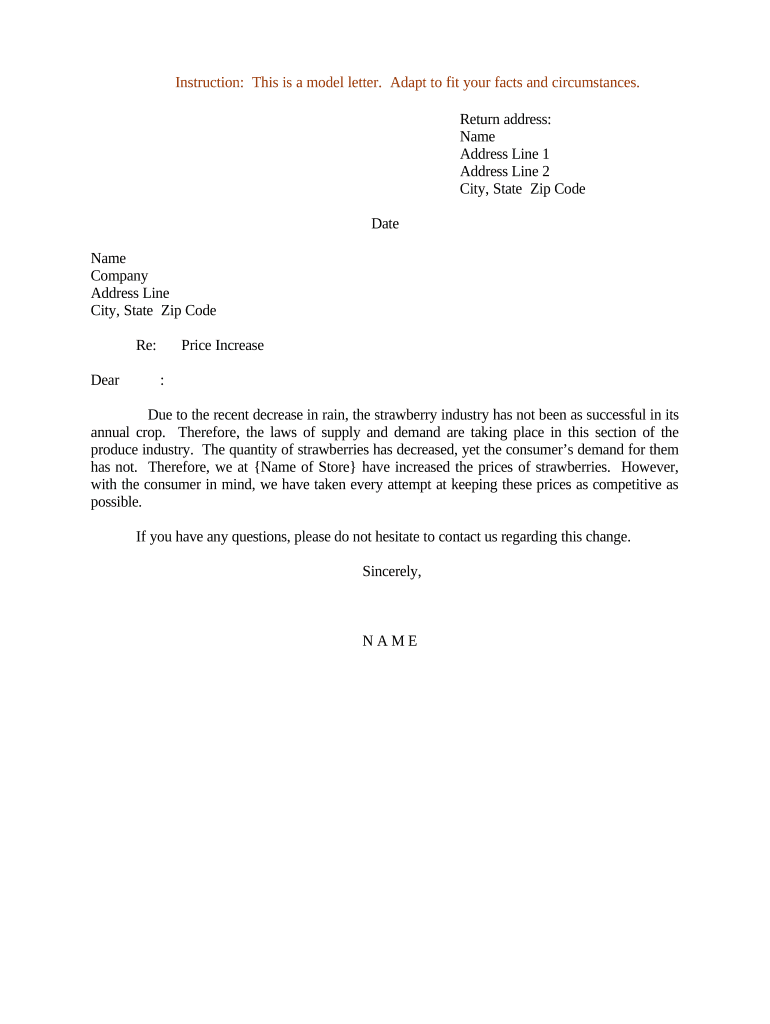







Definition and Meaning of a Price Increase Letter
A price increase letter is a formal communication sent to customers to inform them about a pending rise in prices for products or services. It serves to maintain transparency in business practices and prevents customers from being caught off guard by sudden changes. By clearly outlining the reasons for the price increase, the letter helps foster trust and keeps customer relationships intact.
Key Elements of a Price Increase Letter
- Subject Line: A clear and specific subject line indicating that the letter pertains to a price increase.
- Introduction: A polite opening that acknowledges the recipient’s value and briefly states the purpose of the letter.
- Reason for Increase: A detailed explanation of why prices are increasing, including factors like inflation, supply chain disruptions, or increased operational costs.
- New Pricing Information: Clear communication of the new prices, whether they are per unit, service rate, or subscription fee.
- Effective Date: The date when the new prices will take effect, allowing customers to make informed decisions.
- Reassurance: Optional assurance of continued quality service or product availability, along with any measures the business is implementing to mitigate impact on customers.
Important Terms Related to a Price Increase Letter
Understanding specific terms related to writing a price increase letter can enhance clarity and effectiveness when communicating with customers:
- Terminology: Terms such as "rate adjustment," "cost of goods sold," and "value proposition" may be frequently used.
- Notice Requirement: Some industries require businesses to provide advance notice of price increases, which may vary based on state laws or contractual agreements.
- Inflation: A key factor often cited when explaining price increases as it directly impacts the cost of materials and services.
Who Typically Uses a Price Increase Letter?
Various businesses and service providers may utilize price increase letters, particularly in instances where customer pricing could change due to external market factors. Common users include:
- Retail Businesses: Companies that offer consumer goods and have to adjust prices according to market trends and supply chain conditions.
- Service Providers: Entities in sectors like consulting, maintenance, and healthcare, where service costs can fluctuate based on labor and operational expenses.
- Subscription Services: Businesses that operate on a recurring billing model often need to inform subscribers of changes in subscription fees.
Steps to Complete a Price Increase Letter
Drafting a price increase letter involves several clear steps to ensure the communication is effective:
- Determine Price Changes: Assess the necessary adjustments based on cost analysis or market research.
- Draft the Letter: Write the letter, incorporating key elements as previously discussed.
- Review for Clarity: Ensure language is clear, direct, and easy for customers to understand.
- Confirm Delivery Method: Decide whether the letter will be sent via email, regular mail, or posted on the company website.
- Monitor Customer Reactions: Be prepared to respond to feedback or questions from customers after the letters are sent.
Examples of Using a Price Increase Letter
Several contexts stipulate when a price increase letter might be necessary:
- Inflationary Periods: When inflation causes an increase in the cost of raw materials, companies may issue a letter to explain the need for price adjustments.
- Market Changes: A business may notify customers of a price increase due to shifts in demand or competitive pressures.
- New Regulations: Sometimes, regulatory changes can result in higher costs; thus, businesses must communicate these adjustments transparently.
By understanding the structure, importance, and best practices associated with writing a price increase letter, companies can effectively manage customer expectations and maintain strong relationships even in the face of rising costs.




