Letter from Identity Theft Victim to Credit Issuer Regarding Known Imposter Identity Theft 2026

Get Form
identity theft personal statement example Preview on Page 1

Here's how it works

01. Edit your identity theft personal statement example online
Type text, add images, blackout confidential details, add comments, highlights and more.
02. Sign it in a few clicks
Draw your signature, type it, upload its image, or use your mobile device as a signature pad.
03. Share your form with others
Send theft statement example via email, link, or fax. You can also download it, export it or print it out.

How to use or fill out Letter from Identity Theft Victim to Credit Issuer Regarding Known Imposter Identity Theft with DocHub

Form edit decoration
9.5
Ease of Setup
DocHub User Ratings on G2
9.0
Ease of Use
DocHub User Ratings on G2
  1. Click ‘Get Form’ to open it in the editor.
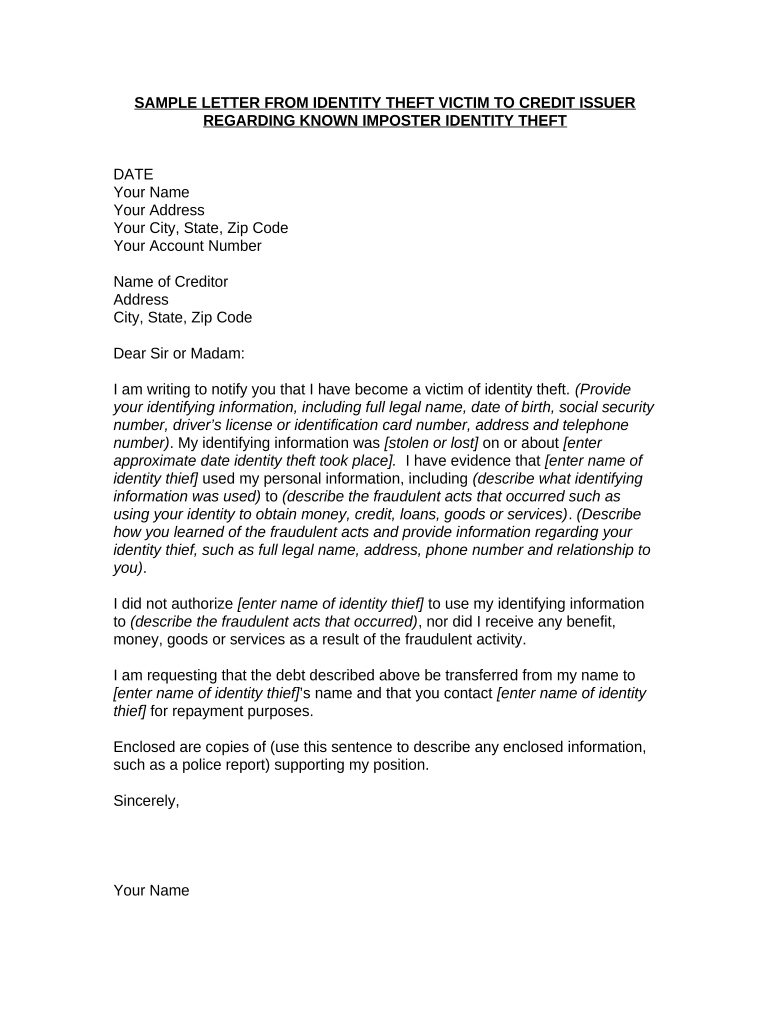
  2. Begin by entering the date at the top of the letter. This sets a formal tone and provides a reference for your communication.
  3. Fill in your name, address, city, state, zip code, and account number. Ensure accuracy as this information identifies you as the victim.
  4. Next, input the creditor's name and their address details. This directs your letter to the correct party responsible for handling your account.
  5. In the body of the letter, clearly state that you are a victim of identity theft. Provide all necessary identifying information including your full legal name, date of birth, social security number, and any other relevant details.
  6. Describe how your information was compromised and detail any fraudulent activities that occurred due to identity theft. Be specific about what identifying information was used.
  7. Request that the debt be transferred from your name to that of the identity thief. Include their name for clarity.
  8. Mention any enclosures such as police reports or evidence supporting your claim at the end of the letter.

Start using our platform today to easily fill out and manage your important documents for free!

be ready to get more

Complete this form in 5 minutes or less

Get form

Got questions?

We have answers to the most popular questions from our customers. If you can't find an answer to your question, please contact us.
Contact us
1. Financial Identity Theft. Financial identity theft is perhaps the most common type of identity theft. It involves an unauthorized person gaining access to and using another persons financial information.
Other warning signs that your personal information may have been stolen by an identity thief include: Withdrawals from your bank or other financial account that you didnt make. Unfamiliar charges appear on a credit card statement. Collections calls for debts you do not owe.
The details youll need to provide on the affidavit include: Whether any personal information in your credit report is incorrect due to identity fraud. Whether any new accounts or inquiries were listed in your credit reports due to identity fraud. Specifics about fraudulently opened accounts.
Creditors may ask you to fill out fraud affidavits. The Federal Trade Commissions ID Theft Affidavit is accepted by the credit bureaus and by most major creditors. Send copies of the completed form to creditors where the thief opened accounts in your name.
The letter requests an investigation into the disputed information under Section 623 of the Fair Credit Reporting Act (FCRA), aiming to correct errors and ensure the accuracy of the credit report. This process allows individuals to address and rectify any inaccuracies that may impact their creditworthiness.

Security and compliance

At DocHub, your data security is our priority. We follow HIPAA, SOC2, GDPR, and other standards, so you can work on your documents with confidence.

Learn more
ccpa2
pci-dss
gdpr-compliance
hipaa
soc-compliance

People also ask

The Federal Trade Commissions ID Theft Affidavit is accepted by the credit bureaus and by most major creditors. Send copies of the completed form to creditors where the thief opened accounts in your name.
What is catfishing fraud? Catfishing fraud refers to a form of identity theft that involves impersonation and deception, typically online.
Dear Sir or Madam: I am a victim of identity theft. I am writing to request that you block the following fraudulent information from my credit report: (Identify item(s) to be blocked by name of source, such as creditors or tax court, and identify type of item, such as credit account, judgment, etc.).

personal statement for ftc identity theft report