
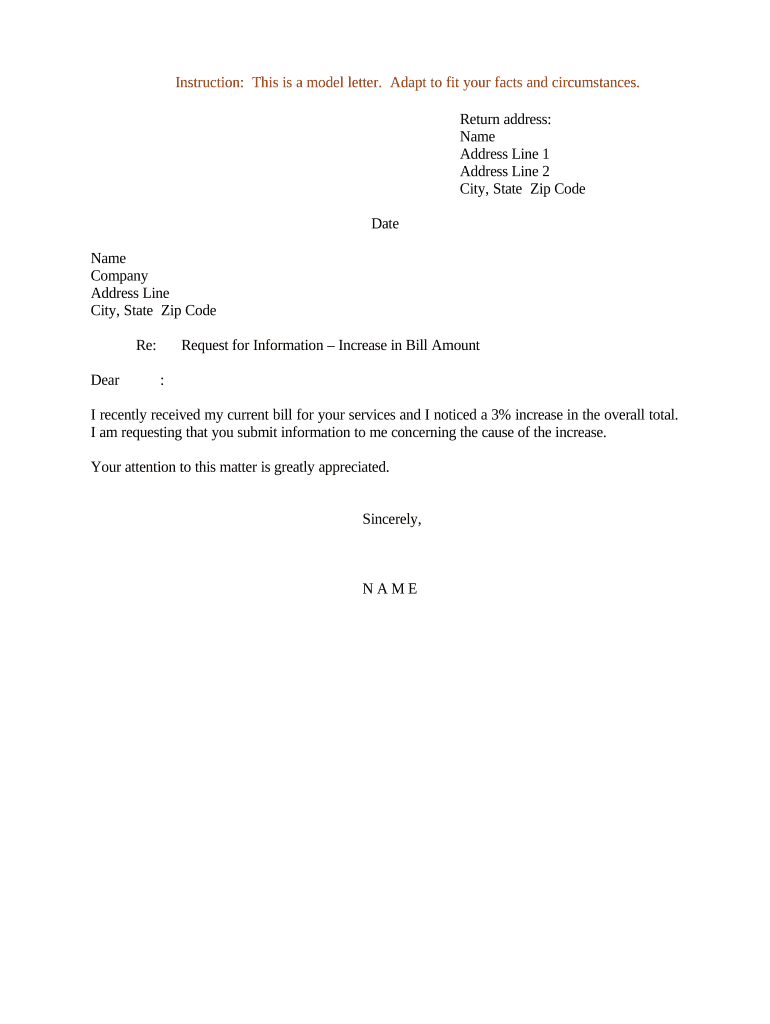







Definition and Meaning of a Letter Request Increase
A letter request increase typically refers to a formal communication soliciting a rise in some form of benefit or compensation. This may pertain to salary adjustments in an employment context, increases in service costs, or enhancements in contractual agreements. The core purpose of such a letter is to effectively communicate the rationale behind the request, ensuring that it is both professional and persuasive.
-
Salary Increase Requests: Employees often submit letters to request a salary increment due to various factors such as performance, market conditions, or changes in living costs. For example, an employee may cite increased workload and successful project completions as justifications for their request.
-
Service Charges: Individuals or organizations may draft letters to request an increase in service charges, demonstrating rising operational costs or value-added services. A company might reference inflation rates or improvements in service delivery to justify a requested raise in fees.
-
Contractual Amendments: Letters can also be used to request increases related to contracted terms, such as rent or service agreements. A landlord may draft a letter to a tenant justifying a rent increase based on property improvements or market comparisons.
Key Elements of a Letter Request Increase
Creating a successful letter request increase requires attention to several essential components that enhance its effectiveness and clarity.
-
Clear Subject Line: The subject should clearly indicate the purpose of the letter, such as "Request for Salary Increase" or "Request for Service Fee Adjustment."
-
Formal Greeting: Begin with the recipient's name and a proper salutation (e.g., "Dear [Name],") to establish professionalism.
-
Introduction Statement: Start with a brief introduction that outlines the purpose of the letter, setting the tone for the request.
-
Rationale for Request: Clearly articulate the reasons for the increase request. This section should be fact-based and may include supporting data or examples. For instance, when requesting a salary increase, an employee might reference industry benchmarks, personal achievements, and contributions to team goals.
-
Closing Statement: Summarize your request and express appreciation for the recipient's consideration. A professional closing, like "Sincerely," followed by your name, should conclude the letter.
Steps to Complete the Letter Request Increase
Drafting a letter requesting an increase requires a systematic approach to ensure clarity and professionalism.
-
Select the Right Format: Choose a professional letter format. This typically includes your contact information, the date, and the recipient's details at the top of the letter.
-
Write a Subject Line: Clearly state the purpose of your letter to grab the reader’s attention immediately.
-
Address the Recipient: Use a formal salutation, such as "Dear [Recipient’s Name],".
-
State the Purpose: In the introduction, clearly indicate that you are requesting an increase and provide essential context.
-
Present Supporting Information:
- Clearly detail your reasons for the request.
- Include relevant data, such as market comparisons, personal achievements, or documented increases in responsibilities.
-
Conclude Respectfully: Summarize your request, reiterate appreciation, and close with a courteous farewell.
-
Proofread and Edit: Review your letter for any spelling or grammatical errors to maintain professionalism.
Examples of Using a Letter Request Increase
Effective examples can provide clarity on how to formulate a letter request increase across various contexts.
Salary Increase Example
A sample letter requesting a salary increase might include:
- Subject: Request for Salary Increase
- Dear [Manager's Name],
I am writing to formally request a review of my current salary based on my increased responsibilities and positive contributions over the past year. My contributions to the [specific project or achievement] have resulted in [quantifiable outcome]. According to market research, the average salary for my role has increased by [percentage], and I believe a corresponding adjustment is warranted.
- Sincerely, [Your Name]
Service Fee Increase Example
An example letter for service fee adjustment could look like this:
- Subject: Request for Service Fee Adjustment
- Dear [Client's Name],
I hope this message finds you well. I am reaching out to discuss an upcoming change in our service fees. As we strive to maintain quality and enhance our offerings, we find it necessary to increase our service fees by [percentage]. This adjustment reflects the rising costs associated with [specific expenses or improvements].
- Thank you for your understanding. [Your Name]
Who Typically Uses a Letter Request Increase
Various professionals and sectors utilize the letter request increase based on their specific needs and contexts.
-
Employees seeking salary adjustments: Workers in various industries may submit such letters to request salary increments, especially in light of responsibilities, performance, or cost of living adjustments.
-
Clients and businesses: Organizations may send letters to request adjustments in service fees or charges in response to inflation, enhanced service quality, or changes in contract terms.
-
Contractors and freelancers: Those in contract-based roles often contact clients for adjustments reflecting additional work or market changes.
By understanding the nuances and frameworks of a letter request increase, individuals can better position their requests for favorable outcomes.




