
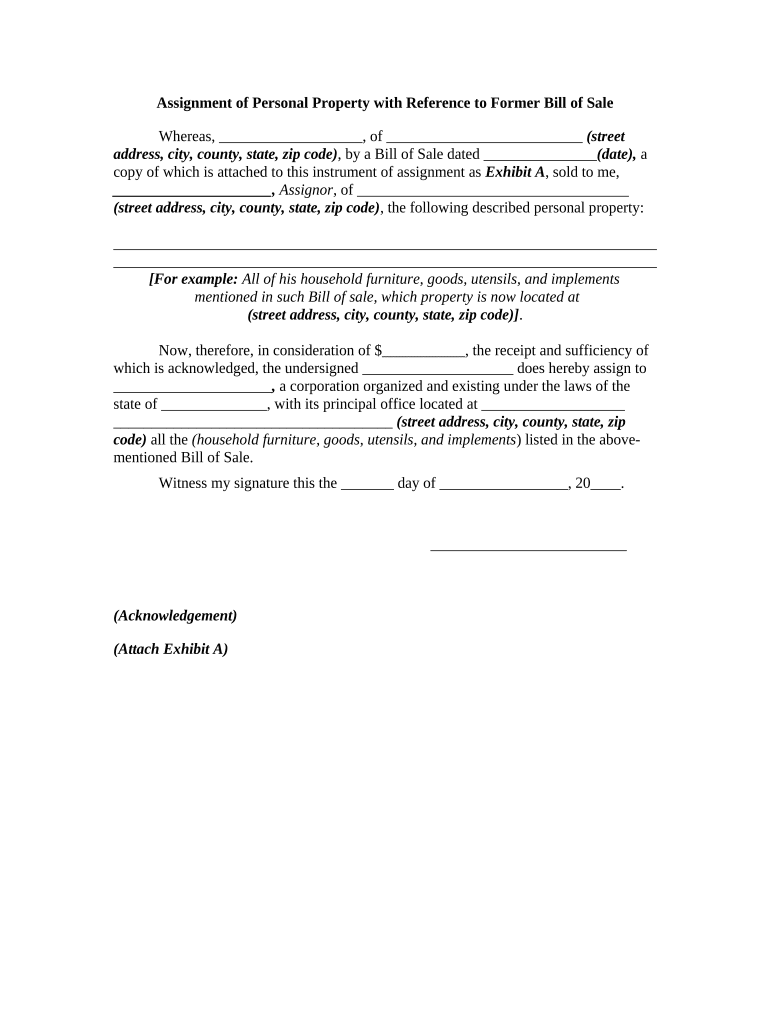







Understanding the Assignment of Personal Property Form
The assignment of personal property form is a crucial legal document that facilitates the transfer of ownership of specified items from one individual or entity to another. This form typically details the parties involved, the specific items being transferred, and acknowledges receipt of any payment associated with the transfer.
Key Components of the Form
-
Parties Involved: Clearly state the names and addresses of both the assignor (the current owner) and the assignee (the new owner). This ensures that all parties are explicitly identified in the transaction.
-
Description of Property: Include a detailed and accurate description of the personal property being assigned. This might encompass serial numbers, condition, and any distinguishing features that help identify the items.
-
Payment Details: Document the payment or compensation exchanged for the property. This section can specify whether the agreement was under any conditions, such as a sale price or other forms of compensation.
Common Uses and Applications
The assignment of personal property form serves various purposes, including:
-
Sales Transactions: Commonly used in sales transactions where items of value are sold from one individual to another, documenting the change of ownership in a legally binding manner.
-
Gifting: Often utilized when transferring ownership as a gift. The form provides clarity and legality to the act of gifting personal property.
-
Trusts and Estates: This form may be integral to transferring assets into a trust or redistributing personal property during estate settlements.
Steps for Completing the Assignment of Personal Property Form
-
Identify the Parties: Gather the full names and addresses of the assignor and assignee.
-
Detail the Property: Write a comprehensive description of each item being assigned, noting important details such as model information, condition, and identifying marks.
-
Specify Payment Terms: Clearly mention the amount paid for the transfer, if applicable.
-
Sign and Date: Both parties should sign and date the form to affirm mutual consent to the transaction.
-
Notarization: In some cases, you may want to have the form notarized to add an additional layer of authenticity.
Advantages of Using the Assignment of Personal Property Form
-
Legally Binding: The form serves as official documentation of the transfer of ownership, preventing disputes about the ownership of the property in the future.
-
Clarity: Establishing clear terms helps avoid misunderstandings between parties concerning the nature of the transaction.
-
Record Keeping: The form creates a permanent record that can be referenced for future agreements or disputes.
Considerations for State-Specific Regulations
Different states might have specific rules regarding the assignment of personal property forms, including requirements for notarization or particular language that must be used. It is essential to consult local regulations or seek legal advice to ensure compliance.
Examples and Scenarios
-
Sale of Electronics: If an individual is selling a laptop, they would need to complete the assignment of personal property form, detailing the make, model, serial number, and condition of the laptop.
-
Gift of Art: An art collector might give a painting as a gift, using the form to signify ownership transfer and specify that no payment is involved.
Conclusion - Importance of Proper Usage
Understanding and utilizing the assignment of personal property form is vital in ensuring legal ownership transfers occur smoothly and effectively. The form not only protects the rights of the assignor and assignee but also establishes a clear record that can be relied upon in the event of future disputes or confusions regarding ownership.




