



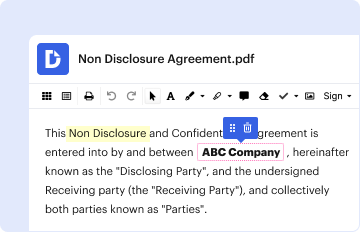
01. Edit your form online
Type text, add images, blackout confidential details, add comments, highlights and more.

Type text, add images, blackout confidential details, add comments, highlights and more.
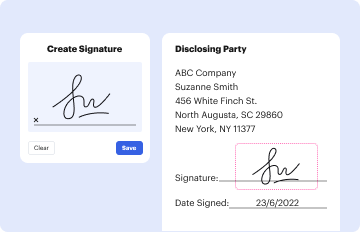
Draw your signature, type it, upload its image, or use your mobile device as a signature pad.

Send it via email, link, or fax. You can also download it, export it or print it out.
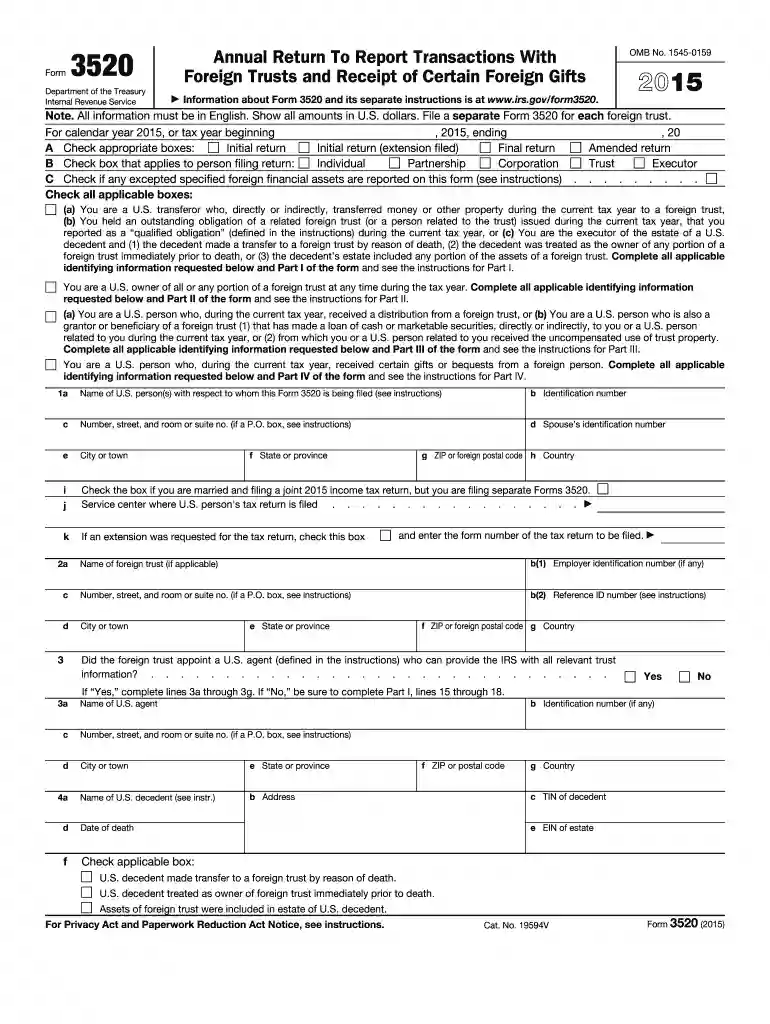
Form 3520, officially titled "Annual Return To Report Transactions With Foreign Trusts and Receipt of Certain Foreign Gifts," is a document required by the IRS. This form is necessary for U.S. persons who engage in transactions with foreign trusts or receive specified foreign gifts. It serves as a compliance tool to ensure that U.S. taxpayers disclose activities that may impact their tax obligations under U.S. law. The form requires detailed information about each related transaction, including the specifics of the trust, the value of contributions or distributions, and any gifts or bequests from foreign persons.
Understanding specific terminology is crucial when dealing with Form 3520. Key terms include:
Form 3520 contains several essential components:
Form 3520 can be acquired through several methods:
Filing Form 3520 involves several detailed steps:
The due date for Form 3520 is the same as your tax return, including any extensions. Typically, this means the form is due by April 15th. If you are unable to meet this deadline, you should file Form 4868 or Form 7004 to request an extension.
Compliance with IRS guidelines is non-negotiable:
Failure to file Form 3520 on time, or filing an incomplete form, can lead to significant penalties. These may include:
Form 3520 is commonly used by:
Form 3520 is compatible with various tax preparation software:
In each case, verify that your selected software supports Form 3520 to facilitate an accurate and efficient filing process.
We've got more versions of the form 3520 2015 form. Select the right form 3520 2015 version from the list and start editing it straight away!
| Versions | Form popularity | Fillable & printable |
|---|---|---|
| 2023 | 4.9 Satisfied (32 Votes) | |
| 2022 | 4.5 Satisfied (49 Votes) | |
| 2021 | 4.8 Satisfied (105 Votes) | |
| 2020 | 4.3 Satisfied (48 Votes) | |
| 2019 | 4.3 Satisfied (101 Votes) | |
| 2018 | 4.3 Satisfied (103 Votes) | |
| 2017 | 4.2 Satisfied (63 Votes) | |
| 2016 | 4.4 Satisfied (595 Votes) | |
| 2015 | 4.1 Satisfied (31 Votes) | |
| 2014 | 4 Satisfied (28 Votes) | |
| 2013 | 4 Satisfied (27 Votes) | |
| 2012 | 3.8 Satisfied (41 Votes) | |
| 2010 | 4 Satisfied (39 Votes) |
At DocHub, your data security is our priority. We follow HIPAA, SOC2, GDPR, and other standards, so you can work on your documents with confidence.
File a separate Form 3520 for each foreign trust. For calendar year 2015, or tax year beginning. , 2015, ending. , 20. A Check appropriate boxes:.Read more
The purchaser will provide a Michigan Sales and Use Tax. Contractor Eligibility Statement (Form 3520). See RAB. 1999-2. Qualified nonprofit organizationsRead more
by S Amin CPA 2017 The trustee of a foreign grantor trust is required to file Form 3520


