
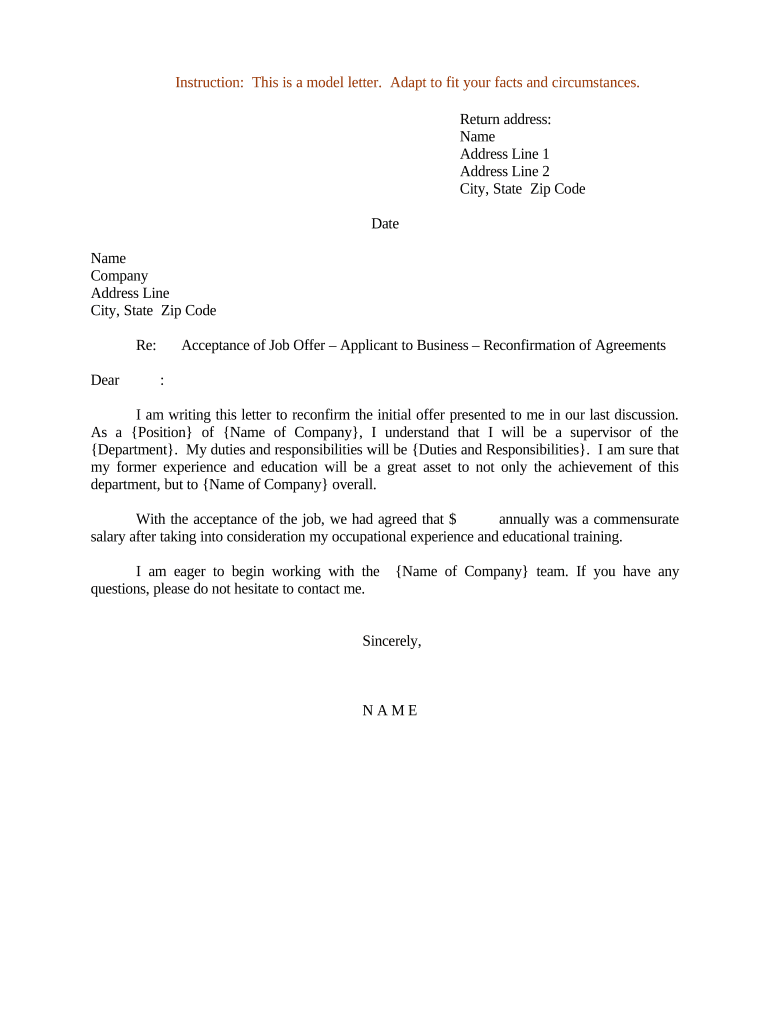







Definition & Meaning of Letter Acceptance
The term "letter acceptance" refers to a formal document in which an individual accepts a job offer or an agreement proposed by an employer or another party. This letter outlines key details such as the position accepted, salary, employment start date, and other significant conditions of employment. By providing a written confirmation of acceptance, the individual solidifies their commitment to the terms discussed and ensures mutual understanding between both parties.
In the context of job offers, a letter acceptance serves not only as a formal acknowledgment but also as a professional gesture that reflects the applicant's enthusiasm and readiness to integrate into the new work environment. It is important to clearly express appreciation for the opportunity, which sets a positive tone for future interactions with the employer.
Significance of a Letter Acceptance
- Clarification: It officially confirms the specifics of the offered position, which helps prevent misunderstandings.
- Professionalism: Submitting a formal acceptance letter demonstrates professionalism, showing that the candidate values the offer and treats it seriously.
- Record Keeping: Both parties maintain a written record that can be referred to in the future if any discrepancies arise regarding the accepted terms.
Key Elements of an Acceptance Letter
When drafting a letter acceptance, certain key elements must be included to ensure clarity and professionalism:
- Recipient Information: Start with the name of the employer or hiring manager along with their title and company information.
- Subject Line: A subject line such as "Acceptance of Job Offer" is essential to clarify the purpose of the letter.
- Expression of Gratitude: Begin with a thank you note for the offer.
- Position and Terms: Clearly state the position accepted, along with any key terms such as salary and start date.
- Request for Any Additional Steps: Mention a willingness to complete any pending documents or further requirements before starting the role.
- Closing Remarks: Conclude with a formal closing that reiterates excitement about the new position.
Example Structure
-
Header:
- Your Name
- Your Address
- Email and Phone Number
-
Date: Date of writing the letter.
-
Recipient Information: Name and title of the recipient.
-
Body:
- Thanking the employer
- Clearly stating acceptance
- Mentioning key terms
-
Closing: A professional sign-off, such as "Sincerely," followed by your name.
Steps to Complete the Letter Acceptance
Completing a letter acceptance involves a systematic approach to ensure all necessary information is provided effectively. Below are the steps required:
- Draft the Letter: Ensure to layout the essential elements such as recipient information, date, and your contact details at the top.
- Compose the Body: Open with gratitude, clearly state acceptance of the offer, and outline the key terms of the agreement.
- Review the Letter: Check for grammatical errors and ensure that all information is accurate and complete.
- Send the Letter: Submit your acceptance letter through the agreed-upon communication method, whether via email, postal mail, or an online platform if indicated by the employer.
- Follow-up: Confirm receipt with the recipient, especially if you submitted the letter via email, to ensure they have received your acceptance.
Important Considerations
- Timeliness: Send your letter acceptance promptly, ideally within a day or two after receiving the job offer.
- Formal Tone: Maintain a professional tone throughout to make a positive impression.
- Keep it Brief: While providing necessary details, avoid excessive sentiment; focus on clarity and professionalism.
Legal Use of Letter Acceptance
In the U.S., a letter acceptance can hold legal weight if it includes terms that can be enforced under contract law. By accepting an offer in writing, both the employer and the employee may be bound by the agreed-upon terms if they meet the elements of a valid contract: offer, acceptance, consideration, and mutual intent to create legal obligations.
Key Legal Points
- Contract Binding: An acceptance letter may signify the formation of a contract, dependent on the acceptance of consideration, such as salary or benefits.
- Proof of Agreement: Should disputes arise, the letter serves as evidence of the agreed-upon terms, thereby protecting the rights of both parties.
- Modification of Terms: Any modifications to the agreement after the acceptance is generally recommended to be documented formally to avoid confusion.
Who Typically Uses Letter Acceptance?
Typically, individuals entering into employment relationships, whether as full-time employees or independent contractors, use letter acceptance. This includes:
- Recent Graduates: New entrants to the job market who have just received job offers.
- Professionals Switching Jobs: Individuals looking to transition from one role to another.
- Contractors: Freelancers or independent contractors who require written documentation for business engagements.
- Interns: Students accepting internship positions may also provide a letter acceptance.
This formal letter serves as an important part of the onboarding process, reinforcing the applicant's intention to join the organization and supporting administrative procedures relating to hiring and human resources.
Examples of Using Letter Acceptance in Practice
Understanding real-world applications of letter acceptance can aid individuals in crafting their letters. Here are some examples:
- Job Offer Acceptance: A candidate accepts a software developer position at a tech firm, detailing their starting salary and anticipated start date in their letter.
- Internship Acceptance: A college student confirms acceptance of an internship in a marketing firm, acknowledging the responsibilities and stipends discussed.
- Contractor Engagement: A freelance graphic designer agrees to terms presented by a client, including project timelines and payment terms, documented through a letter acceptance.
These examples underscore the significance of clearly articulated, formal communications in professional settings, fostering a relationship based on trust and clarity.




