




01. Edit your financial planning fact finder template online
Type text, add images, blackout confidential details, add comments, highlights and more.

Type text, add images, blackout confidential details, add comments, highlights and more.

Draw your signature, type it, upload its image, or use your mobile device as a signature pad.

Send fact find template via email, link, or fax. You can also download it, export it or print it out.
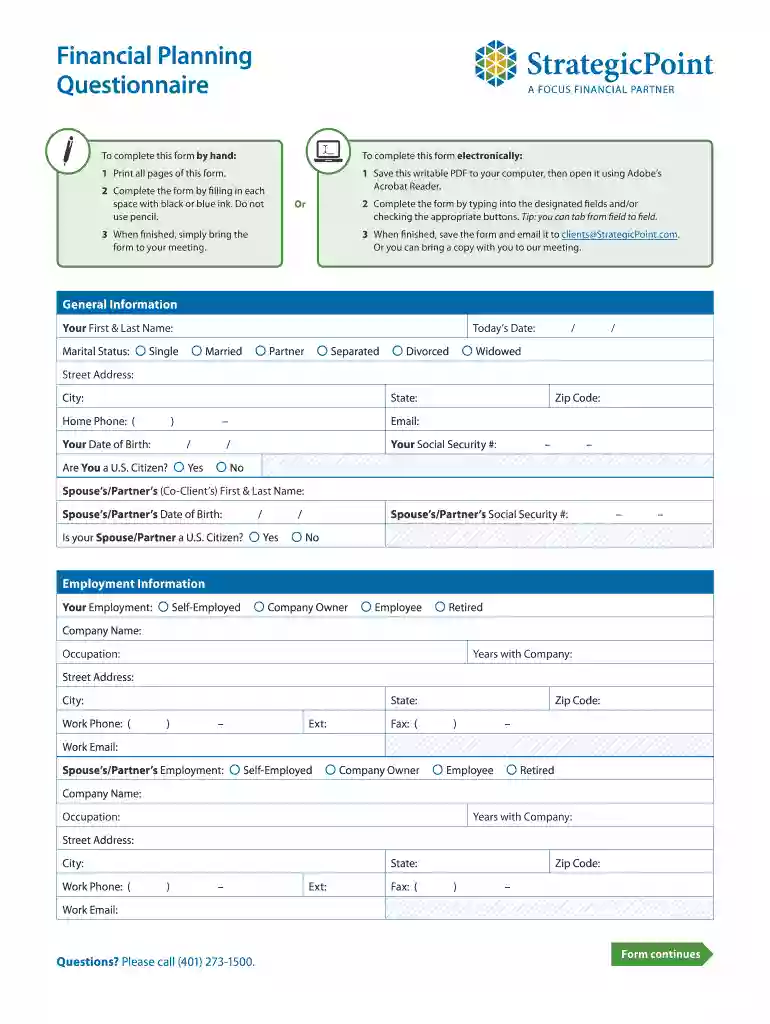
The financial planning fact finder template serves as a crucial tool for financial advisors. It is designed to gather comprehensive information from clients, allowing for tailored financial planning strategies. This template usually includes key sections that focus on the client’s personal and financial details, which play a significant role in formulating effective financial strategies.
The main body of a financial planning fact finder typically includes several sections aimed at collecting various types of client data:
Personal Information: This section covers essential details about the client such as name, address, date of birth, and marital status. These factors are critical for identifying the client’s immediate family needs and goals.
Employment Details: Advisors need to understand the client’s job status, income sources, and employer benefits. This can include salary, bonuses, or self-employment income, allowing the advisor to assess total income potential.
Asset Overview: This consists of a detailed list of all significant assets owned by the client, including bank accounts, investment portfolios, real estate, and retirement accounts. Providing a clear view of assets is vital for analyzing the overall financial health of the client.
Liabilities and Debt: Understanding what liabilities the client currently holds, such as mortgages, car loans, and credit card debts, is crucial for a holistic view of their financial situation. This insight helps advisers advise clients on debt management and improved financial stability.
Insurance Coverage: This section reviews existing insurance policies, including life, health, property, and retirement plans. Advisors can identify coverage gaps and make recommendations for additional protection or adjustments.
Utilization of the financial planning fact finder template follows a structured process that ensures that all pertinent information is captured efficiently.
Gather Client Information: Begin by scheduling a meeting with the client to discuss their financial needs. Use the template as a guide to collect all necessary information.
Complete the Form: As the meeting progresses, fill out the template, ensuring that both the advisor and client review each section thoroughly.
Analyze the Data: After completing the fact finder, the advisor should analyze the gathered data. This analysis will inform the development of a personalized financial plan that considers the client’s goals and challenges.
Employing the financial planning fact finder template provides significant advantages for both clients and advisors:
Comprehensive Understanding: The template enables the advisor to gain insights into the client’s entire financial situation rather than just isolated aspects.
Customization of Financial Plans: With accurate and complete information, advisors can tailor strategies that align closely with the client’s individual goals and risk tolerance.
Streamlined Communication: Using a structured format fosters open conversations between advisors and clients, making the information-gathering process less daunting and more efficient.
Financial advisors may encounter variations of the fact finder template tailored to specific needs, such as:
Retirement Planning Fact Finder: Focuses specifically on information pertinent to retirement savings, future income needs, and existing retirement plan structures.
Business Fact Finder: Designed for business owners, this version collects vital data regarding business operations, revenue, expenses, and strategic goals.
Client Fact Find Template: A more generalized form that may combine elements from both personal and business-focused inquiries to provide a wider perspective on the client’s overall financial situation.
The financial planning fact finder template is an indispensable resource for financial advisors. It not only enhances the accuracy of the information collected but also ensures that clients receive well-rounded, effective financial strategies tailored to their unique circumstances.
At DocHub, your data security is our priority. We follow HIPAA, SOC2, GDPR, and other standards, so you can work on your documents with confidence.


