
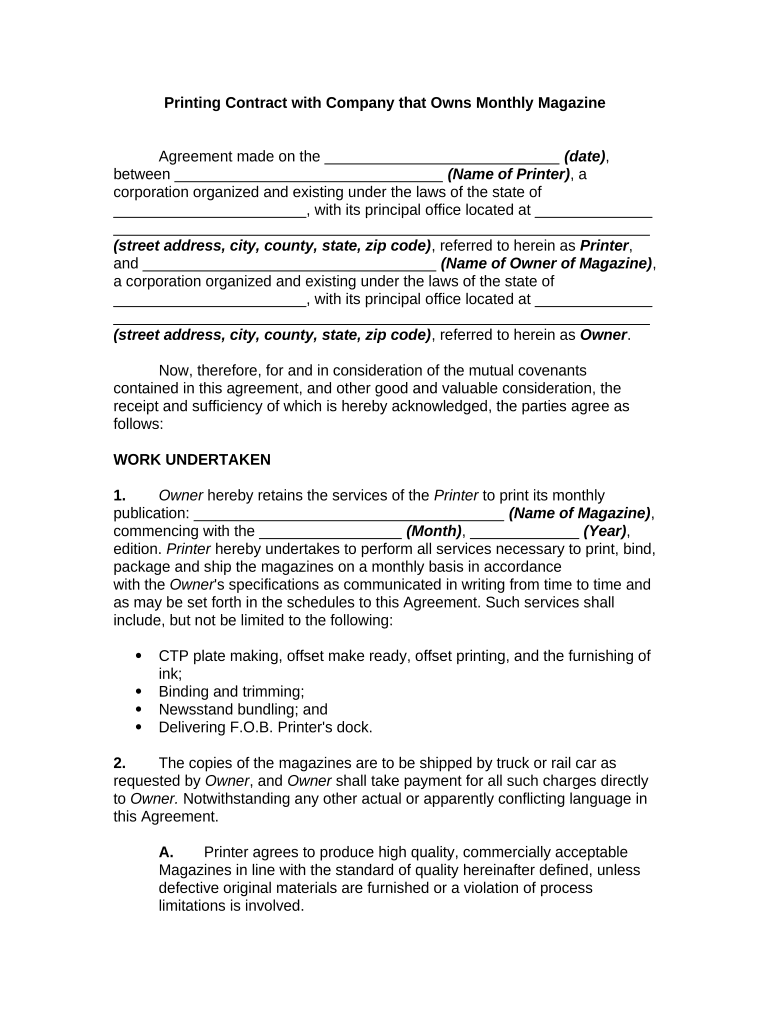







Definition & Meaning of a Printing Contract
A printing contract is a legally binding agreement between a client and a printing service provider. This document outlines all responsibilities and expectations associated with the printing project. It typically includes details on the specific services provided, quality standards, timelines, and payment agreements.
Key Components
- Scope of Work: Defines the details of the printing project, including the types of printed materials (e.g., brochures, magazines).
- Quality Standards: Specifies the quality expectations for printed products to ensure satisfaction.
- Timeline: Outlines the deadlines for different stages of the printing project, from initial designs to final delivery.
- Payment Terms: Clearly states the cost of services, payment methods, and schedules.
Importance in Business
Establishing a printing contract reduces misunderstandings and protects both parties legally. It serves as a reference point for disputes and clarifies the responsibilities of each party.
How to Use the Printing Contract
Utilizing a printing contract effectively involves several steps, ensuring both clarity and legality in the contractual agreement.
- Select a Template: Begin with a reliable printer service agreement template that suits your project needs.
- Define the Project Scope: Clearly outline the details of your printing project, including sizes, quantities, materials, and types of printing.
- Review Legal Requirements: Ensure that the contract complies with relevant laws and regulations in your jurisdiction, especially regarding liability and quality standards.
- Detail Payment Terms: Specify the total cost, payment methods, due dates, and any penalties for late payments.
Best Practices
- Always have both parties review the contract before signing.
- Consider legality by having a lawyer review the contract in case of complex terms or large-scale projects.
- Maintain clear communication throughout the contract period to ensure all parties are aligned.
Important Terms Related to Printing Contracts
Understanding the terminology associated with printing contracts is essential for both parties involved to avoid confusion.
- Proofing: A process where the client reviews a preliminary version of the printed material to ensure it meets specifications.
- Editorial Responsibility: The liability for content accuracy and rights related to the materials produced.
- Delivery Terms: Provisions that specify how and when the final products will be delivered, including shipping arrangements and costs.
- Force Majeure: Clauses that relieve parties from liability in the event of unforeseen circumstances that prevent contract fulfillment.
Why These Terms Matter
These terms create a foundation for clear expectations and responsibilities, significantly lowering the risk of disputes and dissatisfaction.
Key Elements of the Printing Contract
Several key elements should be included in every printing contract to ensure its effectiveness.
- Identification of Parties: Clearly identify the client and printing service provider, including contact information.
- Detailed Project Description: A comprehensive description of the print job that includes design elements and specifications.
- Confidentiality Clause: Protects sensitive information related to the client’s branding and intellectual property.
- Amendment Clause: Allows for modifications to the contract with mutual consent, providing flexibility as needed.
Examples of Effective Use
In practice, a well-drafted contract might prevent disputes over project scope by detailing every aspect of the job. For example, if a magazine publisher hires a printer to produce a monthly issue, the contract should specify the number of copies, paper quality, and any special treatments such as binding options.
State-Specific Rules for the Printing Contract
Understanding state-specific regulations related to printing contracts is essential for compliance and legal protection.
Variations Across States
- Liability Limitations: Different states may have varying laws regarding liability limits for printing services.
- Business Licensing: Some states require specific licenses for printing businesses, affecting compliance in contracts.
- Dispute Resolution: Regulations governing arbitration and mediation processes can differ, impacting how disputes are resolved.
Examples of Regulations
In California, for instance, the law might require greater transparency in terms of fees and quality standards, while states like Texas may have more lenient rules regarding liability and dispute resolution.
Who Typically Uses the Printing Contract?
Printing contracts are essential for various parties engaged in print media, ensuring clarity and agreement on project parameters.
- Publishing Companies: Regularly utilize contracts for monthly magazines or book printing.
- Corporate Entities: Often require printing services for promotional materials like brochures and business cards.
- Event Organizers: Use contracts for printing event-related materials, such as tickets and programs.
- Nonprofits: Frequently engage printers for informational brochures and outreach materials.


Benefits to Users
A well-structured printing contract helps these organizations manage their printing resources effectively while securing fair treatment and clear communication from printing services.




