






Understanding the Acknowledgement Receipt Bid
The acknowledgement receipt bid serves as a formal confirmation between parties involved in a bidding process. This document signifies that one party has received a bid from another, typically for services or products. It represents acceptance of the submission and often initiates the next steps in a contractual relationship. The acknowledgement receipt bid is key in maintaining clear communication and establishing a professional record of the bidding process.
Importance of Acknowledgement Receipt Bid
A well-documented acknowledgement receipt bid contributes to enhanced clarity during transactions and helps to prevent disputes regarding the receipt of bids. It underscores the professional nature of the engagement and ensures that both parties have a shared understanding of expectations. Furthermore, it can serve as evidence if any disagreements arise later about the submission or evaluation of the bid.
Key Elements of an Acknowledgement Receipt Bid
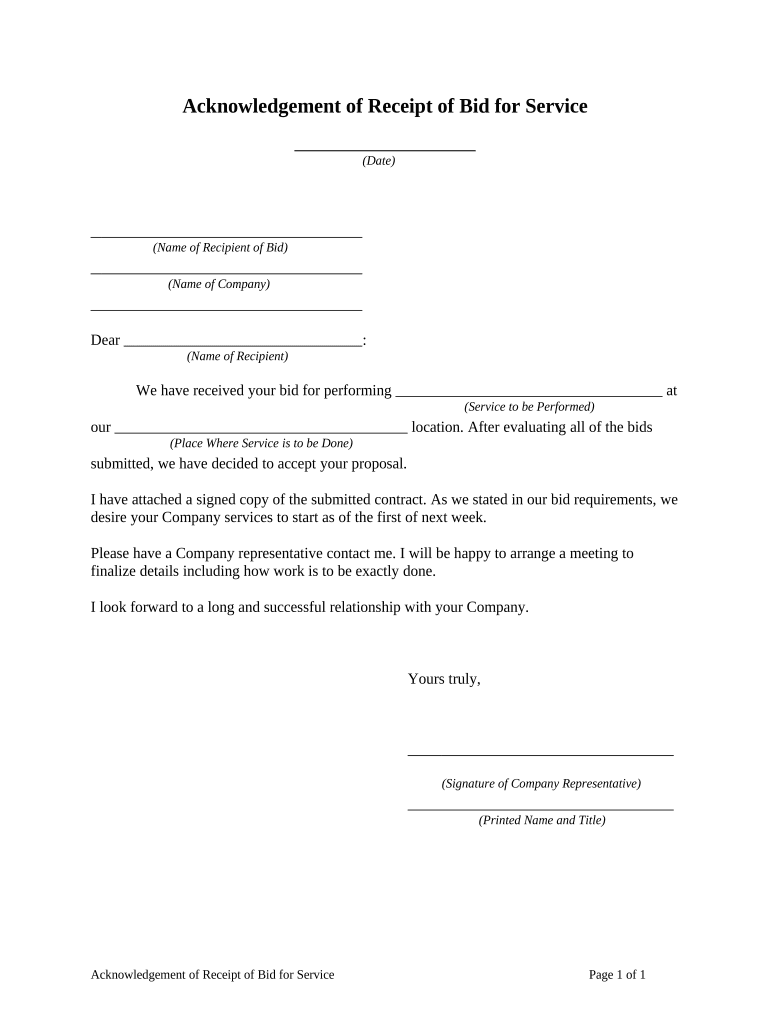
An effective acknowledgement receipt bid should include crucial components that provide clarity and context. Essential elements include:
- Date of Receipt: Documenting the date helps establish a timeline for the bidding process.
- Bidder's Information: Including the name, address, and contact details of the party submitting the bid.
- Description of Services or Goods: Providing details about the services or products being proposed enables better understanding and evaluation.
- Reference Number: If applicable, including a reference or bid number helps with organization and tracking.
- Signature Line: A space for signatures validates the document and confirms agreement between parties.
These elements aid in making the acknowledgement receipt bid comprehensive and legally sound.
How to Use the Acknowledgement Receipt Bid
When utilizing the acknowledgement receipt bid, follow these steps to ensure clarity and compliance:
- Preparation of Document: Use a standardized template or create a custom document that includes all necessary elements outlined above.
- Submission of Bid: The bidding party submits their bid in a manner consistent with the requirements outlined in the tender request.
- Issuing the Acknowledgement Receipt: Upon receipt of the bid, the receiving party should promptly issue the acknowledgement receipt, confirming that the bid has been received as per the stated requirements.
- Documentation Retention: Both parties should retain a copy of the acknowledgement receipt bid for their records, ensuring that it can be referenced in future communications.
This systematic approach guarantees that both parties maintain a mutually agreed framework, reducing confusion and enhancing professional relationships.
Examples of Using the Acknowledgement Receipt Bid
Consider various scenarios where an acknowledgement receipt bid would be crucial:
-
Construction Projects: A construction firm submits a bid to a municipality for a public works project. The municipality acknowledges receipt of the bid, mitigates the risk of any claim that the bid was not received, and outlines the timeline for the evaluation.
-
Service Contracts: A company submits a bid to provide IT support services to a corporate client. The client issues an acknowledgement receipt bid to confirm its receipt, which solidifies the commencement of discussions regarding the move forward in the selection process.
These practical examples highlight the diverse applications of the acknowledgement receipt bid across various industries.
Benefits of Using an Acknowledgement Receipt Bid
In addition to ensuring mutual understanding, an acknowledgment receipt bid:
- Enhances Professionalism: It showcases a professional approach to the bidding process.
- Fosters Trust: It establishes a foundation of trust between the bidding parties.
- Streamlines Communication: It aids in improving overall communication by delineating expectations clearly.
Common Terminology Associated with the Acknowledgement Receipt Bid
When dealing with the acknowledgement receipt bid and related documents, some terminology may frequently appear. Understanding these terms is beneficial:
- Bid Submission: The act of presenting a proposal to a requesting party.
- Contract Award: The process of formally accepting one party’s bid to proceed with a contractual agreement.
- Tender Document: The formal request for bids issued by the project owner.
- Compliance: Adhering to the requirements outlined within the tender document.
Familiarity with these terms not only aids in clear communication but also enhances comprehension of the overall bidding process.
Legal Use of the Acknowledgement Receipt Bid
In the legal context, the acknowledgement receipt bid serves to confirm the specifics of the submission and protect both parties involved. It is important to recognize its implications under contract law, including:
- Evidence of Receipt: It provides legal evidence that a bid was received as part of a specified process.
- Documented Intent: It serves as a record of intent between the parties, facilitating enforceability if disputes arise.
Understanding the legal ramifications reinforces the importance of proper use of the acknowledgement receipt bid in formal engagements.
Digital vs. Paper Version of Acknowledgement Receipt Bid
The advancement of digital documentation has transformed how acknowledgment receipt bids are managed. Considerations include:
- Digital Format: Offers quicker transmission, easy access, and streamlined workflows, especially when integrated with platforms that support e-signatures.
- Paper Version: May be required in specific situations or industries where physical documentation is mandated, allowing for physical signatures and stamped verification.
Each format provides distinct advantages, thus the choice may depend on the specific requirements of the bidding process, the parties involved, and any regulatory obligations.