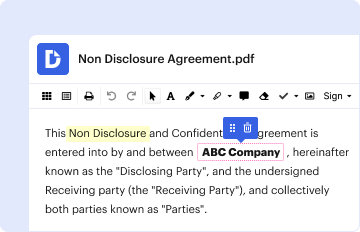
Type text, add images, blackout confidential details, add comments, highlights and more.
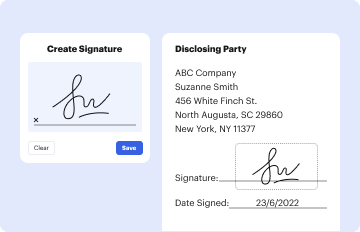
02. Sign it in a few clicks
Draw your signature, type it, upload its image, or use your mobile device as a signature pad.
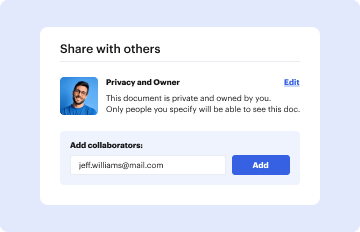
03. Share your form with others
Send it via email, link, or fax. You can also download it, export it or print it out.
How to Use or Fill Out Invoice Blanks with Our Platform
Ease of Setup
DocHub User Ratings on G2
Ease of Use
DocHub User Ratings on G2
Click ‘Get Form’ to open the invoice in the editor.
Begin by entering your company’s name, logo, and slogan at the top of the invoice. This personalizes your document and establishes your brand identity.
Fill in your company’s address details including street address, city, state, zip code, phone number, fax number, and email address. Accurate contact information is crucial for effective communication.
Enter the date of the invoice and a unique invoice number for tracking purposes. This helps both you and your client keep records organized.
In the 'For' section, provide a brief description of the services rendered along with any charges associated with them. Be clear and concise to avoid confusion.
Complete the 'Bill To' section with the client's company name, contact person’s name and title, as well as their address details.
List each service provided along with its corresponding amount in the designated fields. Ensure that all amounts are accurate to reflect what is owed.
Calculate and enter the total amount due at the bottom of the invoice. This should be a sum of all listed services.
Specify payment instructions including who checks should be made payable to and any late charge terms if applicable.
Start using our platform today to streamline your invoicing process for free!
A dummy invoice refers to a fictitious or fabricated invoice that is not based on an actual transaction or represents a false or misleading transaction. It can also be termed as a sham invoice, mock invoice, invoice, or false invoice.
What is meant by void invoice?
A void invoice is a corrective measure that keeps an invoice as part of the accounting or financial record, however, its impact is actually null or zero on the accounting records and financial reporting.
How to fill out a blank invoice?
What to include when you fill out an invoice. The name and contact information of the vendor and customer. An invoice number for payment tracking. The transaction and invoice dates. The payment due date. A list of sold products or services with prices. Any pre-payments or discounts.
What is a blank invoice?
A blank invoice is a document template used by businesses to bill clients for goods or services rendered. It includes all the necessary fields for entering transaction details but is otherwise empty, allowing you to customize it for each specific transaction.
Vertex42.com provides over 300 professionally designed spreadsheet templates for business, home, and education - most of which are free to download. invoices,
Jul 12, 2019 Checks invoices be paid unless approved by an authorized signer blank checks (checks without a date or payee designated) be signed in advanceRead more
Cookie consent notice
This site uses cookies to enhance site navigation and personalize your experience.
By using this site you agree to our use of cookies as described in our Privacy Notice.
You can modify your selections by visiting our Cookie and Advertising Notice.