
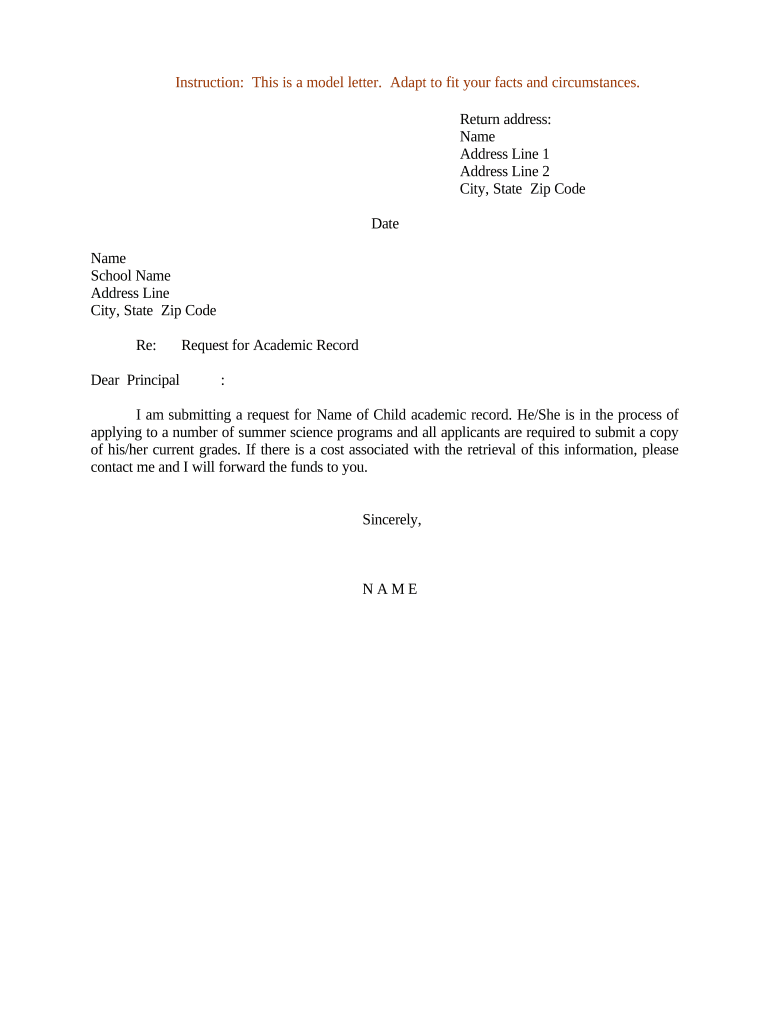







Definition and Purpose of a Sample Letter Request Record
A sample letter request record serves as a template to formally request documentation and information related to academic, medical, or legal records. These requests are commonly directed toward educational institutions, healthcare facilities, and other organizations that maintain pertinent records. The primary aim of such a letter is to facilitate the retrieval of necessary information while ensuring compliance with applicable privacy laws.
Understanding the structure and components of a letter requesting records is essential for effective communication. A well-crafted request can expedite the process and minimize the potential for misunderstanding. It is crucial to ensure that all relevant details, such as the recipient’s information, the purpose of the request, and specific records sought, are clearly articulated.
Key Elements of a Sample Letter Request Record
- Sender's Information: Include your full name, address, and contact information at the top of the letter.
- Recipient's Information: Clearly state the name, title, and organization of the person you are addressing.
- Subject Line: A succinct subject line that indicates the reason for the request can enhance clarity.
- Formal Greeting: A polite opening, such as "Dear [Recipient's Name]," sets the tone for the request.
- Purpose Statement: Briefly explain why you are requesting the records and what specific documents you are seeking.
- Legal and Ethical Compliance: Mention relevant laws or regulations that empower the request, such as FERPA for educational records or HIPAA for medical records.
- Deadline for Response: Politely request a timeframe for when you would like to receive the documentation.
- Closing Statement: Conclude with a courteous closing, expressing appreciation for the recipient's assistance.
- Signature: End with your signature for authenticity.
How to Use a Sample Letter Request Record
Utilizing a sample letter request record effectively involves several steps to ensure that all necessary components are included and the request is properly formatted.
-
Identify the Necessity: Determine the specific records you need and the organization that holds these documents. This could be academic transcripts, medical records, or legal documents.
-
Choose the Appropriate Template: Select a sample letter that matches your purpose. Many templates exist for different scenarios, such as requesting school records or medical paperwork.
-
Customize the Template: Fill in personal details such as your name, address, and the intended recipient’s information. Adapt the text to reflect your specific situation, ensuring the language is clear and concise.
-
Review and Edit: It is crucial to proofread the letter for typos, grammatical errors, and clarity. Make sure the purpose of your request is unmistakably communicated.
-
Submit the Request: Depending on the organization's requirements, submit the letter via email, postal service, or online form. Include any additional documentation that may support your request, such as identification or consent forms.
Examples of Common Use Cases
-
School Records: A parent may use a sample letter to request their child's academic records when applying to a summer program.
-
Medical History: Patients can utilize a template to obtain their medical records for continuity of care when changing healthcare providers.
-
Legal Documentation: Individuals seeking to retrieve documents for personal injury claims may write a letter to a law firm or governmental body.
Steps to Complete the Sample Letter Request Record
Completing a sample letter request record requires careful attention to detail to ensure all necessary steps are followed. This structured approach helps improve the likelihood of a successful outcome.
-
Gather Information: Before drafting the letter, compile all necessary information, including the specific records needed, the recipient's contact details, and your personal information.
-
Draft the Letter: Utilize a provided template as a framework, customizing it to fit your unique context.
-
Indicate Your Intent: Clearly state in the letter why the records are needed and how they will be used. This transparency can help in processing the request.
-
Include Identification: Attach any necessary identification or proof of eligibility. This might include photo ID or documentation establishing your relationship to the records being requested.
-
Send the Letter: Choose a delivery method that ensures the recipient receives the request promptly and securely.
Important Considerations
- Timeliness: Allow sufficient time for the organization to process the request.
- Follow-up: If a response is not received by the designated timeframe, consider sending a polite follow-up inquiry.
Legal Use of the Sample Letter Request Record
When employing a sample letter request record, it is essential to adhere to legal requirements surrounding privacy and data protection. In the United States, specific laws govern the dissemination and retrieval of records.
-
FERPA: For educational institutions, the Family Educational Rights and Privacy Act grants parents and eligible students the right to access educational records.
-
HIPAA: The Health Insurance Portability and Accountability Act protects personal health information and provides individuals the right to request their medical records.
-
State Laws: Various states may have additional regulations regarding access to personal records, so it's critical to be informed about local legislation.
Compliance with these laws is not merely good practice; it is often a legal requirement. Failing to comply can result in denials, delays, or even legal repercussions. Additionally, clearly stating the applicable laws supporting your request in your letter can lend weight and urgency to the communication.
Who Typically Uses the Sample Letter Request Record
A wide array of individuals and organizations frequently request records using a sample letter. Understanding the typical users can provide context for the letter's purpose and structure.
-
Parents or Guardians: Often request academic records for their children, particularly during transitions to new schools or programs.
-
Students: May seek their own transcripts for college applications, scholarship requests, or employment opportunities.
-
Patients: Individuals often write letters to obtain their medical records for personal management of health or changes in healthcare providers.
-
Legal Representatives: Attorneys frequently draft such letters to obtain pertinent records relevant to their cases.
-
Researchers: Academic or clinical researchers might request data or access to records as part of their studies, ensuring to follow ethical guidelines.
Understanding the audience enhances the effectiveness of communication, allowing the requestor to tailor their message appropriately.


Examples of Using the Sample Letter Request Record
Exploring practical examples can provide insight into how to craft a detailed and effective letter. Here are several scenarios demonstrating how the structure can be adapted for different needs.
-
Requesting Academic Records for Admission: A parent writes to a school's registrar requesting their child's transcripts for a summer science camp application, specifying the camp's requirements and the importance of timely receipt.
-
Retrieving Medical Records for Treatment: A patient may request copies of their medical history to share with a new healthcare provider, detailing applicable treatments and medications for continuity.
-
Accessing Legal Documents for Estate Planning: An individual may need to collect documents related to a deceased relative’s estate by writing to a court or law office, articulating their relationship and need to access specified records.
These examples highlight the versatility of a sample letter request record, demonstrating its application across diverse contexts and needs.




