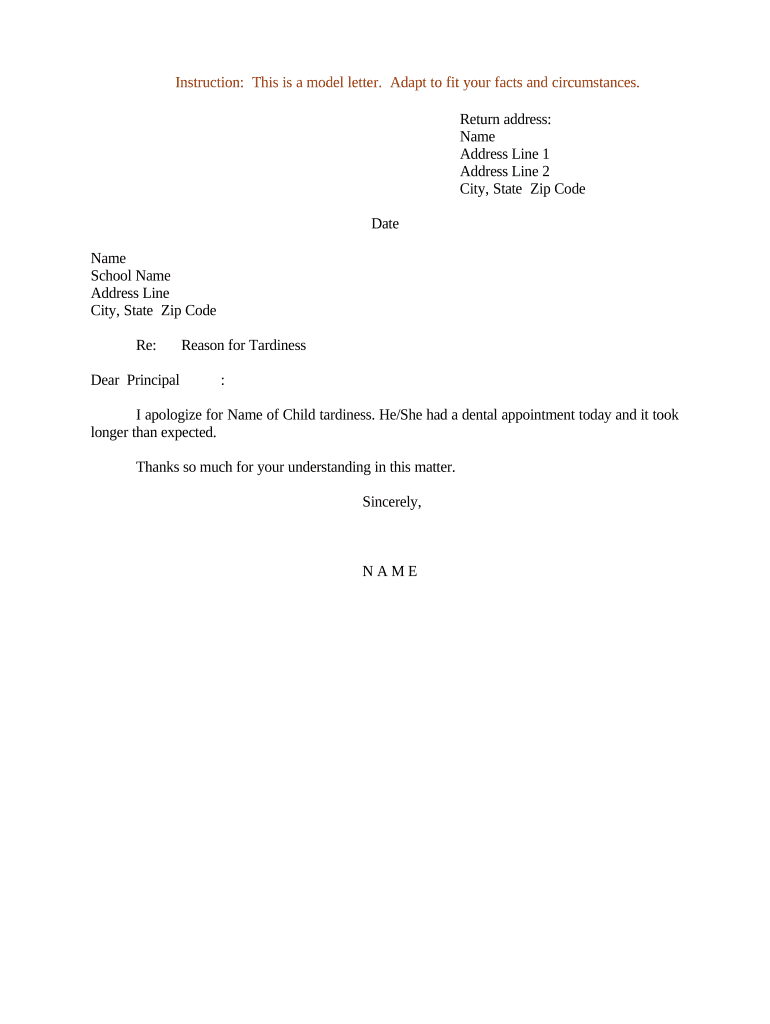







Definition & Meaning of the Sample Letter for Reason for Tardiness
A sample letter for reason for tardiness serves as a template that individuals can use to formally explain their late arrival to a school, workplace, or other institution. This letter allows for clear communication regarding the circumstances that led to the tardiness, often expressing regret and seeking understanding from the recipient. The letter typically includes key elements, such as the date, the sender's information, the recipient's information, and a detailed explanation of the tardiness incident.
Purpose of the Letter
- Provides a formal written explanation to authorities, such as teachers or supervisors.
- Aids in maintaining good relationships by communicating responsibility and respect for the recipient’s expectations.
- Used to mitigate any penalties or disciplinary actions that may arise from the tardiness, showcasing the individual's willingness to communicate openly.
Key Elements of the Sample Letter for Reason for Tardiness
A well-structured letter explaining tardiness should include several essential components to ensure clarity and professionalism. These key elements are crucial for effective communication.
- Subject Line: A concise subject identifying the purpose, such as "Explanation for Tardiness."
- Recipient Information: Include the addressee's name, title, and address, making sure to address them appropriately.
- Sender Information: Clearly state your name, contact information, and date at the top of the letter to establish the context of communication.
- Greeting: Use a respectful salutation, such as "Dear [Recipient's Name]," to personalize the message.
- Body: This section should detail the reason for tardiness, including specific circumstances, such as:
- Transportation delays
- Medical appointments
- Family emergencies
- Apology: Acknowledge the inconvenience caused by being late, expressing sincerity in your regret.
- Closing Remarks: Conclude with an expression of appreciation for the recipient’s understanding and a willingness to prevent future occurrences.
- Signature: Include a professional sign-off and your signature (if sending a physical copy) to finalize the communication.
Steps to Complete the Sample Letter for Reason for Tardiness
Completing a letter for tardiness involves several steps to ensure that it is thorough and effective. Following these steps can guide the writer in creating a clear and empathetic explanation.
- Choose a Format: Select whether the letter will be printed or sent via email, as the format may affect layout and presentation.
- Gather Information: Collect all necessary details regarding the tardiness, including the date, reasons, and any supporting documents (e.g., notes from a doctor).
- Draft the Letter:
- Start with the sender and recipient information, followed by the date.
- Write a compelling and concise subject line.
- Open with a polite greeting, followed by the explanation.
- Be Specific: Clearly state the reasons for the tardiness with relevant details while keeping responses professional and concise.
- Review the Letter: Check spelling, grammar, and overall tone to ensure the message is respectful and sincere.
- Send the Letter: Deliver it through the chosen medium, ensuring it is done promptly to convey the message in a timely manner.
Examples of Using the Sample Letter for Reason for Tardiness
Utilizing specific examples can illustrate how to effectively convey a reason for tardiness in different scenarios. Here are a few instances:
-
Tardiness Due to Medical Appointments: "Dear Principal [Name], I am writing to explain my child's late arrival on [date]. We had a dental appointment that unfortunately ran longer than expected. We appreciate your understanding regarding this matter."
-
Tardiness Due to Transportation Issues: "Dear [Supervisor's Name], I apologize for being late to work on [date]. There was an unexpected subway delay that caused my tardiness. I assure you that I will plan for alternative transportation in the future."
-
Tardiness Due to Family Emergencies: "Dear [Recipient's Name], I am writing to inform you of my late arrival on [date] due to a family emergency. I appreciate your support and understanding during this difficult time."
These examples demonstrate how to maintain professionalism while addressing the reason for tardiness succinctly and respectfully.
Legal Use of the Sample Letter for Reason for Tardiness
Understanding the legal context of a tardiness explanation letter is essential, particularly in workplaces or educational settings. This letter serves as documentation that can be referenced in potential disciplinary actions or performance evaluations.
- Formal Record: A letter can act as an official record of communication, providing accountability for the individual’s actions.
- Protection Against Disciplinary Actions: Providing a reasonable explanation may potentially protect against penalties that might arise from habitual tardiness.
- Jurisdictional Considerations: Legal implications may vary by state or institution policies; thus, being aware of the specific guidelines is important for compliance.
Who Typically Uses the Sample Letter for Reason for Tardiness
The sample letter for a reason for tardiness is primarily utilized by individuals in various situations. Understanding who typically uses this letter can provide insights into its practical applications.
- Students: Students often write these letters to their teachers or school administrators to explain delays in arriving at school.
- Employees: Workers may submit a tardiness explanation letter to supervisors or HR departments when running late to work.
- Parents: Parents can write on behalf of their children when addressing school officials about tardiness due to appointments or transportation issues.
- Individuals with Special Circumstances: Those facing unique challenges, such as sudden illness or family crises, may also find this letter useful for providing context for their tardiness.
By understanding the diverse scenarios in which the letter is applicable, users can navigate its use more effectively in their respective contexts.