
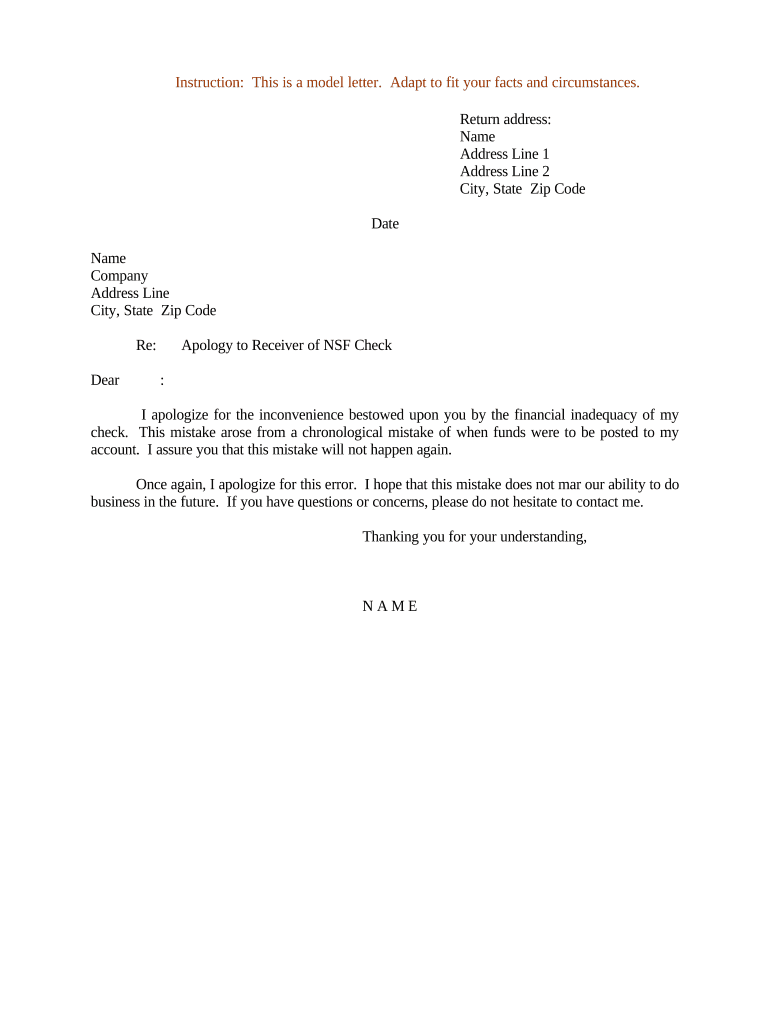







Definition & Meaning of Letter NSF Check
A letter NSF check, or Non-Sufficient Funds check letter, is a formal communication sent by a check issuer to inform a payee that their deposited check has bounced due to insufficient funds in the checking account. This situation typically arises when the account holder does not have enough money to cover the amount written on the check. The letter serves to explain the issue, express regret, and often includes an invitation for the payee to discuss or resolve any potential inconveniences caused by the bounced check.
In the context of U.S. banking and commerce, the letter NSF check helps maintain transparent communication between parties involved in a transaction. It plays a crucial role in professional and personal relationships, as it ensures that the payee is aware of the situation and understands that the issuer is taking responsibility for the error.
How to Use the Letter NSF Check Effectively
The letter NSF check can be used in various scenarios, particularly in business transactions, personal loans, or tenancy agreements. Here are some effective ways to utilize the letter:
-
Communicate Clearly: The letter should clearly state that the check was returned due to insufficient funds. Include essential details like the check number, date, amount, and the reason for the NSF status.
-
Address the Impact: Acknowledge any inconvenience caused to the payee. This may include delays in payments, additional fees incurred, or any effect on the recipient’s operations or financial planning.
-
Provide Solutions: Offer to rectify the situation, whether by providing an alternative payment method, sending a replacement check, or covering any fees the payee might have incurred due to the NSF check.
-
Encourage Dialogue: Encourage the recipient to reach out with any questions or concerns. This can help maintain a positive relationship post-incident and promotes open communication.
Steps to Complete the Letter NSF Check
When drafting a letter NSF check, follow these structured steps to ensure clarity and professionalism:
-
Header Information:
- Include your name, address, and contact information.
- Add the date of writing.
- Specify the recipient's name and address.
-
Greeting:
- Use a formal salutary phrase like “Dear [Recipient’s Name],".
-
State the Purpose:
- Clearly state that this letter is regarding a bounced check. Reference the check number and amount.
-
Explain the Situation:
- Briefly explain that the check was returned due to insufficient funds and acknowledge the inconvenience it may have caused.
-
Propose a Solution:
- Offer a solution to rectify the situation. This may be sending a new check or suggesting an alternative payment method.
-
Closing Remarks:
- Provide reassurance that such an incident will be avoided in the future and invite the recipient to contact you for any further discussion.
-
Sign Off:
- Use an appropriate closing such as “Sincerely,” followed by your signature and printed name.
Key Elements of the Letter NSF Check
A well-structured letter NSF check should incorporate several key elements to ensure it conveys the necessary information effectively:
-
Clear Subject Line: If relevant, include a subject line indicating the nature of the correspondence, such as “Notification of Returned Check”.
-
Identification of Parties: Clearly identify both the sender and the recipient by name and address.
-
Reference to the Check:
- Provide explicit details about the bounced check, including the amount, date issued, and check number.
-
Acknowledgment of Responsibility: Acknowledge the error and take responsibility for the NSF situation.
-
Proposed Resolution: Specify how you plan to resolve the issue, assuring the recipient of your intent to rectify the mistake.
-
Contact Information: Include a means of contact for any follow-up discussions or questions.
Examples of Using the Letter NSF Check
Understanding how to effectively use the letter NSF check can enhance its applicability in various circumstances. Here are a few examples:
-
Business Transactions: A retailer may need to send a letter to a supplier whose payment check was bounced, clarifying the situation and proposing an alternative payment method.
-
Personal Loans: A friend who lent money may write a letter to politely inform the borrower about their bounced check due to insufficient funds, requesting a new payment arrangement.
-
Rent Payments: A landlord may utilize the letter to notify tenants that their rent check has bounced, outlining next steps for rectification and reiterating the importance of timely payments.
In each case, adapting the language to suit the relationship between parties while maintaining professionalism is crucial. This approach fosters understanding and a willingness to resolve any issues amicably.




