




01. Edit your forwarding letter format online
Type text, add images, blackout confidential details, add comments, highlights and more.

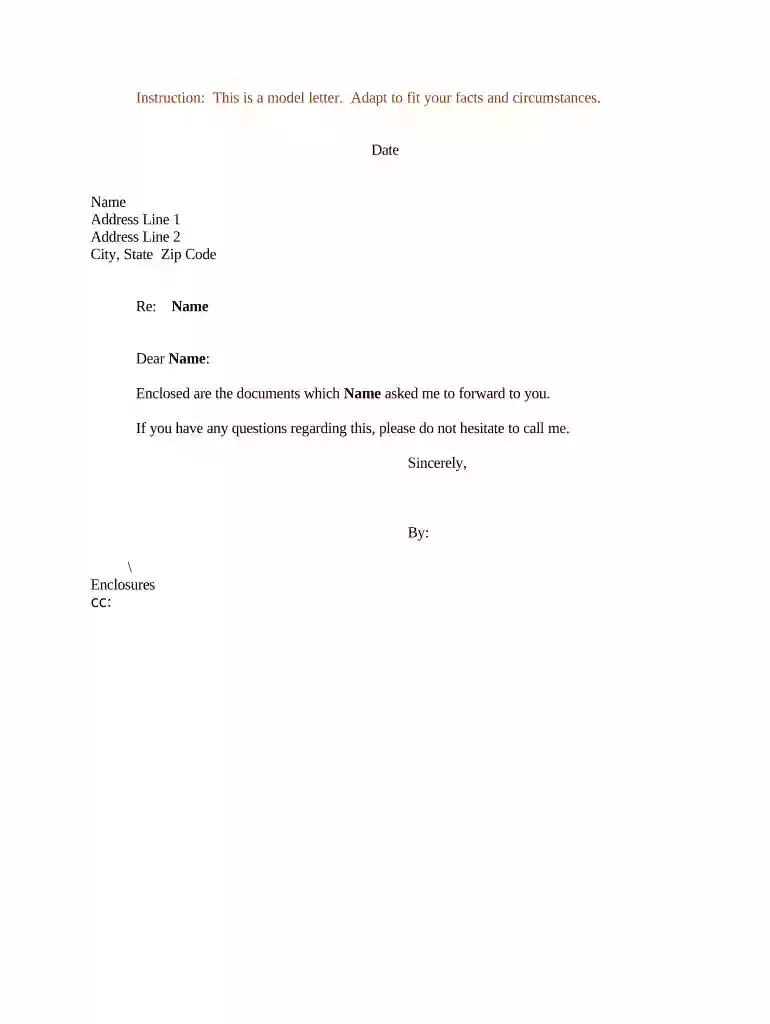
Type text, add images, blackout confidential details, add comments, highlights and more.

Draw your signature, type it, upload its image, or use your mobile device as a signature pad.

Send forwarding letter sample via email, link, or fax. You can also download it, export it or print it out.
A sample letter for forwarding of documentation serves as a template to assist individuals in sending various documents to specified recipients. It functions as a formal means of communication, ensuring clarity and professionalism, while detailing the contents being forwarded. Users benefit from this structured approach, which minimizes misunderstandings and ensures that all necessary materials are included.
Key components of this sample letter typically include:
By utilizing this letter format, individuals can maintain a professional tone and ensure that all necessary information is conveyed in an efficient manner.
Using a sample letter for forwarding documentation involves several steps, which help ensure clarity and completeness. First, identify the essential details specific to your situation. This includes understanding what documents need to be forwarded and tailoring the letter to suit the recipient’s needs.
By following these steps, the sender enhances the effectiveness of the communication, ensuring that the recipient understands the content and purpose.
Completing a sample letter for forwarding documentation involves step-by-step actions that guide you through the process. Follow these steps to ensure all necessary elements are included.
Implementing this structured approach ensures clarity, professionalism, and completeness in your communication.
Familiarizing yourself with key terms associated with the sample letter for forwarding of documentation can enhance comprehension and execution. Below are standard terms relevant to this process:
Understanding these terms improves the effectiveness of letter writing and ensures accurate communication.
Practical examples illustrate the application of the sample letter for forwarding documentation. Here are several scenarios:
Job Applications: A candidate forwarding their resume and cover letter to a potential employer. The letter can clarify the role being applied for and emphasize relevant experience.
Legal Documents: An attorney forwarding a set of legal documents to a client. The letter can explain each document's purpose and outline next steps.
Business Proposals: A business owner sending a proposal to a prospective client. The letter could introduce the proposal and highlight key benefits of the offered services.
Academic Research: A researcher forwarding findings to a colleague for review. The letter can provide context about the research and request feedback.
These examples demonstrate how to structure and adapt the sample letter for specific forwarding scenarios, aiding in clear communication.
At DocHub, your data security is our priority. We follow HIPAA, SOC2, GDPR, and other standards, so you can work on your documents with confidence.



Mar 6, 2000 Dear Mr. Lohaus: Please find enclosed the documents you requested in regard to the letter addressed to Dr. Carl.Read more
Jul 20, 2021 The document also contains guides and samples for developing an Interconnection Security Agreement. (ISA) and a Memorandum of Understanding/Read more


