
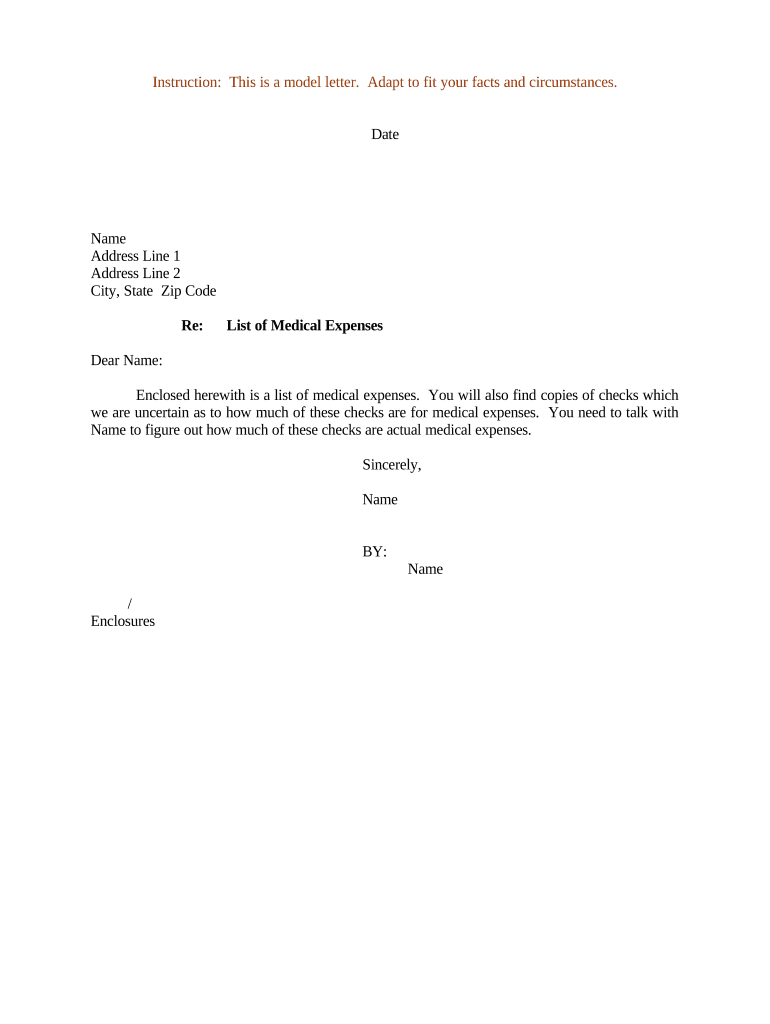







Definition and Meaning of Letter Expenses Sample
A letter expenses sample is a structured format used to detail financial expenditures incurred by an individual or organization. Typically, it serves as a formal request for reimbursement or clarification about specific expenses, often associated with business-related activities, travel, or medical costs. Such letters help maintain transparency in financial dealings and ensure that the requestor follows proper procedures when seeking repayment or reporting expenses.
The purpose of this letter template is to communicate clearly what expenses were made, the nature of those expenses, and the context in which they were incurred. It often includes an itemized list of expenses, receipts, and any additional documentation that supports the request. Utilizing a letter expenses sample can streamline the process of reimbursement and foster an organized, professional approach to managing expenditures.
Key Components of a Letter for Expenses Sample
- Introduction: State the purpose of the letter succinctly.
- Details of Expenses: Provide a comprehensive list or a summary of expenses, including dates, amounts, and descriptions.
- Supporting Documentation: Mention what supporting documents, such as receipts or invoices, are attached.
- Contact Information: Include details for further queries or discussions if needed.
- Closing: Politely express gratitude and include a formal sign-off.
Important Terms Related to Letter Expenses Sample
Understanding the terminology associated with letter expenses samples can enhance clarity and ensure effective communication. Here are key terms often encountered:
- Reimbursement: The process of repaying or compensating an individual for expenses incurred.
- Itemization: Listing specific expenses incurred, often in a table or bullet format.
- Documentation: Any physical or digital evidence, such as receipts, that substantiates claims made in the letter.
- Approvals: Necessary endorsements or confirmations from a supervisor or manager regarding the legitimacy of the expenses.
- Expense Account: A designated fund or account from which reimbursements are drawn.
Being familiar with these terms can facilitate writing and interpreting letters related to expense requests.
How to Use the Letter Expenses Sample
Using a letter expenses sample effectively requires clarity and adherence to an organized structure. Here’s how to craft a letter taking advantage of a sample:
- Select the Appropriate Template: Start with a sample that fits the specific type of expense you are reporting (e.g., business travel, medical).
- Personalize the Content: Fill in the details relevant to your situation while maintaining the clarity of the message. Add personal or company-specific information where necessary.
- Be Specific: Clearly enumerate each expense with corresponding details including the purpose, date, and amount.
- Attach Proofs: Include any relevant documents, which can bolster your claim and facilitate the approval process.
- Review Before Sending: Ensure there are no spelling errors or unclear phrases that could result in confusion. A polished letter reflects professionalism.
Following these steps can help ensure your request is both clear and likely to be approved.
Steps to Complete the Letter Expenses Sample
Completing a letter expenses sample includes several critical steps to ensure accuracy and clarity. Here’s a systematic approach:
- Choose a Format: Select whether to create the letter digitally or on paper. Most organizations will prefer a digital format for efficiency.
- Header: Include your name, address, contact information, and the date at the top of the letter.
- Add Recipient Information: Include the name and address of the individual or department to whom the letter is directed.
- Subject Line: Clearly state the purpose of the letter, such as “Request for Reimbursement of Expenses.”
- Body of the Letter:
- Introduction: State the intention simply.
- Detailed Account: Create a breakdown of expenses using tables or lists to improve readability.
- Attachments: List any documents being appended to support your request.
- Closing Remark: Thank the recipient for their consideration and express your willingness to provide further information if needed.
Following these structured steps provides a clear path to successfully executing a letter for expenses sample.
Examples of Using the Letter Expenses Sample
Here are practical scenarios illustrating how a letter expenses sample is utilized effectively:
-
Travel Reimbursement: An employee who has attended a business conference may submit a letter detailing hotel costs, airfare, and meal expenses incurred during their trip. The template guides them to list each aspect and attach receipts.
-
Medical Claims: An individual seeking reimbursement for medical expenses can utilize the letter sample to outline costs associated with treatments, tests, or medications, ensuring a comprehensive description of each expense.
-
Project Costs: Freelancers often encounter various costs related to client projects. Using a letter expenses sample helps them document and request reimbursement for materials purchased, services rendered, and other project-related expenses.
These examples demonstrate the versatility of the letter expenses sample in various real-world situations.
Business Types that Benefit Most from Letter Expenses Sample
Certain industries and business types can particularly benefit from the consistent use of letter expenses samples:
- Corporate Entities: Organizations that require employees to travel for business frequently need structured formats for reimbursement to maintain clear accounting.
- Freelancers and Contractors: Independent professionals can utilize expense letters to document costs typically incurred while fulfilling contracts with clients.
- Non-Profit Organizations: Non-profits often manage budgets stringently; thus, using letter expenses samples ensures accurate tracking of reimbursements while fostering diligence in financial reporting.
- Medical Professionals: Healthcare providers frequently need to document patient-related expenses, making use of prescribed letter formats essential for outpatient reimbursements.
Understanding which industries make the most use of these letters can tailor the communication to better suit the audience's specific needs.




