
Release regarding Laboratory Activities 2026

Get Form
Release regarding Laboratory Activities Preview on Page 1

Here's how it works

01. Edit your form online
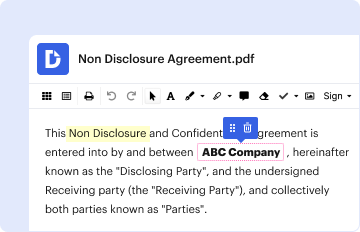
Type text, add images, blackout confidential details, add comments, highlights and more.
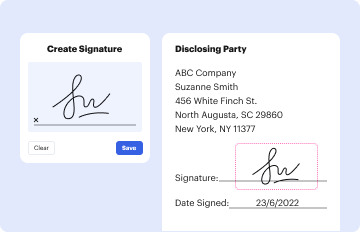
02. Sign it in a few clicks
Draw your signature, type it, upload its image, or use your mobile device as a signature pad.
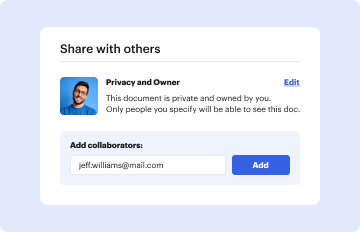
03. Share your form with others
Send it via email, link, or fax. You can also download it, export it or print it out.

How to use or fill out Release regarding Laboratory Activities with our platform

Form edit decoration
9.5
Ease of Setup
DocHub User Ratings on G2
9.0
Ease of Use
DocHub User Ratings on G2
  1. Click ‘Get Form’ to open the Release regarding Laboratory Activities in the editor.
  2. Begin by filling in the location of the Lab in the designated space. This is crucial for identifying where your activities will take place.
  3. Next, specify the name of the course associated with the Lab. This helps clarify the context of your participation.
  4. Indicate the start and end dates of the Lab by filling in the respective fields. Ensure these dates are accurate to avoid any confusion.
  5. Review and complete the release statement, ensuring you understand that you are waiving certain rights and assuming risks associated with participation.
  6. Finally, provide your printed name and signature at the bottom. If you are under 18, ensure a parent or guardian signs as well.

Start using our platform today to easily fill out your Release regarding Laboratory Activities for free!

be ready to get more

Complete this form in 5 minutes or less

Get form

Got questions?

We have answers to the most popular questions from our customers. If you can't find an answer to your question, please contact us.
Contact us
Lab operations encompass a variety of tasks, such as sample tracking, data management, inventory control, compliance monitoring, and result analysis. These tasks must be carried out with precision to ensure accurate results and maintain quality standards.
laboratory activity means any measure taken in a laboratory, or other location routinely employed for such work12 when locating, recovering, developing, analysing and interpreting forensic evidence, with a view to providing expert opinions or exchanging forensic evidence.
10 Things NOT to Do in a Research Lab Wearing open-toed shoes. Keeping long hair down. Eating or drinking. Erasing data from your notebook. Showing up late. Forgetting to label samples or materials. Incorrectly disposing of your materials. Wearing shorts.
The purpose of OSHAs Laboratory Standard (29 CFR 1910.1450) is to ensure that workers in non-production laboratories are informed about the hazards of chemicals in their workplace and are protected from chemical exposures exceeding allowable levels [i.e., OSHA Permissible Exposure Limits (PELs)] as specified in Table
Laboratory tasks in laboratory operations encompass a range of activities essential to the functioning of a lab environment. These tasks include sample collection, preparation, analysis, equipment maintenance, data recording, and compliance with safety and quality standards.

Security and compliance

At DocHub, your data security is our priority. We follow HIPAA, SOC2, GDPR, and other standards, so you can work on your documents with confidence.

Learn more
ccpa2
pci-dss
gdpr-compliance
hipaa
soc-compliance

People also ask

Medical laboratory scientists have a wide variety of responsibilities and duties, including: Examining and analyzing blood, body fluids, tissues, and cells. Relaying test results to physicians. Utilizing microscopes, cell counters, and other high-precision lab equipment. Cross-matching blood for transfusion.
laboratory activities means measures taken in a laboratory when locating and re- covering traces on items, as well as developing, analysing and interpreting forensic evi- dence, with a view to providing expert opinions or exchanging forensic evidence; View Source.
A laboratory provides a controlled environment for conducting scientific experiments and research. It allows students to learn scientific concepts and methods through hands-on activities.

Related links