
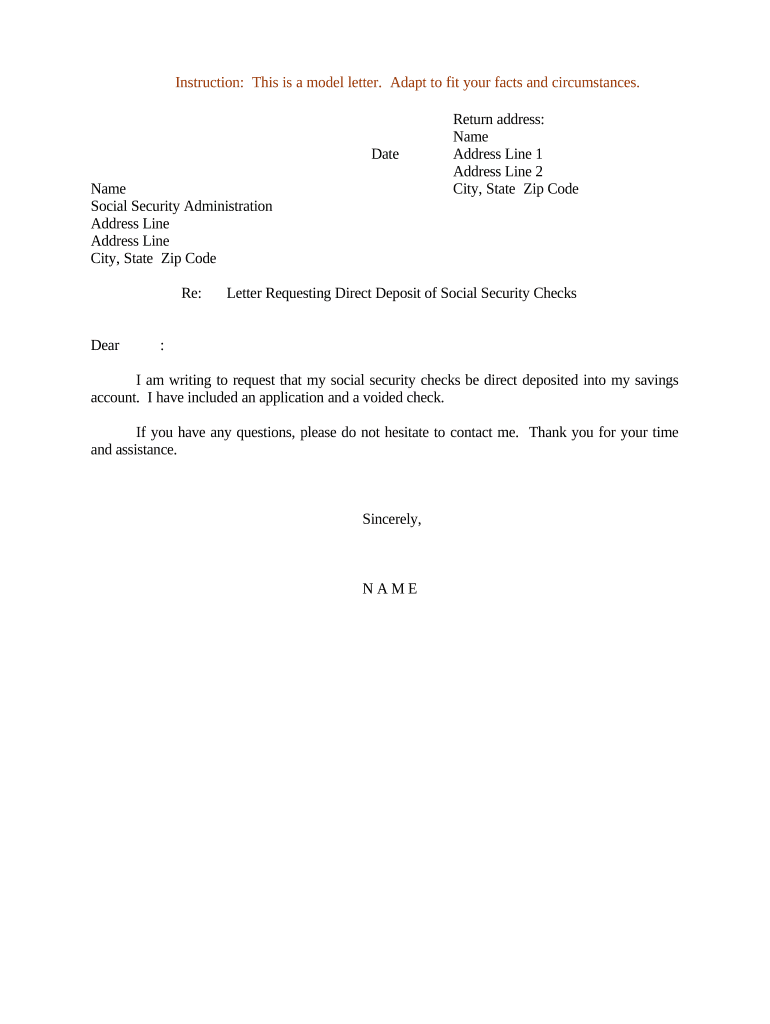







Definition and Meaning of Letter Deposit
A letter deposit refers to a formal written request that directs a financial institution to deposit funds into a specified account. This may include deposits from checks, transfers, or any form of incoming funds intended for a specific account holder. Often used in various contexts, such as for personal transactions or business dealings, the letter is crucial for ensuring the correct allocation of funds.
- Usage Contexts:
- Individuals might use a letter deposit to request that their paycheck be deposited directly into their bank account.
- Businesses may issue letter deposits for the collection of rents, security deposits, or service payments.
The letter serves as a legally binding document that outlines the intent for the deposit and usually requires specific details to ensure accuracy and compliance with banking regulations.
Key Elements to Include in a Letter Deposit
When drafting a letter deposit, certain key elements should be included to assure clarity and proper processing by the bank:
- Date: Always include the date to establish when the request was made.
- Recipient Information: Clearly state the name of the bank or financial institution, along with any relevant branch information.
- Account Holder Details: Include the name, address, and account number of the individual or business that is receiving the deposit.
- Payment Details: Specify the amount to be deposited and the source of the funds, whether it’s a check, transfer, or other means.
- Signature: Closing with a signature validates the letter, making it a formal request.
Including these elements helps avoid issues related to miscommunication and ensures that the funds are properly allocated.
Steps to Complete a Letter Deposit
Completing a letter deposit involves a systematic approach to ensure that all necessary information is presented clearly. Follow these steps:
-
Draft the Letter:
- Use the official letter format, beginning with your address and the date.
- Address the letter to the bank.
-
Provide Account Information:
- Clearly write the account details that the deposit should be made to.
-
State the Deposit Information:
- Clearly mention the amount and the source of funds.
-
Sign the Document:
- Ensure the letter is signed to authorize the deposit.
-
Submit the Letter:
- Deliver the letter to the bank in person, through the mail, or via secure online submission if offered by the bank.
Importance of Using a Letter Deposit
Utilizing a letter deposit plays a significant role in financial transactions for various reasons:
- Clarity and Documentation: Provides a clear record of the requested transaction, which can be useful for future reference.
- Legitimate Requests: Acts as a formal request that helps prevent unauthorized or erroneous deposits.
- Facilitating Cash Flow: Businesses can ensure that necessary funds are safely deposited, thus improving cash management.
Having a formalized process can help in regulatory compliance and protect both the payer and payee in the transaction.
Who Typically Uses Letter Deposits?
Various individuals and entities rely on letter deposits depending on their financial activities:
- Individuals: People receiving regular payments, such as salaries or pensions, often utilize letter deposits to ensure funds are directly deposited into their accounts.
- Businesses: Landlords may request deposit letters for rental payments, while service providers may use them for advance payments for services.
- Organizations: Nonprofits and clubs can use letter deposits for contributions or membership fees.
Each group recognizes the importance of ensuring secure and organized transactions through written requests.
Legal Use of Letter Deposits
The legal framing around letter deposits can impact various parties’ understanding and application of them:
- Compliance Requirements: Institutions must adhere to state and federal regulations related to deposits.
- Fraud Prevention: Legally binding nature helps deter fraudulent claims regarding deposits.
- Documentation: Serves as credible evidence of transactions, which can be important in disputes or audits.
Understanding these legal contexts is essential for both depositors and financial institutions to safeguard the interests of all involved parties.
Variants of the Letter Deposit
Different variations of letter deposits may exist based on the nature of the transfer, including:
- Direct Deposit Request Forms: Commonly used for payroll and government payments.
- Refund Deposit Requests: Specific to returning funds, like security deposits.
- Cheque Deposit Requests: Focused on specific instructions for depositing physical checks.
Familiarity with these variants can help individuals tailor their requests appropriately based on their financial needs.
Examples of Using a Letter Deposit
Sample instances of how a letter deposit is employed include:
- Salary Deposits: An employee submits a letter to confirm the direct deposit of their paycheck into a checking account.
- Rental Payments: A landlord provides a tenant with a letter requesting that rental payments be deposited directly to their bank account rather than cash or check.
- Refund Requests: A customer utilizes a letter for requesting a refund deposit after returning a product, specifying the amount and source of the original payment.
These examples illustrate the flexible application of letter deposits across different situations while emphasizing their importance in effective financial management.




