01. Edit your release deed among family members format online
Type text, add images, blackout confidential details, add comments, highlights and more.
02. Sign it in a few clicks
Draw your signature, type it, upload its image, or use your mobile device as a signature pad.
03. Share your form with others
Send release deed among family members via email, link, or fax. You can also download it, export it or print it out.
How to use or fill out deed with release using our platform
Ease of Setup
DocHub User Ratings on G2
Ease of Use
DocHub User Ratings on G2
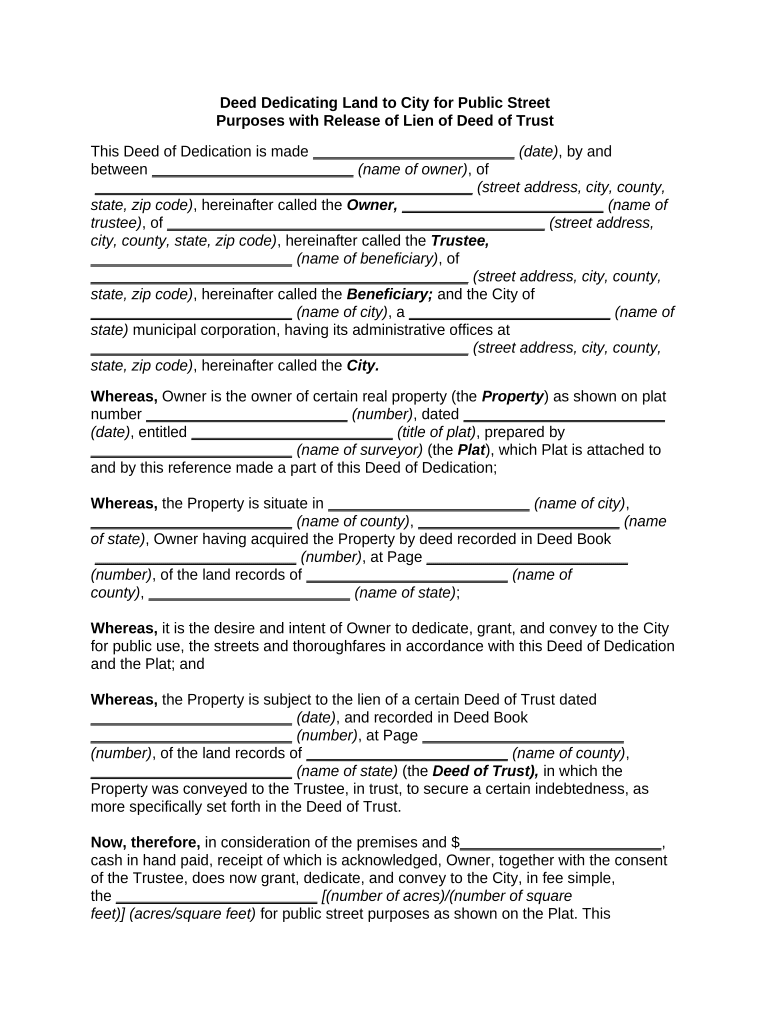
Click ‘Get Form’ to open the deed with release in the editor.
Begin by entering the date of the deed at the top of the form. This is crucial for establishing the timeline of the transaction.
Fill in the name and address of the Owner, Trustee, and Beneficiary in their respective fields. Ensure accuracy as these details are essential for legal identification.
Provide information about the property being dedicated, including its description and plat number. Attach any necessary documents if required.
Indicate the amount of cash consideration received for this dedication. This is typically a nominal amount but must be specified.
Complete sections regarding lien release by confirming that portions of the property are released from any existing Deed of Trust liens.
Finally, ensure all parties sign and date where indicated, including any city officials if applicable. This finalizes your document.
Start editing your deed with release today for free on our platform!
Deed of release formHow long does a deed of release takeRelease deed among family membersDeed of release of chargeRelease of Deed of Trust formCorporate deed of releaseDeed of release Land RegistryDeed of release debenture
Security and compliance
At DocHub, your data security is our priority. We follow HIPAA, SOC2, GDPR, and other standards, so you can work on your documents with confidence.
A deed of release is [a deed] releasing property from the encumbrance of a mortgage or similar pledge upon payment or performance of the conditions.Read more
Cookie consent notice
This site uses cookies to enhance site navigation and personalize your experience.
By using this site you agree to our use of cookies as described in our Privacy Notice.
You can modify your selections by visiting our Cookie and Advertising Notice.