




Understanding the Sample Letter for Advocation of Legislation
The Sample Letter for Advocation of Legislation serves as a formal document used by individuals or organizations to express support for a specific legislative proposal. This letter typically outlines the reasons for the endorsement, providing rationale and context to persuade legislators to consider or support the proposed legislation. Such letters can be directed to various recipients, including senators, representatives, or local government officials.
Key Elements of the Sample Letter for Advocation of Legislation
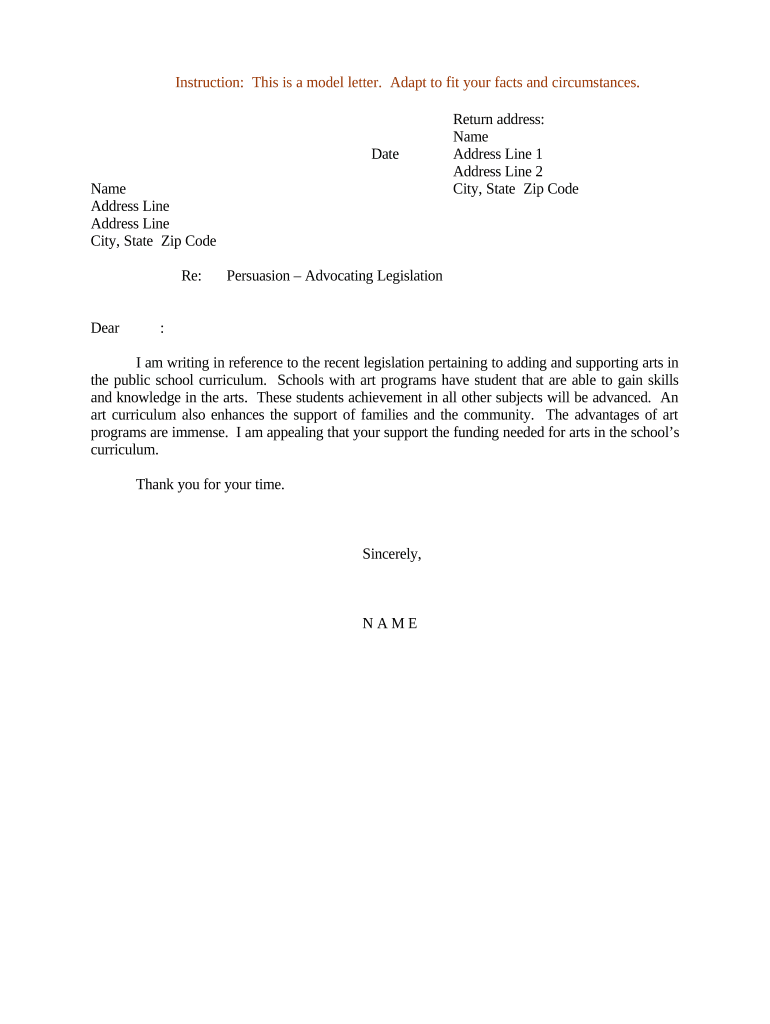
When crafting a sample advocacy letter, several vital elements should be included to ensure clarity and effectiveness:
- Sender Information: Clearly state the name, address, and contact information of the sender to establish credibility.
- Date: Include the date of writing to indicate the timing of your communication.
- Recipient Information: Address the letter to the specific legislator or official, including their title and address.
- Subject Line: A brief subject line summarizing the intent of the letter, such as "Support for Proposed Legislation on [Issue]."
- Introduction: Introduce yourself or your organization, explaining your relationship to the issue at hand.
- Body of the Letter: Clearly present the arguments in favor of the legislation, supported by relevant data or anecdotes.
- Conclusion: Conclude with a strong closing statement that encourages the recipient to take action and expresses willingness for further discussion.
- Signature: A personal signature followed by the typed name and title (if applicable).
How to Use the Sample Letter for Advocation of Legislation
Using this letter effectively requires following a structured approach:
- Identify the Legislative Issue: Determine which legislation you wish to advocate for and understand its implications.
- Research the Recipient: Tailor the letter to the specific legislator or official by referencing their previous positions or statements related to the issue.
- Gather Supporting Information: Compile statistics, expert opinions, or real-life examples that bolster your argument.
- Draft the Letter: Use the key elements outlined above to create a clear and compelling letter.
- Review and Edit: Proofread the letter for clarity, grammar, and conciseness, ensuring it maintains professionalism.
- Send the Letter: Use appropriate channels, such as email or postal service, to deliver your advocacy letter.
Examples of Using the Sample Letter for Advocation of Legislation
There are numerous contexts in which a sample letter for advocation can be applied. Here are a few examples:
- Environmental Legislation: An environmental organization may send a letter to support a bill aimed at reducing carbon emissions, citing scientific evidence on climate change impacts.
- Education Funding: A school principal might advocate for increased funding for public schools, describing the positive effects of funding on student achievement in their district.
- Health Care Initiatives: A public health group may write to legislators advocating for expanded healthcare coverage, using community health data to support their claims.
Legal Use of the Sample Letter for Advocation of Legislation
The legal framework for advocacy letters in the United States permits individuals and organizations to express their opinions to elected officials. Such correspondence is protected under the First Amendment, allowing for free speech. However, it is important to adhere to guidelines regarding lobbying and ensure that the advocacy does not cross into unlawful practices, such as offering bribes or engaging in deceitful representation.
Why You Should Use the Sample Letter for Advocation of Legislation
Creating and utilizing an advocacy letter serves several key purposes:
- Expression of Views: It provides a formal channel to communicate your opinions and concerns to decision-makers.
- Mobilization of Support: Letters can galvanize community support, especially when individuals or groups rally around a common interest.
- Influence Policy: Well-articulated letters can impact legislative decisions, making your voice heard in the political process.
- Inform Legislators: Advocacy letters can educate lawmakers about particular issues, illustrating public sentiment and the need for legislative action.
By employing this structured letter effectively, individuals and organizations can ensure their advocacy efforts are impactful and contribute to meaningful legislative changes.