
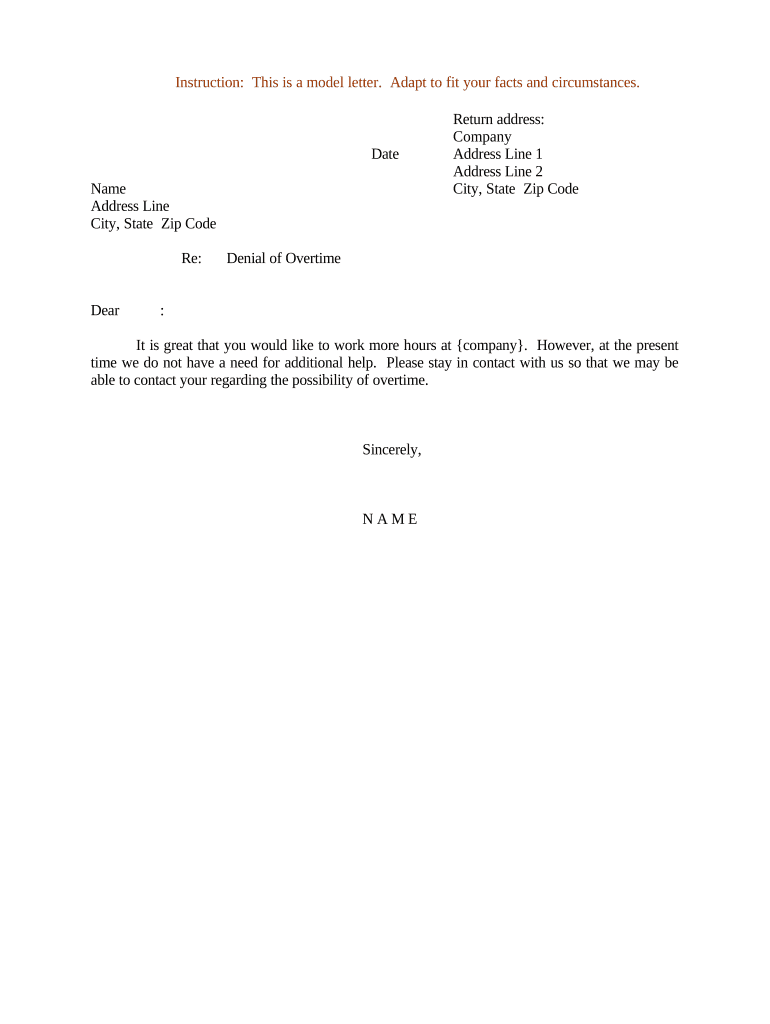







Understanding the Sample Overtime Letter
A sample overtime letter serves as a formal request for additional hours of work beyond the regular schedule. When crafting an overtime request letter, it's essential to express the rationale behind the request clearly and professionally. Here’s a comprehensive outline of the critical components involved in formulating an effective overtime request.
Purpose of an Overtime Request Letter
An overtime request letter is typically used by employees who seek permission or approval from their supervisors or management to work extra hours. The purpose can vary, including:
- Meeting project deadlines
- Managing heavy workloads
- Supporting team members with urgent tasks
By articulating the necessity for additional hours, employees can demonstrate their commitment to their roles and the organization's goals.
Structuring Your Overtime Request Letter
A well-structured overtime request letter includes specific elements to ensure clarity and professionalism. The following components should be included:
-
Subject Line: Clearly stating the purpose, such as "Request for Overtime Work" or "Overtime Request for [specific project/date]."
-
Formal Greeting: Address the recipient appropriately — for example, “Dear [Manager’s Name],”.
-
Introduction: Begin with a brief statement of intent, explaining the request for overtime.
-
Justification: Provide a detailed rationale for the overtime request. Here, it’s beneficial to include:
- Workload specifics
- Project deadlines
- Potential impacts of not meeting deadlines
-
Proposed Schedule: Outline the exact hours requested for overtime work, specifying the dates and duration.
-
Closing Statement: Reiterate appreciation for consideration and express willingness to discuss the request further.
-
Sign-Off: Use a professional closing, like “Sincerely” or “Best regards,” followed by your name.
Sample Overtime Request Scenarios
Understanding various scenarios can streamline the process of composing effective letters. Here are a few examples:
-
Project-Specific Request: “Due to the approaching deadline for the [Project Name], I am requesting approval for overtime on [specific dates], which will enable me to ensure timely completion.”
-
Team Support Role: “As our team faces an increased workload, I would like to request overtime on [specific dates] to assist in meeting our targets, particularly regarding [specific task].”
-
Customer Demand Surge: “Given the recent spike in customer orders, I seek permission to work overtime on [dates] to ensure we meet customer expectations and service levels.”
Best Practices for Overtime Request Letters
When writing an overtime request letter, several best practices can enhance its effectiveness:
- Be Concise: Aim for clarity without excessive detail. Keep your request direct and straightforward.
- Be Respectful: Acknowledge your supervisor's authority and express gratitude for their consideration.
- Offer Flexibility: Indicate your willingness to discuss alternative solutions or adjustments to the proposed overtime if necessary.
- Follow Company Policy: Familiarize yourself with your organization's procedure regarding overtime requests to ensure compliance. Some companies may require a specific form or template.
Legal Considerations and Company Policies
It’s important to be well-informed about your company’s overtime policies and relevant labor laws, which can influence your request. Here are key points:
-
Company Policies: Understand the guidelines surrounding overtime, such as approval processes, eligible positions, and compensation.
-
Labor Laws: Familiarize yourself with the Fair Labor Standards Act (FLSA) and any state-specific labor regulations that govern overtime eligibility and payment.
Conclusion
A sample overtime letter should encapsulate clarity, professionalism, and a firm understanding of the context behind requesting additional hours. By following a structured approach and being mindful of company policies and labor laws, employees can significantly enhance the chances of their overtime requests being approved.




