







Definition & Meaning
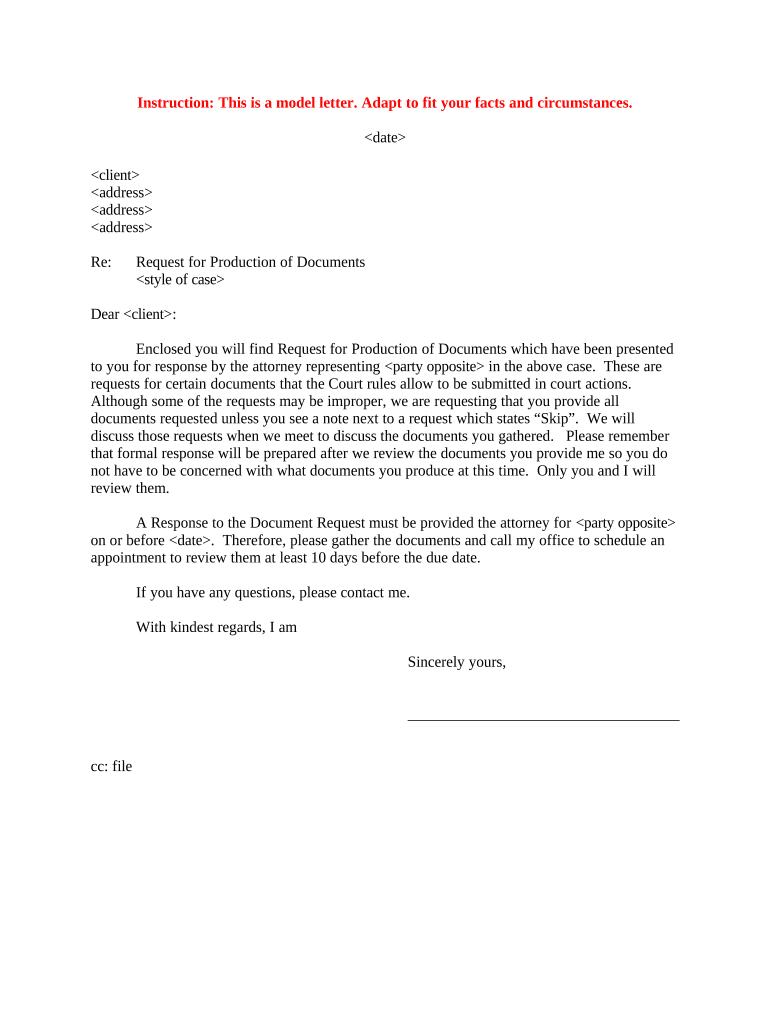
A sample letter of request for documents serves as a formal template used to solicit specific documents from individuals, organizations, or agencies. This type of letter is prevalent in various settings, including legal, business, and administrative contexts. The purpose is to clearly articulate the request, specify the documents needed, and convey urgency or necessity in obtaining them.
Understanding the underlying purpose of this letter is crucial. It not only provides a structured approach to requesting information but also ensures that the recipient understands the nature of the request. For instance, in a legal case, an attorney may need specific evidence from a client or another party to build their case, and a well-crafted request letter can facilitate this process.
The request should be straightforward, respectful, and specific to avoid confusion. Typically, it includes the following essential components:
- Sender's contact information
- Date
- Recipient's contact information
- A clear subject line or opening statement
- Detailed list of requested documents
- A polite closing remark, often including a deadline for response
Clarity is key; a clearly stated purpose and a well-defined list of needed documents can help minimize back-and-forth communication.
Key Elements of the Sample Letter of Request for Documents
Creating an effective sample letter of request for documents involves understanding its key elements. Here are the critical components to include:
-
Sender's Information: This includes the name, address, phone number, and email of the person making the request. It sets a professional tone and provides the recipient with a direct contact.
-
Date: Including the date when the letter is written is essential for record-keeping and establishing the timeline of the request.
-
Recipient's Information: The name and address of the individual or organization from whom the documents are being requested should be clearly stated to ensure proper delivery.
-
Subject Line: A brief subject line that encapsulates the purpose of the letter helps the recipient understand the request at a glance.
-
Body of the Letter: This is the main portion where you:
- State the reason for the request
- List the specific documents needed
- Include any deadlines or timeframes for submission
- Mention any legal or procedural context if applicable
-
Closing Statement: A courteous closing, thanking the recipient for their assistance and expressing anticipation for their prompt response, reinforces professionalism.
-
Signature: The sender's handwritten or digital signature, followed by their typed name, adds authenticity to the letter.
By incorporating these elements, a sample letter of request for documents can be clear, concise, and effective.
Steps to Complete the Sample Letter of Request for Documents
Writing a sample letter of request for documents requires a systematic approach to ensure completeness and accuracy. Below are the step-by-step instructions to follow:
-
Determine the Recipient: Identify who is the appropriate individual or department to address your letter to, ensuring they are the right contact for the requested documents.
-
Gather Required Information: Compile all necessary details, such as the specific documents you need, any relevant dates, and context behind your request.
-
Use a Professional Format: Begin with your name and address, followed by the date, and then the recipient's information. This should be left-aligned and formatted as a formal letter.
-
Draft a Clear Subject Line: A subject line such as "Request for Documents" will immediately indicate the purpose of your letter.
-
Compose the Letter Body:
- Introduction: Briefly introduce yourself and the purpose of your request.
- Details of the Request: Clearly articulate what documents you need and any relevant context to support your request.
- Closure with Deadline: Politely express when you need the documents, emphasizing urgency if necessary.
-
Polite Closing: Conclude with a professional closing statement, expressing gratitude for their attention and help.
-
Proofread: Review the letter for grammar, spelling errors, and clarity. Ensure the tone is respectful and business-appropriate.
-
Sign the Letter: Add your signature and print your name below.
By following these steps, you can create an impactful and effective letter that facilitates your request for documents.
Examples of Using the Sample Letter of Request for Documents
Practical examples can further illustrate how a sample letter of request for documents may be employed across different contexts:
-
Legal Context: An attorney may need documents such as contracts, evidence records, or previous case rulings from a client. The letter would clearly state the documents needed and why they are critical for an upcoming court date.
-
Employment Documentation: An HR representative might request tax forms, employment verification, or other personnel documents from a current or former employee. This letter would clarify the importance of these documents for benefits processing or compliance.
-
Financial Requests: A business owner may need specific financial reports from their accountant, such as income statements and balance sheets, to prepare for a loan application. The letter should specify which reports are necessary for the application process.
-
Governmental Assistance: Citizens commonly request documents such as birth certificates or tax records from government agencies. The letter should contain sufficient personal identification and specific references to the documents required.
-
Project Management: A project manager might request particular reports from team members involved in a project to ensure timely updates for stakeholders. This letter would outline the reports needed and their relevance to project deadlines.
These examples underscore the versatility of the sample letter of request for documents in various fields, from legal and business to governmental contexts.
Important Terms Related to the Sample Letter of Request for Documents
Certain terms and phrases frequently arise in discussions surrounding a request letter for documents. Understanding these terms can clarify the process and enhance communication:
-
Compliant: Refers to adhering to legal standards and requirements when making requests, such as ensuring the correct processes are followed when requesting financial or personal documents.
-
Formal Request: Indicates that your request is structured and adheres to specific business or legal conventions, often necessary for official transactions.
-
Urgency: The degree of immediacy associated with the request; sometimes communicated in the closing part of the letter to emphasize the need for a quick response.
-
Documentation: Refers to the specific files or records being requested, which could vary significantly in context (like legal documents, financial records, or personal identification).
-
Recipient: The individual or organization to whom the request is addressed; understanding the correct recipient is crucial to ensure the request reaches the appropriate party.
-
Compliance Deadline: A specified date by which the requested documents should be submitted. Emphasizing this deadline helps ensure timely responses.
Familiarity with these terms can streamline communication and improve the effectiveness of the request process.
Why Should You Use the Sample Letter of Request for Documents?
Utilizing a sample letter of request for documents offers myriad advantages across different contexts:
-
Professionalism: A formal letter reflects a serious and organized approach to communication, enhancing your credibility.
-
Clarity: Structured requests minimize ambiguity, making it clear what documents are needed and why they are essential.
-
Record Keeping: A letter serves as written documentation of your request, which can be useful for future reference or if disputes arise.
-
Improved Response Rates: Formal requests are often taken more seriously by recipients, leading to higher chances of prompt and complete responses.
-
Legal Compliance: In legal contexts, a well-structured request may be necessary to meet formal discovery requirements, ensuring adherence to protocols.
By embracing the practice of utilizing a sample letter of request for documents, individuals and organizations enhance their operational efficacy and communication standards.




