






Definition and Purpose of Schedule R
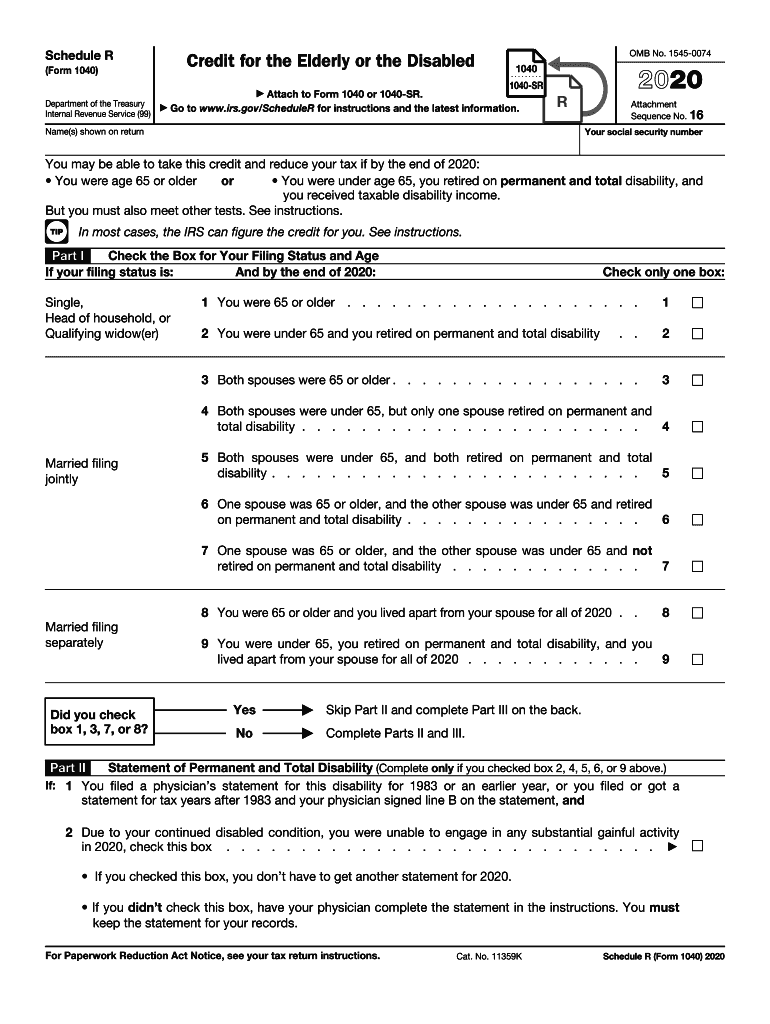
Schedule R is primarily used in tax situations within the United States to claim the Credit for the Elderly or the Disabled. Incorporated into Form 1040 or 1040-SR, this form is essential for taxpayers who meet specific age or disability criteria. The main purpose of Schedule R is to help eligible individuals calculate their credit based on their age, disability status, filing status, and income level. It provides a systematic way to identify eligibility and claim the applicable tax credit, aiding individuals who qualify due to age or disabilities to reduce their tax burden.
Eligibility Criteria for Schedule R
Eligibility for Schedule R is determined based on age and disability status. Candidates typically include individuals who are:
- Aged 65 or older as of January 1 of the tax year.
- Under 65 but considered permanently and totally disabled.
In addition to these criteria, the individual’s adjusted gross income and the nontaxable portions of pensions and disability benefits play a critical role. The form provides detailed instructions to determine whether one’s income level qualifies for the credit.


How to Obtain Schedule R
Schedule R can be obtained through various means to accommodate different preferences:
- Download from IRS Website: The IRS website offers a downloadable PDF version of Schedule R, which can be printed and completed by hand.
- Tax Software Integration: Most tax preparation software, such as TurboTax and H&R Block, include Schedule R and assist users in completing it accurately.
- Professional Accountants: Individuals may also receive Schedule R automatically when working with a tax professional or accountant, as it is included in standard tax return paperwork for clients eligible for the credit.
Steps to Complete Schedule R
Completing Schedule R involves several detailed steps:
- Personal Information: Begin by filling in personal details and identification numbers.
- Determine Eligibility: Use Part I to verify eligibility based on age or disability.
- Calculate the Credit: If eligible, proceed to Part II and III to detail income, calculate the credit amount, and apply any applicable income exclusions.
- Transfer Figures: Transfer the calculated credit amount to the appropriate line on Form 1040 or 1040-SR.
- Review and Submit: Ensure all information is accurate, review for any errors, and attach the schedule to your tax return.
IRS Guidelines for Schedule R
The IRS provides specific guidelines that must be followed when completing Schedule R:
- Verification of Disabilities: Disability must be substantiated by a physician through the declaration present in the form.
- Supporting Documentation: The IRS may require additional documentation, such as a physician’s statement or proof of retirement benefits.
- Income Limitations: Those exceeding specific income thresholds may be disqualified from claiming the credit.
Consulting IRS Publications and resources can provide additional clarity on these guidelines.
Submission Methods
Schedule R can be submitted in several ways:
- Electronic Filing: This is the preferred method, as it is fast, efficient, and minimizes errors. Tax software automatically includes completed Schedule R with the electronic submission of tax returns.
- Mail: For those filing paper returns, Schedule R must be attached to 1040 or 1040-SR and submitted to the designated IRS mailing address corresponding to one's location.
- In-Person: Although less common, some tax preparation offices or IRS facilitation centers offer in-person services to assist with submissions.
Penalties for Non-Compliance
Failing to accurately complete and submit Schedule R, when eligible, can result in penalties:
- Underpayment Penalty: Incorrectly calculating and claiming the credit can lead to penalties for underpayment of taxes.
- Failure to File Penalty: Not filing when obligated to do so can incur additional fees and interest charges.
- Misrepresentation Penalties: Purposefully providing incorrect information may lead to severe civil or criminal penalties, reinforcing the importance of accuracy and honesty.
Who Typically Uses Schedule R
Schedule R is typically utilized by specific groups:
- Retirees Over 65: Seniors who are eligible often use this form to gain additional tax relief.
- Disabled Individuals: Persons under 65 with permanent and total disabilities can also benefit.
- Low to Moderate-Income Households: Those with limited income or significant non-taxable income may qualify for the credit, thus lessening their tax obligations.
Understanding the eligibility and benefits associated with Schedule R enables a targeted approach to claiming deserved tax relief, supporting those who qualify by reducing their overall tax liabilities.