
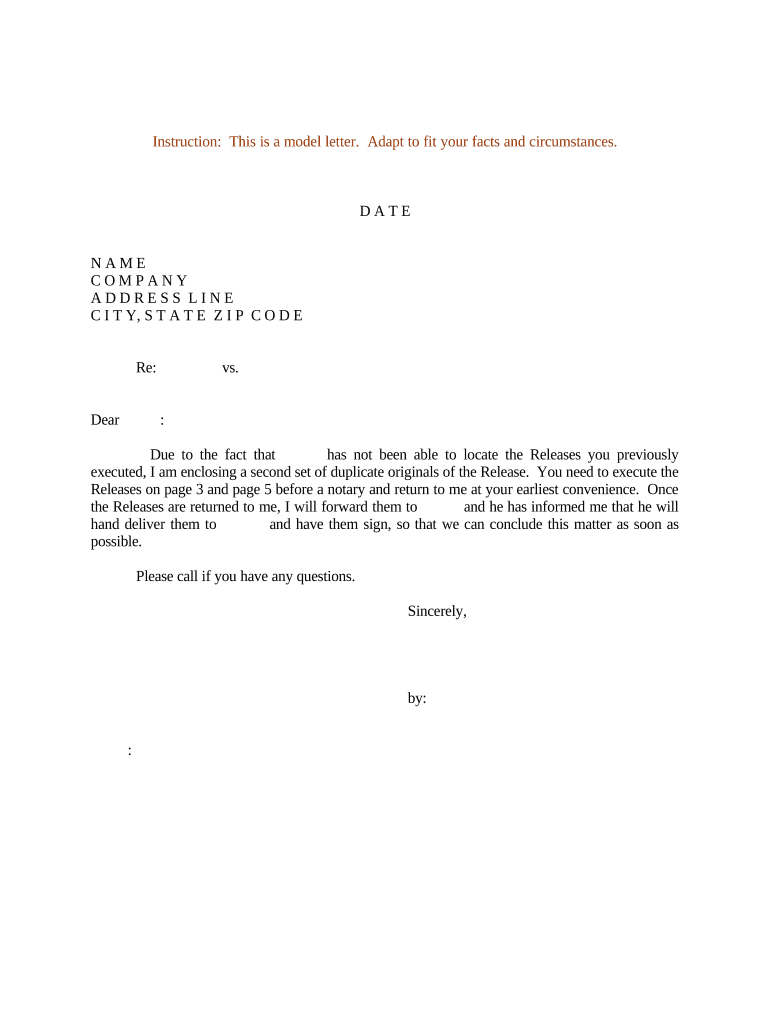







Definition & Meaning of Sample Letter for Duplicate Releases
A sample letter for duplicate releases is a formal correspondence that serves as a notification or request to obtain duplicate originals of documents that are presumed lost or unlocatable. Typically employed in legal or financial contexts, this letter emphasizes the need for official replacement of documents such as releases of liability or other agreements that necessitate notarization. The purpose of this communication is to outline the steps required to substitute the missing documents, ensuring that all parties are informed and consent is properly documented.
This type of letter is often structured to address various parties directly involved in the transaction or agreement, providing essential details such as identity verification, description of the lost documents, and any related case identifiers or reference numbers. Understanding the precise meaning and importance of this type of communication can significantly streamline the document recovery process and reduce potential disputes.
Key Elements of the Sample Letter for Duplicate Releases
When drafting a sample letter for duplicate releases, it is essential to include specific key elements to ensure clarity and effectiveness. These components generally include the following:
-
Sender’s Information: Include your full name, address, phone number, and email address. This identifies you as the requester and provides contact details for follow-up.
-
Recipient’s Information: Clearly state the name and address of the individual or organization to whom the letter is addressed, ensuring it reaches the correct recipient.
-
Subject Line: A concise subject line indicating the purpose of the letter, such as "Request for Duplicate Release Documents."
-
Introduction: A brief opening paragraph that states the intent of the letter and the nature of the documents in question.
-
Details of the Lost Documents: Specifically describe the documents that are missing, including any relevant identification numbers, dates, or parties involved.
-
Request Statement: Clearly articulate your request for duplicate originals and include a justification for why the replacement is necessary. This may involve referencing any previous correspondence regarding the matter.
-
Notarization Details: If applicable, mention that the duplicates will also require notarization, reiterating any legal obligations.
-
Closing Statement: A polite closing that expresses gratitude for consideration and a request for a timely response.
-
Signature Block: Your signature, printed name, and date.
Including these elements ensures that your letter is comprehensive, professional, and increases the likelihood of a favorable response.
Steps to Complete the Sample Letter for Duplicate Releases
Completing a sample letter for duplicate releases involves several straightforward steps. By following this structured approach, individuals can effectively communicate their request and ensure a smooth process:
-
Gather Necessary Information: Assemble all pertinent details related to the lost documents, including reference numbers, dates, and any other identifying information.
-
Draft the Letter: Begin writing your letter using the key elements as a guide. Ensure that the tone remains professional and clear throughout.
-
Format the Letter Properly: Use a standard business letter format, ensuring your contact information and the recipient’s information are correctly positioned. Maintain a clean layout for better readability.
-
Specify the Request: Be explicit about what you are requesting. Avoid vagueness, which might lead to misunderstandings or delays.
-
Include Relevant Documentation: If there are any supporting documents (like prior received letters or identification), mention these within the letter and attach copies if required.
-
Review for Accuracy and Clarity: Carefully proofread your letter for grammatical errors, clarity, and completeness. This step helps present professionalism and attention to detail.
-
Send the Letter: Choose the appropriate method to send your letter, whether via email, mail, or in-person delivery, and keep a copy for your records.
By adhering to this sequence, you ensure that your letter is not only comprehensive but also clearly conveys your intent and information, facilitating the recovery of the necessary documents.
Important Terms Related to Sample Letter for Duplicate Releases
Understanding the terminology associated with a sample letter for duplicate releases is vital to drafting effective correspondence and managing expectations throughout the process. Key terms include:
-
Duplicate Release: A legal document that serves the same function as the original release but is issued anew after the original has been lost.
-
Notarization: The process of having a document formally certified by a notary public, ensuring its authenticity and that the signatures are legitimate.
-
Liability Release: A legal document that relieves one party from legal liability to another, often used in agreements related to services, events, or contracts.
-
Request Statement: The section of the letter where the author formally asks for the issuance of duplicate documents.
-
Recipient: The individual or organization that receives the letter, typically the party responsible for issuing the duplicate documents.
Familiarity with these terms enhances communication effectiveness and demonstrates your understanding of the legal context involved in document recovery.
Examples of Using the Sample Letter for Duplicate Releases
The practical application of a sample letter for duplicate releases can vary based on context and specific needs. Here are a few examples to illustrate its use:
-
Legal Context: An individual may need to request duplicate release documents related to a personal injury settlement where the original documents have been misplaced. The letter would include details about the case, parties involved, and any previous correspondence regarding the settlement.
-
Financial Institutions: A borrower might use the letter to request duplicate release documents for a lien that has been satisfied but where the original release documents cannot be located. The letter would specify the loan number and any pertinent dates associated with the transaction.
-
Property Transactions: In real estate transactions, a buyer may need to draft a duplicate release letter for documents related to a property sale that was lost during the closing process. This letter would provide details about the property address and involved parties to expedite document recovery.
These examples highlight the diverse scenarios in which a sample letter for duplicate releases might be relevant, illustrating its versatility and utility in various transactional contexts.




