







Definition & Meaning of a Tax Extension Letter
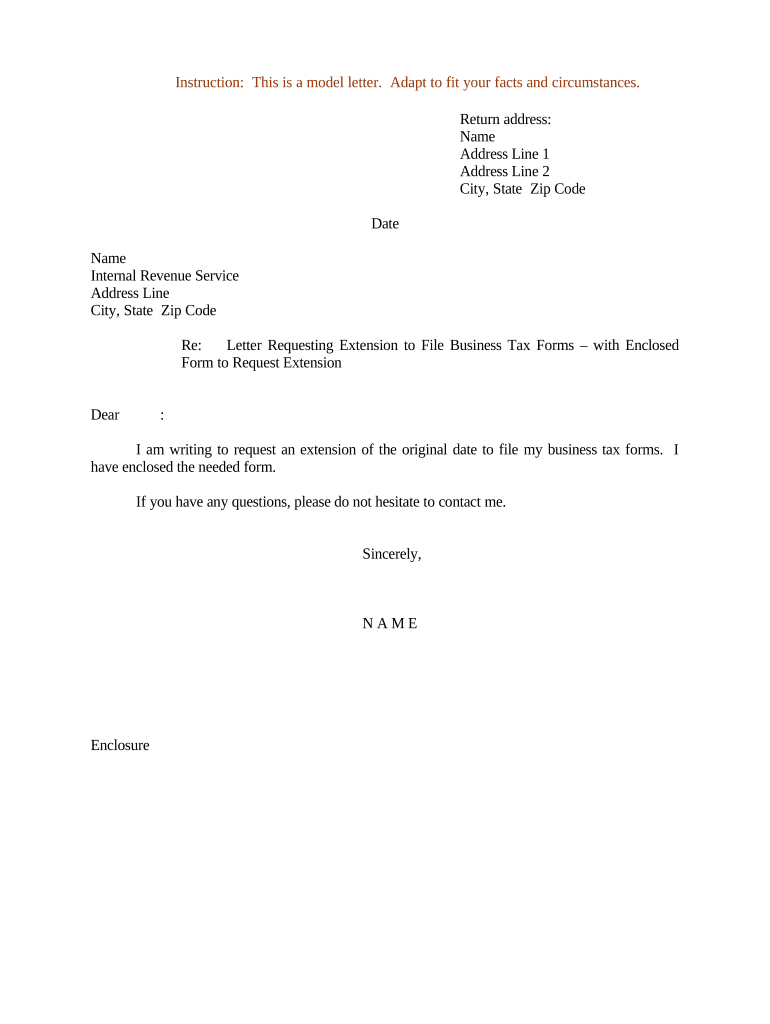
A tax extension letter is a formal request submitted to the Internal Revenue Service (IRS) or appropriate state tax authority seeking additional time to file a tax return. This letter serves as an official notification of the taxpayer's intent to delay their filing deadline while outlining the reasons for the request. The extension does not, however, extend the deadline for payment of any taxes owed; it only allows for more time to complete the return itself.
Key Elements of a Tax Extension Letter
- Sender's Information: The full name and address of the taxpayer requesting the extension.
- Date of Request: The date on which the letter is written.
- Recipient's Information: The IRS address or state tax authority’s address to which the request is directed.
- Subject Line: A clear subject line indicating the purpose, such as "Request for Tax Extension."
- Reason for Extension: A brief explanation for why the extension is necessary.
- Signature: The sender's signature, validating the request.
Understanding the components of the letter can help ensure that all necessary information is included, which may facilitate the extension process.
How to Use the Tax Extension Letter Sample
Using a tax extension letter sample involves several straightforward steps to ensure compliance with IRS guidelines and a successful filing extension.
- Obtain the Template: Access a reliable sample template which outlines the necessary structure and language.
- Customize the Letter:
- Insert your personal details, including name, address, and tax identification number.
- Clearly state your reason for requesting the extension.
- Ensure Clarity and Conciseness: Keep the language straightforward and avoid complex jargon to facilitate easy understanding by the IRS.
- Review: Check the letter for accuracy and completeness, ensuring all vital information is present.
- Submit the Letter: Send the completed letter via suitable methods (mail or electronically, depending on IRS guidelines) before the filing deadline.
Steps to Complete the Tax Extension Letter Sample
Completing a tax extension letter sample involves the following steps:
- Gather Required Information:
- Full name, Social Security number (or Employer Identification Number for businesses), address, and relevant tax year.
- Draft the Letter:
- Clearly identify yourself and state your intention to request an extension.
- Include a reasonable and valid reason for the extension, if applicable.
- Check IRS Requirements:
- Determine if you need to complete a specific form (e.g., Form 4868 for individuals) in conjunction with your letter.
- Submit the Request:
- Send the letter to the IRS by the original filing deadline.
- Ensure you retain a copy for your records.
IRS Guidelines for Requesting a Tax Extension
When requesting a tax extension, it’s vital to adhere to IRS guidelines to ensure that your request is accepted and processed correctly.
- Forms Required: Generally, Form 4868 for individuals or the appropriate business extension form should accompany the request.
- Filing Deadline: Ensure the letter is submitted by the original due date of the tax return — typically April 15 for individuals.
- Payment Requirement: Be aware that any taxes owed must still be paid by the original deadline to avoid penalties.
- Confirmation of Receipt: If submitted electronically, ensure you receive a confirmation. For mailed letters, consider using a service that provides tracking.
Important Terms Related to the Tax Extension Letter Sample
Familiarizing yourself with key terminology is essential in effectively navigating tax procedures and understanding the extension process.
- Form 4868: The IRS form utilized by individuals to request a six-month extension to file their annual tax return.
- Extension Period: The additional time granted, allowing taxpayers to submit their returns at a later date without incurring penalties for late filing.
- Penalty for Non-Payment: A separate penalty that applies when taxes owed are not paid by the original deadline, regardless of any extension granted for the return filing.
- Tax Identification Number (TIN): A number assigned by the IRS to identify taxpayers, which must be included on the extension request.
Understanding these terms can clarify the process and requirements surrounding tax extensions.
Filing Deadlines and Important Dates
Being aware of key filing deadlines can prevent potential penalties and ensure compliance with tax obligations.
- Individual Tax Return Deadline: Typically due on April 15, although it may shift if it falls on a weekend or holiday.
- Extension Submission Deadline: Any request for an extension must be submitted by the original filing deadline, also typically April 15.
- Extended Deadline: If a tax extension is granted, the new deadline for filing individual returns will usually be October 15, giving the taxpayer an additional six months.
Missing these deadlines can result in penalties, interest, and difficulties in tax compliance.
Examples of Using the Tax Extension Letter Sample
Practical examples illustrate the application of a tax extension letter sample in different contexts.
Scenario 1: Individual Taxpayer
An individual may need to submit a tax extension when unforeseen circumstances arise, such as a medical issue that delays tax-related paperwork. In this case, the individual uses a tax extension letter to formally request additional time while ensuring they have settled any owed taxes by April 15.
Scenario 2: Business Situation
A business may seek a tax extension if it is awaiting essential financial documents or experiences an unexpected event, such as a natural disaster, leading to disruptions. Using a tax extension letter allows the business to formally communicate with the IRS and request an extension while planning for any outstanding tax payments.
Each example underscores the importance of timely communication with tax authorities to remain compliant while managing various circumstances that impact filing abilities.




