




01. Edit your 2015 tax online
Type text, add images, blackout confidential details, add comments, highlights and more.

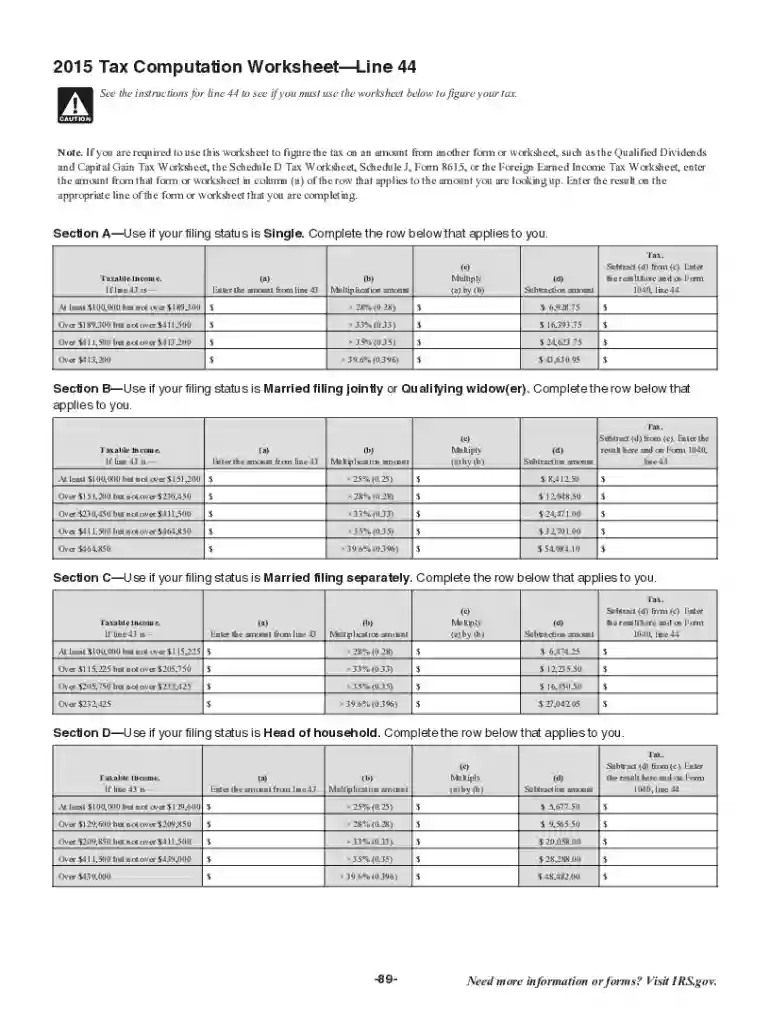
Type text, add images, blackout confidential details, add comments, highlights and more.

Draw your signature, type it, upload its image, or use your mobile device as a signature pad.

Send 2015 tax income via email, link, or fax. You can also download it, export it or print it out.
The 2015 IRS Form is a set of tax forms used for filing federal taxes for the tax year 2015. These forms are issued by the Internal Revenue Service (IRS) and contain various forms and schedules necessary for individuals and entities to report their earnings, claim deductions, and calculate their tax liabilities. The most common forms used include Form 1040, Form 1040A, and Form 1040EZ, each catering to different filing situations and levels of complexity.
To effectively use the 2015 IRS Form, it's essential to first identify the appropriate form based on your financial situation. For instance, if you have multiple sources of income or need to claim itemized deductions, Form 1040 would be necessary. However, if your situation is less complex, Form 1040A or 1040EZ could suffice. The forms require detailed reporting of income sources, eligible deductions, and applicable tax credits. Accurately completing these sections ensures compliance with tax regulations and maximizes potential refunds or minimizes taxes owed.
Completing the 2015 IRS Form involves several systematic steps to ensure accuracy and compliance. Begin by downloading the applicable forms directly from the IRS website or obtaining them from local IRS offices.
Understanding key terminology aids in correctly completing the 2015 IRS Form. Familiarity with these terms ensures clarity and precision in tax reporting.
For the 2015 tax year, the deadline for filing was typically April 15, 2016. However, taxpayers could request an extension, typically allowing them until October 15, 2016, to file their returns. Meeting these deadlines avoids late filing penalties and interest on taxes owed.
Failing to file or pay taxes by the deadline incurs penalties. The IRS imposes a failure-to-file penalty and a separate failure-to-pay penalty. Non-compliance could also result in accrued interest on unpaid taxes, increasing financial liability over time.
There are multiple methods to file the 2015 IRS forms:
While the 2015 IRS Form pertains to federal taxes, taxpayers should be aware of state-specific tax rules that may require additional forms or different calculations. Each state has its own tax agency and may have different deadlines, deductions, and credits. It's crucial to consult with the applicable state agency or a tax professional to ensure compliance with both federal and state tax obligations for 2015.
We've got more versions of the 2015 tax form. Select the right 2015 tax version from the list and start editing it straight away!
| Versions | Form popularity | Fillable & printable |
|---|---|---|
| 2024 | 4.8 Satisfied (29 Votes) | |
| 2023 | 4.1 Satisfied (37 Votes) | |
| 2022 | 4.4 Satisfied (37 Votes) | |
| 2021 | 4.8 Satisfied (114 Votes) | |
| 2017 | 4.4 Satisfied (88 Votes) | |
| 2016 | 4.4 Satisfied (108 Votes) | |
| 2015 | 4.2 Satisfied (59 Votes) | |
| 2014 | 4 Satisfied (45 Votes) | |
| 2013 | 4.3 Satisfied (40 Votes) | |
| 2011 | 4.4 Satisfied (64 Votes) |
At DocHub, your data security is our priority. We follow HIPAA, SOC2, GDPR, and other standards, so you can work on your documents with confidence.
A copy of the IRS Form 4868, Application for Automatic Extension of Time to File U.S. Individual Income Tax. Return, that was filed with the IRS for tax
If you are an alien individual and you meet the closer connection exception to the substantial presence test, you must file Form 8840 with the IRS to establish.Read more
Dec 31, 2015 U.S. Individual Income Tax Return 2015 OMB No. 1545-0074 IRS Use OnlyDo not write or staple in this space. For the year Jan. 1Dec. 31Read more


