
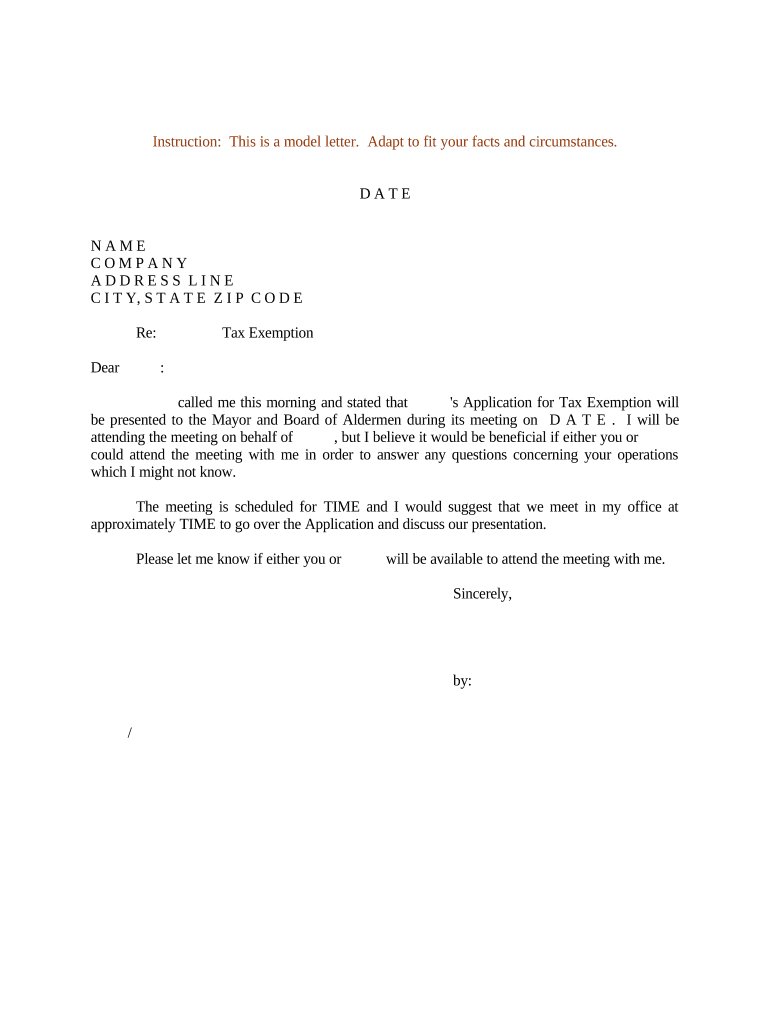







Definition and Importance of the Tax Exemption Application
A tax exemption application is a formal request submitted to a governing body, typically the Internal Revenue Service (IRS) or a state tax authority, seeking relief from certain tax obligations. This application is critical for individuals and organizations that qualify under specific criteria, such as charitable organizations or those involved in education, to minimize or eliminate their tax burden. Understanding the nuances of these applications can significantly impact financial planning and budgeting for both individuals and businesses.
Tax exemption applications can pertain to various tax types, including sales tax, property tax, and income tax. For instance, nonprofit organizations often submit a tax exempt letter to demonstrate their eligibility for tax-exempt status. Properly understanding and utilizing this application can lead to substantial savings, as it allows qualifying entities to retain more of their revenue for operational or charitable purposes.
Steps to Complete the Tax Exemption Application
Completing a tax exemption application involves several key steps to ensure accuracy and compliance with regulatory requirements. The following steps outline the typical process:
-
Identify the Appropriate Form: Determine which specific form is needed for your situation. For example, most organizations seek IRS Form 1023 or state-specific equivalents for nonprofit status.
-
Gather Required Documentation: Collect all necessary documents, which may include:
- Organization bylaws
- Financial statements
- Budget projections
- Mission statement or purpose
-
Fill Out the Application: Complete the application form with detailed and accurate information. Pay special attention to sections that require specific declarations about the organization's activities and financial arrangements.
-
Review the Application: Before submission, review the application for completeness and accuracy. Errors or omissions can lead to delays or denials.
-
Submit the Application: Follow the submission guidelines. This may vary by state or federal requirements, including methods such as online submission, mailing, or in-person delivery.
-
Await Confirmation: After submission, it’s vital to monitor the status of the application through the relevant tax authority. Keep all correspondence for future reference.
Required Documents for the Tax Exemption Application
When applying for a tax exemption, specific documents are required to substantiate your claims and establish eligibility. The following documents are often necessary:
-
Proof of Nonprofit Status: Documentation that shows the organization is registered as a nonprofit, such as a state formation certificate or IRS determination letter.
-
Financial Records: Recent financial statements, including income statements or balance sheets, to demonstrate the financial health and operation of the entity.
-
Organizational By-Laws: A copy of the bylaws detailing the organization's governance structure, purpose, and operational procedures.
-
Mission Statement: A clear statement of the organization's goals, purpose, and the beneficiaries it serves.
-
Federal Employer Identification Number (EIN): Necessary for tax administration purposes.
Having these documents prepared and correctly formatted can streamline the application process and improve chances for approval.
IRS Guidelines for Tax Exemption Applications
The IRS provides specific guidelines for completing tax exemption applications, notably with Form 1023 or Form 1023-EZ, and understanding these regulations is paramount:
-
Eligibility Requirements: The organization must meet specific criteria, such as being organized and operated primarily for exempt purposes defined under section 501(c)(3) of the Internal Revenue Code.
-
Application Process: The IRS outlines a systematic approach for filing, reviewing, and obtaining determination letters for tax-exempt status.
-
Filing Fees: There are associated fees for submitting the application, and they vary based on the complexity and scope of the form being completed.
-
Timelines: Processing times may vary significantly, with standard wait times for a determination letter typically ranging from three to six months.
Staying informed about IRS guidelines can help avoid common pitfalls and facilitate a smoother application experience.
Important Terms Related to the Tax Exemption Application
Understanding key terms associated with the tax exemption application is crucial for navigating the application process effectively:
-
Exempt Organization: A term used for groups that qualify for exemption from federal income tax. This includes charities, educational institutions, and various nonprofits.
-
Determination Letter: The official document issued by the IRS confirming an organization’s tax-exempt status.
-
Form 990: A required annual information return that most tax-exempt organizations must file, detailing their financial activities and compliance with IRS regulations.
-
Sales Tax Exemption Certificate: A form issued to grant exemption from sales tax on certain purchases, often essential for tax-exempt organizations when dealing with vendors.
Familiarity with these terms can improve understanding and communication during the application process, whether you are discussing your status with legal advisors, potential donors, or regulatory bodies.




