






Definition & Meaning of a Sample Letter from Dentist to Patient
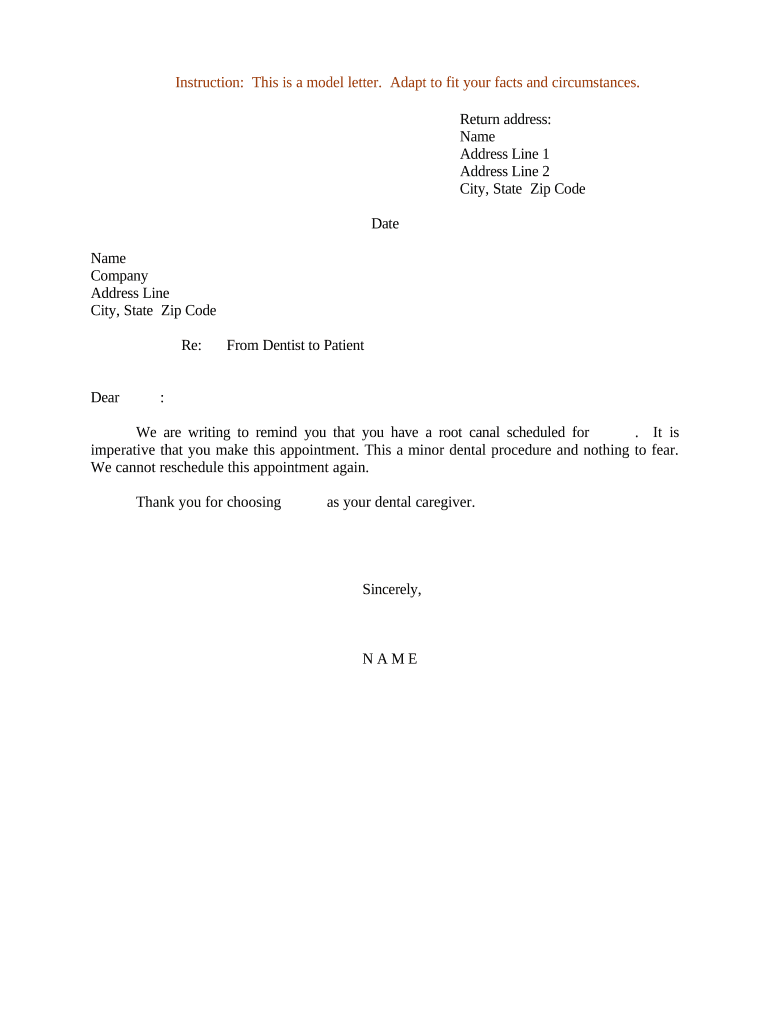
A sample letter from a dentist to a patient serves as a communication tool that conveys important information about dental appointments, treatment plans, or follow-up care. This document is typically personalized to address individual patient needs, ensuring that they are informed about their dental health and any procedures that may be required. The letter not only facilitates clear communication between the dentist and patient but also supports compliance with treatment recommendations, ultimately enhancing patient care.
Key aspects of this type of letter include:
- Purpose: It can remind patients of upcoming appointments, provide information about necessary treatments, or stress the importance of completing unfinished dental work.
- Tone: The letter should maintain a professional yet supportive tone, reassuring patients about their treatment and encouraging them to address their dental health proactively.
- Components: Essential elements include the patient's name, details regarding the treatment, appointment dates, and contact information for any questions or concerns.
How to Use the Sample Letter for From Dentist to Patient
Using a sample letter from a dentist to a patient involves several steps to ensure that communication is effective and clear. The following steps outline the process:
- Identify the Purpose: Determine the specific reason for the letter, such as a reminder for a dental appointment or a notice regarding a treatment plan.
- Personalize the Template: Replace template placeholders with the patient’s name and relevant appointment or treatment information. Customizing the content ensures that it resonates with the patient.
- Include Essential Details: Always mention the date, time, and location of appointments, as well as any specific instructions for pre-treatment (such as fasting or medication adjustments).
- Encourage Communication: Provide a contact number or email for patients to reach out if they have questions or need to reschedule, fostering an open line of communication.
- Review for Clarity: Ensure the language used is straightforward and devoid of technical jargon, making it easy for the patient to understand the message.
Key Elements of the Sample Letter for From Dentist to Patient
When composing a sample letter from a dentist to a patient, several key elements should be included to ensure that it achieves its purpose effectively:
- Patient Information: Start with the patient's full name and the date of the letter. Including their contact information can also be helpful.
- Appointment Details: Clearly state the purpose of the letter, including specifics of the appointment or treatment plan, such as:
- Date and time of the appointment
- Location of the dental office
- Reason for the appointment (e.g., routine check-up, specific dental procedure)
- Instructions: Provide any pre-appointment guidelines that the patient should follow, such as dietary restrictions or required forms.
- Provider Information: Include the dentist's contact details, their qualifications, and any relevant office policies to establish credibility and trust.
- Closing Encouragement: End with a supportive note that encourages the patient to reach out if they have concerns, reinforcing a positive patient-dentist relationship.
Important Terms Related to Sample Letters from Dentist to Patient
Understanding key terms associated with sample letters from dentists to patients enhances communication and clarity. These terms include:
- Treatment Plan: A detailed outline of the proposed procedures or treatments for the patient's dental health, usually requiring their consent.
- Unscheduled Treatment: Refers to procedures that have been recommended but not yet scheduled, necessitating follow-up communication to encourage completion.
- Appointment Reminder: A notification sent to patients prior to their upcoming appointments, ensuring they are aware of the time, date, and location.
- Patient Consent: Documented agreement from the patient to proceed with recommended treatments, which can be referenced in letters that discuss necessary procedures.
- Telehealth Communication: A growing method for dentists to connect with patients virtually, especially useful for initial consultations or follow-ups.
Examples of Using the Sample Letter for From Dentist to Patient
Several relevant use cases illustrate the application of a dentist's letter to patients. These examples highlight its versatility:
- Completed Treatment Notification: A letter can be sent to a patient upon completion of their dental treatment, summarizing what was done and any follow-up care needed.
- Reminder for Check-Up: A dentist may use a letter to remind patients of overdue check-ups, emphasizing the importance of regular dental visits to maintain oral health.
- Unscheduled Dental Treatment Letter: If a patient has delayed scheduling recommended procedures, a letter can be tailored to remind them about the urgency of completing these treatments for their long-term health.
- Formal Treatment Plan Communication: In cases where a patient requires complex procedures, a letter may provide a detailed plan including costs, expected outcomes, and follow-up visits.
- Transition of Care: Letter correspondence can facilitate referrals to specialists, ensuring patients understand the next steps and reasons for a referral.
By utilizing these structured examples, dentists can maintain effective communication with their patients, enhancing their overall practice management and patient satisfaction.