
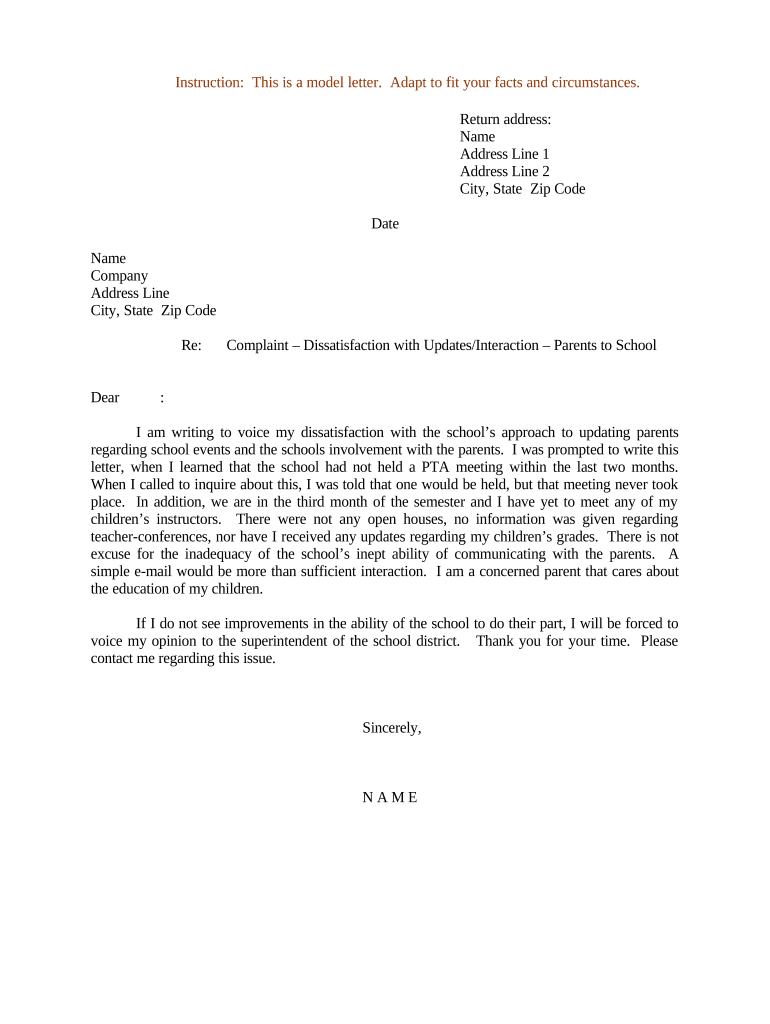







Understanding the Sample Complaint Form
A sample complaint form serves as a template for individuals looking to express grievances formally regarding various issues, including but not limited to service dissatisfaction, product defects, or legal matters. This structured document outlines the specific details of the complaint, facilitating clear communication between the individual and the receiving party.
Essential Components of a Complaint Form
A well-structured complaint form typically includes several key elements. Each section provides vital information that ensures the complaint is understood and can be acted upon efficiently.
-
Contact Information: This includes the complainant's name, address, email, and phone number. Accurate contact details are essential for follow-up communications.
-
Description of the Issue: A detailed account of the problem or dissatisfaction must be provided. This should clearly outline what occurred, when it happened, and any relevant circumstances surrounding the event.
-
Desired Resolution: Articulating what the complainant hopes to achieve—such as a refund, exchange, or acknowledgment—helps the receiving party understand how to address the complaint effectively.
-
Signature and Date: The complainant must sign the form and date it, indicating they attest to the information's accuracy. Certain forms might also include a witness signature section.
How to Use a Sample Complaint Form
Using a sample complaint form effectively involves understanding its structure and how to fill it out accurately.
-
Identify the Purpose: Determine what specific issue you need to address. This will guide how you describe the events in the form.
-
Gather Supporting Information: Collect any necessary documentation or proof that supports your complaint, such as receipts, photographs, or previous correspondence.
-
Complete the Form Thoroughly: Fill in all sections of the form, ensuring clarity and conciseness. Avoid vague language; be specific about dates, names, and events.
-
Review Before Submission: Check the form for completeness and accuracy. Confirm that all required documents are attached.
-
Submit Appropriately: Follow the instructions for submission, which may vary based on the nature of the complaint. This could include mailing the form, submitting it through an online portal, or delivering it in person.
Common Uses for a Complaint Form
Sample complaint forms are versatile and can be applied in various contexts. Some common uses include:
-
Consumer Complaints: File a complaint against a retailer or service provider regarding poor service or defective goods.
-
Employment Issues: Employees may use this form to report workplace discrimination, harassment, or unfair treatment by management.
-
Legal Complaints: Individuals may need to submit formal complaints to local authorities or courts regarding alleged misconduct or violations of rights.
Key Elements to Consider When Filling Out a Complaint Form
When completing a sample complaint form, it is crucial to consider certain elements that can enhance the effectiveness of your complaint.
-
Clarity and Specificity: Clearly describe each incident, avoiding generalizations. Use precise language to articulate grievances.
-
Supporting Evidence: Attach copies of any relevant documents, such as contracts or service agreements, to substantiate your case.
-
Format and Professionalism: Maintain a professional tone throughout the form. This demonstrates seriousness and respect for the complaint process.
Legal Considerations in Filing Complaints
Filing a complaint often engages legal implications, particularly in employment or consumer rights contexts. Awareness of relevant laws can strengthen a complaint.
-
Know Your Rights: Familiarize yourself with relevant laws, such as the Fair Labor Standards Act for employment issues or consumer protection laws for product complaints.
-
Document Deadlines: Be aware of any deadlines for filing complaints, which can vary significantly based on the type of grievance and jurisdiction.
-
Finality of the Complaint: Understand that submitting a complaint may initiate a formal process that could involve further legal action or mediation.
By integrating these elements into your approach to using a sample complaint form, you can enhance the likelihood of a satisfactory resolution to your issue.




