







Definition & Meaning of the Printable Body Map NHS
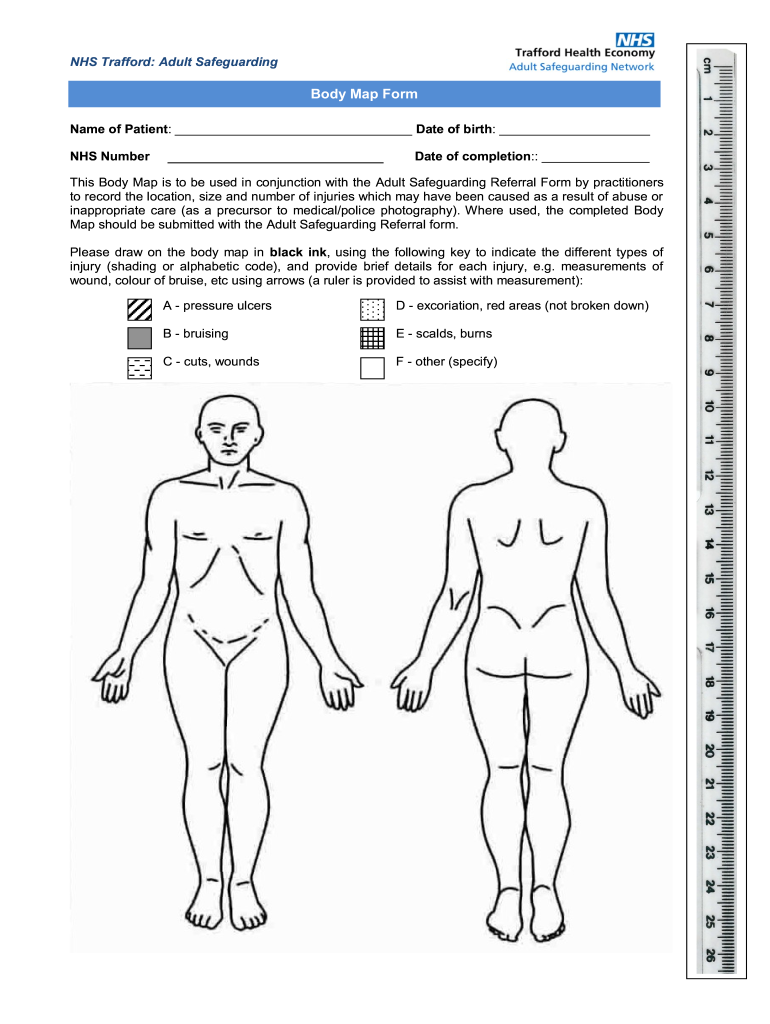
The printable body map NHS serves as a vital tool used by practitioners to document and illustrate injuries or marks on the body effectively. This form is integral in safeguarding vulnerable adults, as it prompts care professionals to accurately indicate the locations, types, and severities of injuries that may point toward abuse or improper care. The information captured on the body map facilitates communication among healthcare providers, ensuring that any concerns regarding patient welfare are thoroughly documented and addressed.
Features of the Printable Body Map NHS
- Visual Representation: The body map includes an outlined figure of a human body, allowing users to mark specific areas where injuries are present.
- Key for Marking Injuries: A key is often provided to identify different types of injuries, such as bruises, cuts, or other abnormalities, helping to standardize documentation across various users.
- Notes Section: A dedicated space for additional comments or observations enables detailed entries regarding the context of the injuries.
How to Use the Printable Body Map NHS
Utilizing the printable body map NHS effectively involves several steps to ensure accurate documentation. Care professionals must first familiarize themselves with the key provided on the map, which delineates various markings for specific types of injuries.
Step-by-Step Instructions for Using the Body Map
- Acquire the Template: Download the printable body map from reliable sources, ensuring it is the most up-to-date version.
- Select Injured Areas: Examine the patient’s body and identify all marked injuries. Be thorough in this assessment for the best report outcomes.
- Mark the Areas: Use the appropriate symbols from the key to indicate the type of injury in the corresponding area on the body map.
- Add Additional Details: Utilize the notes section to record any essential information regarding the circumstances of each injury, the date of examination, and any prior interventions.
- Review for Accuracy: Ensure all markings are clear and that notes are legible, providing a comprehensive overview for future reference.
Key Elements of the Printable Body Map NHS
Understanding the essential components of the body map form enhances its effectiveness in documenting injuries.
Main Components Include:
- Patient Identification: Space for the patient's name, age, and other identifying information.
- Injury Documentation: Clear sections for marking injuries with corresponding descriptors from the provided key.
- Completion Date: A line for entering the date when the body map was drawn up, which is crucial for maintaining a timeline of injuries.
- Practitioner’s Information: A section for the practitioner or caregiver’s name and contact details for accountability.
Importance of Each Element
Each component not only supports accurate reporting but also offers a framework for assessing recurring injuries, which may be significant in filing reports or seeking further action if abuse is suspected.
Steps to Complete the Printable Body Map NHS
Completing the printable body map NHS requires careful attention to ensure each aspect accurately reflects the patient's condition. The process can be broken down into clear, actionable steps.
Comprehensive Breakdown:
- Gather Necessary Supplies: Ensure access to writing materials and the body map template.
- Conduct a Thorough Examination: Inspect the patient’s body systematically to identify all injuries.
- Document Observations: Begin marking injuries using the figures provided on the body map template. Note the size, color, and defining characteristics of each injury.
- Utilize the Key for Clarity: Apply the key for injury types—different symbols might indicate bruises, cuts, abrasions, or scabs, which ensures clarity and understanding for anyone reviewing the document.
- Finalize Documentation: After marking, enter all relevant information in the notes section, including the examination date and context of findings.
Who Typically Uses the Printable Body Map NHS
The printable body map NHS is primarily used by a range of professionals who interact with vulnerable populations. Understanding who employs this tool can help streamline its use in various settings.


Typical Users Include:
- Healthcare Providers: Physicians, nurses, and specialists documenting patient injuries for medical records.
- Social Workers: Professionals assessing the safety of individuals in care settings and documenting findings in case of abuse.
- Care Home Staff: Staff in residential care facilities who monitor and report on the well-being of residents.
- Child Welfare Workers: Individuals responsible for child protection who need to document concerns methodically.
Contextual Relevance
Each of these professionals requires the body map for specific legal, medical, or ethical reasons, reinforcing the tool's role in the safeguarding process across varying environments.
Legal Use of the Printable Body Map NHS
Employing the printable body map NHS correctly involves understanding the legal implications surrounding its documentation and use.
Key Legal Considerations:
- Confidentiality: All documentation must uphold patient confidentiality standards, especially when dealing with sensitive populations, such as children and vulnerable adults.
- Accurate Representation: Misrepresentation of injury types could lead to legal consequences; thus, precise documentation is crucial.
- Legal Record: This body map might serve as a crucial piece of evidence in legal proceedings, so maintaining a clear, reliable record is essential for legal accountability.
Compliance with Guidelines
Understanding and adhering to local laws regarding documentation, reporting obligations, and the protection of sensitive data is paramount for all users of the body map.
Examples of Using the Printable Body Map NHS
Illustrating how the printable body map NHS can be utilized in practice helps elucidate its significance.
Scenarios of Application:
- Case Study in a Care Facility: A staff member discovers multiple unexplained bruises on an elderly resident. Using the body map, they document their findings, utilizing the key to indicate the nature of each bruise. This documentation is then used in a care review meeting to discuss potential abuse.
- Emergency Department Recording: A patient arrives with visible injuries from a suspected domestic incident. The attending nurse uses a printable body map to document injuries immediately, providing crucial details for subsequent investigations or legal actions.
- Child Protective Services Involvement: At a home visit, a social worker observes several scars and bruises on a child's body. Using the body map, the worker accurately records the observations, facilitating further inquiry into the child’s safety.
Value of Documentation
These examples illustrate how effectively utilizing the body map can lead to comprehensive documentation, safeguarding individuals and ensuring accountability in care settings.




